This article is about my RV living tips on the do’s and don’ts of RV life, travel and camping.
And I have written a lot articles and made a lot of videos about RVing so far.
But the information in this article will be about some of the best RV living tips that I can give you.
For things to do and things not to do if you own an RV. So let’s go ahead and get started first of all on the “do” list.
RV Living Tips – The #1 Thing To Do
And the first piece of advice I can give you is that you should have a system for purifying water in your RV.
Because we have traveled all over this country in our RV. And we have found that water quality varies considerably from one area to another.
In fact, it can even be very different from one campground to another at times.
So you really want to be sure that especially your drinking water is safe for use.
In fact, I made a video about that in the past. And the video is not about some expensive and complicated water purification system.
Because I feel that you can go a little crazy in this area if you aren’t careful.
But actually, the video is about a very simple and inexpensive system that we use even now. And we’re very happy with it.
So you can watch the video and see if it’s something that will work for you as well. Just click here or on the image below to watch that video.

#2 On The List Of Things To Do
OK, next up on the list is to keep all safety equipment in your RV current and up-to-date. And try to make sure it works properly as well.
Now what do I mean when I’m talking about life safety equipment?
Well, I’m talking about fire extinguishers, LP detectors, CO detectors, and smoke detectors.

These are components in your RV that can save your life. So they really are important!
However, I can tell you that as an inspector, we often observe that these items are just ignored. And very often, for a very long time!
In other words, they’re out of sight and out of mind in many cases. Now of course, RV owners may intend to keep them current.
But before you know it, many years have gone by and nothing has been done. So don’t be that kind of RVer!
Make sure all of these life safety devices are well within the range of use recommended by the manufacturer.

What About Fire Exit Safety?
Now, while we’re on the subject here, also make sure you know where your fire exits are in your RV.
They’re usually a window of some type, and they’ll be marked as an emergency exit. So be familiar with where those exits are.

But more than that, don’t just know where the exit is, also make sure that it works properly.
Once again, as an inspector, it’s amazing how often I get to that window and try to open it.
But it’s clear that it hasn’t been opened in a long time. In fact, in many cases it’s even stuck to the rubber seal of the window.
So don’t let that happen in your RV! Instead, know where the exits are, and know that they would work well in an emergency.
The #3 Thing To Do On My RV Living Tips List
Next up on our list of RV living tips and things to “do”, is to know the age of your tires. And be sure to replace them when needed!
The truth about RV tires is that they usually age out long before they wear out.
And many RV tire manufacturers recommend that you don’t let your tires go beyond 5 – 6 years of age.
Of course, you can go longer than that if you choose. But you’re taking a big risk if you do.
Because an RV’s tires are the connection that you have with the road as you travel.
And if something goes wrong with an RV tire, very bad things can happen quickly. Resulting in a bad accident, serious injury, or even death!
So know the age of of your tires at all times and replace them when you should.
Now how do you know the age of your tires? Once again, I made a video about that.
To watch it, just click here or on the image below.

So you can watch the video first and then go and find out the age of your tires right away.
That way you can make your decision about replacing your RV’s tires based on what you find.
The #4 Thing To Do On My List
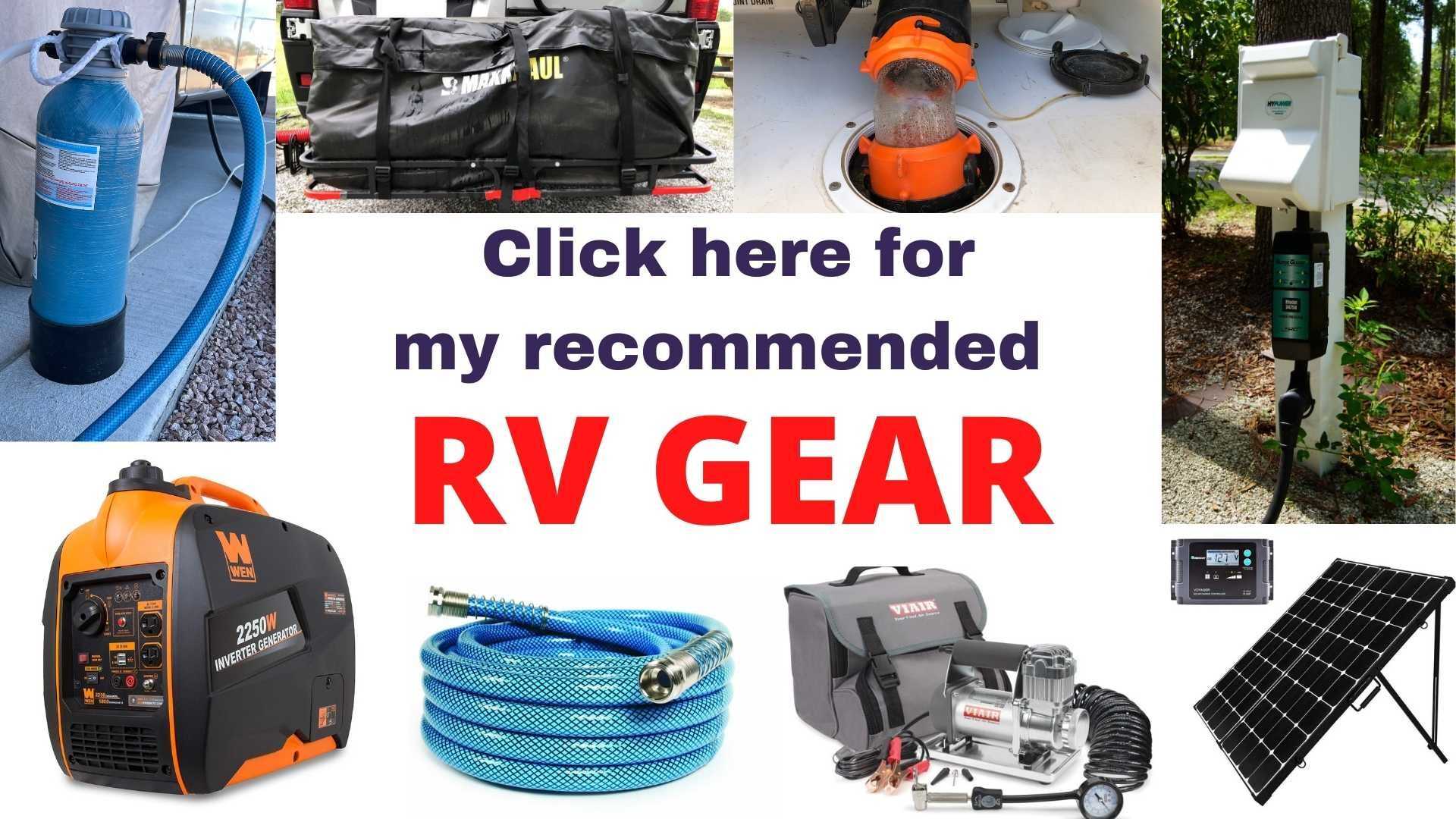
Our next point on the “do” list is to buy your RV from one of the better RV brands. One that is known for better overall build quality.
Now there’s plenty of people out there that say “All RVs are just garbage”. But that’s just not true!
There are RV brands that are better made than others. They are not all built poorly as some claim.
And the truth is that you can get a problematic RV from almost any RV brand out there.
Because all RVs are still basically built by hand. And that means that consistency can be a challenge in the RV building process.
So why not put the odds on your side to get a better overall product by buying a brand that’s known for more consistently higher quality?
It really does make a difference if you choose wisely before you buy the RV!
To find out which brands I recommend, just click here or on the image below.

#5 On The “Do” List Is Very Important
Next on the list of things you should do is to check RV seals and joints often.
And you’ll find RV joints where the front cap and back cap meets the RV walls. But there’s more than that to check.
There’s also joints and seals up on the RV roof that need to be examined too.
So what are you looking for? Well, you don’t want to see holes in the sealant on those joints.
You also want to check for areas where the sealant is cracking. Or where it’s been rubbed away.

And if you find that any of that is happening, then replace that sealant right way!
Because the last thing you want is to have water leaking into your RV.
If it does, it can do major damage very quickly. And it can be very expensive to fix. So check your RV seals, joints and sealant often!
Another Important Thing To “Do” On My List
OK, next up on the “do” list is to have an electric management system for your RV.
One that will protect your entire RV’s electrical system from dangerous electrical situations.
Remember how I mentioned earlier that from one campground to another you can find differences in water pressure?
Well, the same is true of the quality of the electrical connections that you can encounter.
In one campground it’ll be great! But in another campground it can be downright dangerous.
So don’t just settle for a generic RV surge protector. You will need an RV electrical management system.
In fact, I made a video about this that can be very helpful for you to view.
It will compare the differences between electrical management systems and surge protectors.
And it will help you determine what’s best for your situation. To watch that video, just click here or on the image below.

#7 On My List Of RV Living Tips
My next recommendation on the “do” list is to have a tire pressure monitoring system.
One with enough sensors to cover every tire on your RV’s rig, not just the RV itself.
Because if you have a towable RV, then it’s probably being towed by a tow vehicle.

And if you have a motorhome, then you might be carrying along a towed vehicle too.
So have sensor for every tire in the rig. And then monitor them all closely as you drive.
There’s lots of advantages to monitoring your tires closely as you go down the highway.

For instance, if there are problems that develop with a tire, then you can know about it quickly.
Or at least you will begin to see hints that your tires may need attention soon.
And then you may be able to save yourself from a tire blowout before it actually happens.
In fact, this has happened to us while we were on the highway traveling.
And we were able to avoid a major problem with our tires that could have been very dangerous.
All by having a tire pressure monitoring system and watching it carefully as we were driving.
RV Living Tips – #8 On The List
Next on the “do” list is to make sure that you know your rig’s weight. And unfortunately, a lot of RVers don’t know that.
They’re just going down the highway without any idea of how safe their rig’s weight really is.
And as they travel and camp, they buy this thing and that thing along the way. And bring all of that stuff into the RV over time.
They often figure that as long as they’ve got space left in the RV, then they’re fine. But that’s not true!
So be sure you know what the safe weight limit is for your RV. And know what the weight limit is for the cargo that you can bring into it.
Then don’t go above those weight limits. That way you won’t overload the RV, and you can stay safe while you travel.
I made a video about this too. And you can view it by clicking here or on the image below.

#9 – One Of The Best Of My RV Living Tips
Next on the RV “do” list is to get an RV inspection on any RV that you buy. Whether it’s a new or used one.
Unfortunately, there’s still a lot of RV buyers that don’t follow this advice.
But think about it! Almost every town or city has an inspection department for new homes.
And their function is to go out and make sure that any building that’s constructed is built according to code, and is safe.
So why would you want to buy a home on wheels and not have it inspected properly?
In fact, I recommend using certified NRVIA inspectors for this purpose. Because they know what they’re looking for during the inspection.

They can easily determine what shape any RV is really in by inspecting it thoroughly.
Now, online you often hear a lot of complaints about people buying RVs that aren’t really ready for use.
However, the vast majority, if not almost all of them, have not done their due diligence before buying the RV.
And most of them did not get an RV inspection as they should. So don’t be one of those people!
OK, that’s the list of “do’s”. Now let’s move on to the list of RVing “don’ts”.
#1 On My List Of Things Not To Do
And number one on that list is don’t rely on Google Maps to direct you in an RV. And that’s especially important if you have a bigger rig!
Because Google Maps is just going to try to get you to take the quickest route possible.
And I can tell you for sure, it’ll take you down some roads that you really don’t want to be on with an RV.
Roads that can get you in trouble quickly with a bigger rig. So my recommendation is to make sure you use an RV GPS app instead.
Or plan your trips with something like RV Trip Wizard. In fact, we’ve been using it for years for planning RV trips and we’re very happy with it.
Once again, I made a video about how RV Trip Wizard can be used that way. So just click here or on the image below to view that video.

RV Living Tips – The #2 Thing You Shouldn’t Do
OK, number two on the “don’t” list is don’t leave your black tank valve open at RV parks.
I see this a lot with people in campgrounds that are going to be there a while. Or maybe they even just live in the park.
Well, don’t leave that black tank valve open on a constant basis and think it’s fine to do that.
Because the liquids are going to drain right out like they should. But very often, the solids don’t.
Instead, they build up inside the tank and harden there. Once that happens, you have a real problem on your hands at that point.
And it’s often called “the black tank bomb”. It’s a solid, hardened, collection of waste that clogs up the whole RV sewer system.

And you really don’t want that! Because it’s going to be expensive to repair in many cases.
Instead, what you want to do is just leave the black tank valve closed until the tank is full.
Then open it and let the pressure in the tank push everything out of it all at once. Both the liquids and the solids.
I know that it takes more effort to do this regularly. But it will save a lot of unnecessary expense and frustration if you do.
#3 On The RV Living Tips “Don’t” List
Next up on the “don’t” list is don’t hook up to a city water connection without a water pressure regulator.

Remember that I said there are variances in the quality of water across the US, and from campground to campground?
Well, there are also variances in water pressure too. And sometimes there’s more pressure than there should be in the water lines.
When that happens, the excess pressure can cause a real problem with the plumbing in your RV.
And if it does, it’s most likely not going to be an easy problem to fix in many cases.
So protect your plumbing by using a very simple and inexpensive water pressure regulator. And then you don’t have to worry about those issues.
RV “Don’t” #4 On My List
OK, next up on the “don’t” list is don’t drive too fast on the highway when you’re traveling with your RV.
I have to say that we have people go right by us like we’re standing still in our rig.
And I know for sure that the tires on those RVs are not rated for that kind of speed.
Just remember that there is not a fire to go to when you’re traveling. So don’t get too anxious about getting to your destination.
Instead, make sure you’re maintaining a safe speed for your RV. And for us, that speed is somewhere between 60 and 65 miles hour.
That speed seems to keep us in control of what we’re doing at all times.
But also maintain a safe distance too between you and the vehicle in front of you too.
Because things can happen unexpectedly on the road. And you want to be able to bring that big RV down to a stop fairly quickly when they do.
So maintain a good safe distance between you and the vehicle ahead of you.
Tip #5 That You Shouldn’t Do
Next up on the “don’t” list is don’t leave your RV awning out when you’re away from your RV.

Because there are areas in this country where storms just come up quickly without warning. In fact, almost in the blink of an eye!
And the storm can get bad very fast, with high winds. Then it can grab your RV’s awning and destroy it before you know it.
In fact, we’ve seen it happen on several occasions in our RV travels. So don’t leave your awning out when you’re away from the RV.
It can be an extremely expensive mistake to make that is easily avoided.
RV Living Tips – #5 On The List
Next on the “don’t” list is don’t use an RV service tech or repair facility without checking out their online reviews.
Of course, there’s lots of repair techs and service facilities for RV repairs and maintenance. But they are not all the same, not by a long shot!
So be sure you know a little bit about them before you take your rig to them.
And having word of mouth testimonials is a good thing. But it’s also good to check online reviews as well. So be sure you do that.
#6 Of Things You Shouldn’t Do To Your RV
OK, next on the “don’t” list is don’t procrastinate about caring for your RV’s exterior. And a lot of RVers do this!
Of course, they often intend to go out and wash and wax their RV on a regular basis.
But they know it’s a big job. So instead, they just sort of put it off for a while
And weeks turn into months, and then months turn into years. Next thing you know, the outside of their RV looks terrible.
So don’t procrastinate caring for your RV’s exterior. Instead, wash and wax it often!
Now I made a video about this too. It’s about a system that I use to be able to wash and wax my RVs all at the same time.
And it doesn’t take me very long to do it. Also, it’s not a lot of effort to do it either.
So if you want to see the video I made on that subject, just click here or on the image below.

Oh and one more thing. Don’t forget about caring for the rubber and plastic parts on the outside of the RV either.
You can easily protect them by using a great UV inhibitor like 303 Aerospace Protectant.
Tip #7 Of Things You Shouldn’t Do
Next up on the “don’t” list is don’t procrastinate when a mouse gets into your RV. Now this is a very important piece of advice!
Because a mouse can do a tremendous amount of damage to your RV in a very short time.
They often chew through wires behind walls and in the ceiling where it’s hard to reach.
And you’re not going to appreciate getting a bill for many thousands of dollars for those repairs.
So make sure that when you know a mouse has gotten in, get on resolving that situation right away.
And again, I made a video about this subject. In it I cover various means of tackling the situation and handling it effectively.
So if you want to see that video, just click here or on the image below.

Tip #8 Of RV Don’ts
Next up on my “don’t” list is don’t leave your campsite without one last walk around of the rig.
You know, it’s amazing how you can easily forget some very important things to do.
Because maybe you’re not feeling good that day. Or maybe you’ve got your mind on something else.
Or maybe while you’re packing up, the next door neighbor comes over and starts talking with you and gets you out of your rhythm.
And then, you just forget something you shouldn’t forget. Then you drive off and find out about it later, when it’s a problem.
So before you leave your campsite, don’t get out of there without making one last walk around.
Make sure that you look at everything as you go very carefully and deliberately.
Also, using a checklist for setting up your campsite and for taking it down is a very good habit to have too.
Conclusion
All right, these are the various “do’s and don’ts” that I wanted to cover in this article.
And I hope that you found something in there that’ll be very helpful for you in your RV life. Ways to make your RVing more safe and enjoyable!
Have safe and happy RV travels!