
If you’re trying to get rid of mice in an RV, you’re certainly not alone. Mice are one of the most common and frustrating problems RV owners face.
After more than five years of full-time RV travel, we’ve battled mice multiple times in different parts of the country. Every encounter taught me something new. I’ve researched the topic extensively, talked with pest-control professionals, and tested a wide variety of traps and techniques.
This article is essentially my ultimate guide to getting rid of mice in an RV. I’ll share what actually works, what doesn’t always work, and the methods that have been most effective for us.
You can also watch my video on this subject by clicking on the image below:
Why Mice Are Such a Big Problem in RVs
Many RV owners underestimate how serious a mouse infestation can become.
Mice are not just an annoyance. They can:
- Carry diseases
- Leave droppings throughout the RV
- Contaminate food and surfaces
- Chew through insulation
- Destroy wiring
- Create expensive hidden damage
In severe cases, mouse damage can cost thousands or even tens of thousands of dollars to repair, especially when wiring inside walls and ceilings is affected.
What I Learned About Mouse Behavior
Mice Leave Scent Trails
One of the most important things I learned is that mice often leave scent trails that other mice follow.
Think of it as a mouse highway leading into your RV.
Unfortunately, those scent trails can remain active for six months to a year. That means once mice have entered your RV, you need to stay vigilant even after you think the problem is solved.
What Works in One Area May Not Work in Another
This is another frustrating reality.
Repellents and traps that work extremely well in one region may be far less effective in another. No one seems to know exactly why, but many RVers report the same experience.
The number of mice also matters. Catching one or two mice is very different from dealing with a constant stream of them.
Prevention: Your First Line of Defense
The first step to get rid of mice in an RV is understanding how they’re getting inside in the first place.
But prevention is always easier than removing an established infestation.
The most effective prevention method is simple:
Seal every hole you can find.
Where to Check for Entry Points
Inspect these areas carefully:
- Wheel wells
- Around tires
- Water hose openings
- Electrical cord openings
- Sewer hose areas
- Motorhome jacks
- Mud flaps
- Undercarriage openings
Remember, mice can climb surprisingly well. Anything they can climb becomes a ramp into your RV.
Do Repellents Work?
Common repellents include:

- Peppermint oil
- Mothballs
- Irish Spring soap
- Other strong scents
My honest answer: sometimes.
Some RVers swear by these methods, while others see little or no effect. They’re worth trying, but I wouldn’t rely on them as your only defense.
The Best Mouse Traps for RVs
Modern Snap Traps (My Top Choice)
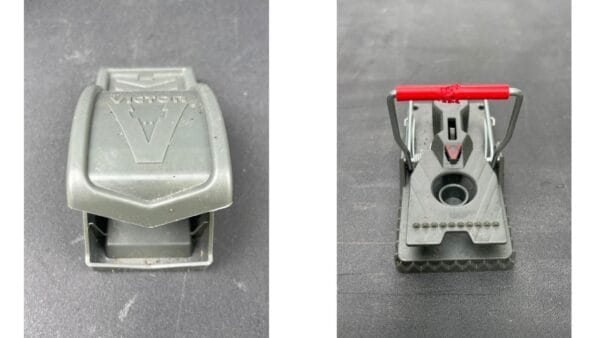
One of the most effective ways to get rid of mice in an RV is by using modern snap traps strategically placed near entry points.
And after trying many different products, I’ve had the best success with modern snap traps.
Compared with old-fashioned wooden traps, the newer designs are:
- Easier to set
- Safer for your fingers
- More reliable
- Highly effective
I use larger versions outside the RV to catch mice before they enter and smaller versions inside the RV where needed.
Glue Traps
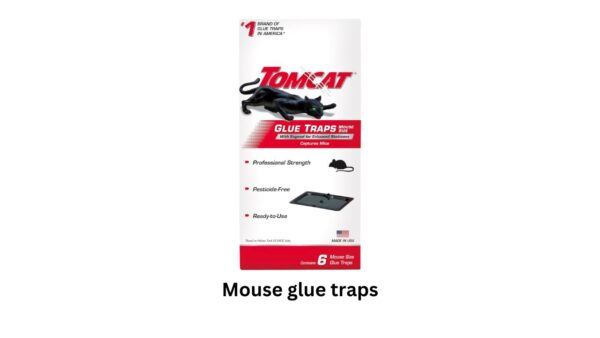
Glue traps can also be effective, especially in tight spaces.
One trick that worked well for us was attaching a string to the glue trap and tying it to a vent or access point. That prevents a trapped mouse from dragging the trap into an inaccessible area.
Using Mouse Poison Safely
Important
I only recommend poison in areas where traps cannot be used.
Examples include:
- RV ceilings
- Hidden cavities
- Enclosed spaces behind panels
How to Access Ceiling Areas
You may be able to reach these spaces by removing:
- Air-conditioner vents
- Speaker grilles
- Vent-fan trim rings
These openings often provide enough access to place bait where mice are traveling.
A Critical Tip Most People Miss
Wear gloves when handling traps and bait.
This was one of the biggest lessons we learned.
If you handle traps with bare hands, you leave human scent on them. Mice can detect that scent and may avoid the trap entirely.
Use disposable plastic gloves whenever you:
- Set traps
- Place bait
- Move traps
- Handle captured mice
The Bucket Trap: An Ingenious Option
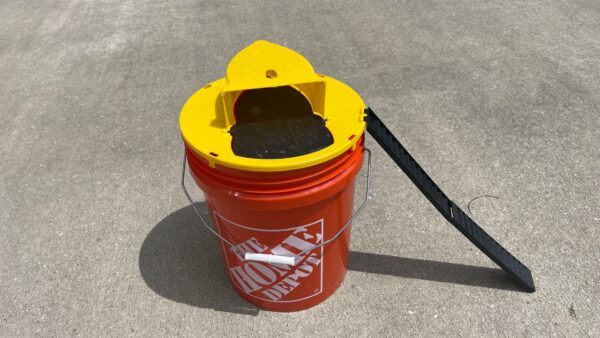
One of the most creative mouse traps I’ve seen is the 5-gallon bucket trap.
How It Works
- A small ramp leads up to the bucket.
- A platform or rolling trap door sits on top.
- Bait is placed at the far end.
- The mouse walks onto the platform and falls into the bucket.
Lethal or Non-Lethal
You can:
- Add water for a lethal trap.
- Leave it dry and relocate the mice elsewhere if you prefer a non-lethal approach.
These traps work especially well outside the RV when mouse activity is heavy.
When to Call a Professional
If your efforts to get rid of mice in an RV aren’t working, it may be time to bring in a professional pest-control company.

Because sometimes you’re simply losing the battle.
If mice keep returning despite your efforts, it may be time to bring in a pest-control professional.
One advantage professionals have is access to stronger bait products than those typically sold in stores.
Many consumer poisons require multiple feedings before they become effective. Professional-grade products often work much faster and can help bring a severe infestation under control.
My Recommended RV Mouse Strategy
If I were starting over, this is the approach I’d use:
Inspect and seal every entry point.
Set modern snap traps outside the RV.
Place snap traps inside near suspected entry areas.
Use glue traps in tight spaces.
Use poison only where traps cannot reach.
Wear gloves whenever handling traps or bait.
Stay vigilant for at least several months after the last mouse is caught.
Final Thoughts
With persistence, the right traps, and a good prevention strategy, you can successfully get rid of mice in an RV and keep them from returning.
Dealing with mice in an RV isn’t pleasant. I don’t enjoy talking about it, and I certainly don’t enjoy dealing with it.
But it’s one of the most important topics RV owners need to understand.
If you haven’t had mice yet, consider yourself fortunate. Many RVers eventually encounter the problem, especially if they travel frequently or spend time in wooded or rural areas.
The good news is that mice can be controlled with persistence, the right traps, and a solid strategy.
Hopefully these tips help you protect your RV and avoid the costly damage that mice can cause.
Safe and happy travels, my friends.
Frequently Asked Questions About Mice in RVs
What is the best mouse trap for an RV?
In my experience, modern snap traps are the most effective combination of safety, ease of use, and reliability.
Can mice get into a sealed RV?
Yes. Mice can squeeze through openings as small as a quarter-inch, so even small gaps can become entry points.
Does peppermint oil keep mice away?
Sometimes, but results vary widely. It may help as part of a broader prevention strategy, but I wouldn’t rely on it alone.
Is mouse poison safe to use in an RV?
It can be used, but I recommend reserving it for inaccessible areas where traps cannot be placed.
How long do mouse scent trails last?
Research suggests mouse scent trails can remain attractive to other mice for six months to a year, which is why ongoing vigilance is important.