
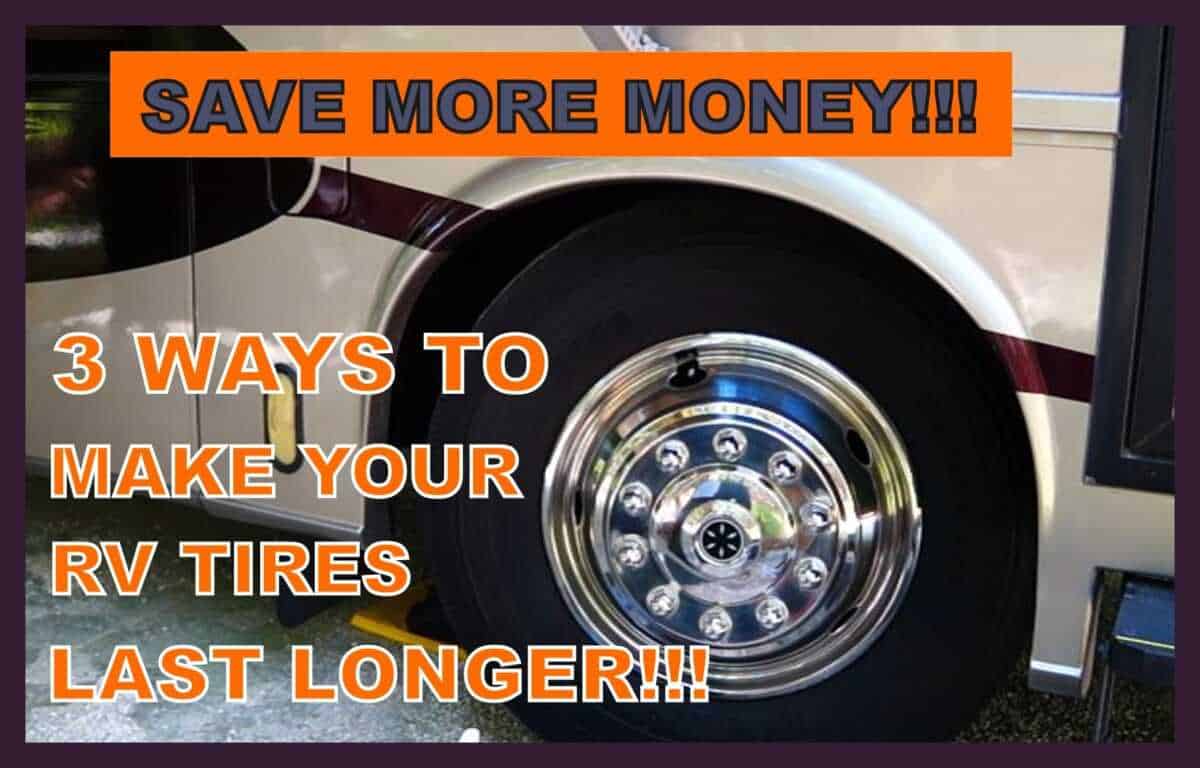
There is so much to be learned about RV tires when you first begin RVing. Things like – What tire weight rating do I need? How much air pressure should I keep in my tires? What RV tire brands seem to be the best? What RV tire inflator should I use?
The list seems endless. But one of the most important things you should know about your RV tires is how to make them last.
This is because RV tires will need to be replaced on a regular basis. It’s one of those items that you just have to plan on replacing every so often. Most likely every 5 – 7 years. So if you can make the tires you have last longer, there are clear advantages to be had.
For one, you will be even more safe as you ride down the highway. But if you can extend the life of your tires, you can also save money on their replacement.
And who doesn’t want to do that? So here are 3 easy ways you can make your RV tires last longer.
Disclosure: Please note this post may contain affiliate links. This means – at no additional cost to you – I earn a commission if you make a purchase using our affiliate links. I only link to products and companies I use and feel comfortable recommending. The income goes toward supporting the free content on this website.
UV Protection For Your RV Tires
The first tip is to use a high quality ultraviolet (UV) inhibitor on the tire sidewalls. One of the worst enemies of RV tires is UV rays from the sun. Over time, they dry out and crack the sidewalls which can lead to tire failure.
In fact, these kind of tires do not usually wear out like car and truck tires. Instead, they usually just age out.
And anything that dries out the moisture in the tire sidewalls will make it age faster. So if you want to extend the life of your tires, be sure to use a good UV inhibitor.
One of the best products that I know of for this application is 303 Aerospace Protectant. It is well known for it’s UV protection properties.
Just spray it on a clean tire sidewall about once a month and let it soak in for a while. Then you just wipe off the excess. It will only take minutes, but what a difference it can make in the life of your tires.
Just click on the image below to learn more about 303 Aerospace Protectant:
Click here for 303 Aerospace Protectant
(This is an affiliate link for the product on Amazon. It does not cost you any extra to buy the product using my affiliate link if you choose to do so)
Use Tire Covers For Your RV Tires
If you want to take your tire protection to a whole new level, consider RV tire covers. Whenever your rig is sitting for any extended length of time, it’s a good practice to install tire covers.
It only takes a few minutes to do and it’s not a difficult task. And the big advantage of tire covers is that you completely block the sun’s UV rays. Especially if they are high-quality RV wheel covers.
But one word of caution, heat is also another enemy of tire sidewalls. So try to avoid using black tire covers that enhance the heat on summer days. Instead, a lighter color will help reflect some of the heat away from your tires. And that is a good thing!
There many RV tire covers for sale on the internet. Many of them will not last very long. So I am going to share with you the motorhome tire covers that I use.
They come in many sizes and different colors that will fit almost any rig. For my money, they are some of the best RV tire covers available. Just click on the link below to learn more about them.
Click here for RV tire covers that last
(This is an affiliate link for the product on Amazon. It does not cost you any extra to buy the product using my affiliate link if you choose to do so)
Protect Your RV Tires During Storage
For long-term storage, check the guidance from your tire manufacturer. Michelin recommends separating tires from the storage surface and lists rubber floor mats, plywood, plastic, and cardboard as options.
Keep the parking surface firm, clean, well drained, and reasonably level. Make sure each tire is fully supported, including both tires in a dual-wheel setup. A barrier is only one part of storage care, not a replacement for correct inflation, sun protection, and regular inspections.
Read Michelin’s RV Tire Guide for its complete storage recommendations.
Conclusion
The ingredients that go into making an RV tire are rugged and made to last under very difficult conditions. But from the day the tire is installed on your RV it is subjected to a harsh environment.
Not the least of which is the damaging effects of ultraviolet rays from the sun. But because we don’t see the damage being done on a daily basis, we often don’t pay much attention to it.
Steadily though, the tire’s components are weakened if we don’t do our best to prevent the damage being done. And just a few minutes of protection added every now and then can make a world of difference in the longevity and safe use of your RV tires.
So if you apply the suggestions in this article, you will be doing your best to protect the lives of those who ride with you on your RV travels and adventures.
Have safe and happy travels my friends!