The Top 5 Tips For Towing A Car With An RV

In this article we’re going to be talking about towing a car with an RV. And I’ll reveal my top five tips for RV flat towing and dolly towing.

Now if you’re new to RV towing, you may still be going through that whole decision making process about whether you should be flat towing or dolly towing.

And the good news is that I’ve made some videos to help you make a good decision. In fact, there’s a video on each method. Flat towing and dolly towing.

And they both will show you the pros and cons of each method. That way you can decide what works best for you and your situation.

But at this point we’re going to assume that you have already made your decision. And you know which method you’re going to choose to tow a car with an RV.

Watch my video on RV towing tips

Disclosure: Please note this post may contain affiliate links. This means – at no additional cost to you – I earn a commission if you make a purchase using our affiliate links. I only link to products and companies I use and feel comfortable recommending. The income goes toward supporting the free content on this website

Towing A Car With An RV – A Rear Camera

So let’s start with tip number one. And that is to use a rear camera to keep an eye on what’s going on with your towed vehicle.

This is so important. And I had this tip really driven home to me last year going through Fort Worth, Texas. That’s when one of the bars on my tow bar broke while I was on the highway.

And I would have never known it if I didn’t have my rear camera monitor on. As a matter of routine I always check it every few minutes or so while driving.

Well, I looked into it and my vehicle behind the RV was moving around. And I knew that wasn’t right!

So I pulled right over was able to get over in time so that the second bar on the tow bar didn’t break because of all the pressure on it. If that had happened, things would have really been difficult!

So that leads me to remind you to be sure you have a real good working rear camera. And that you check it regularly too.

A Piece Of Advice About RV Rear Cameras

Of course, a lot of folks have a rear camera in their RV. But for whatever reason, it’s often not functioning like it should.

And if that’s the case with you, let me give you a little bit of a suggestion. It’s about another camera system that might work as a replacement for you.

In fact, the one I found is a wireless camera system that even works wirelessly on my 40 foot RV. So most likely it’ll work for you as well.

Click here for the wireless camera system that works well for us

It’s very easy to install. And if you think it’s something that might work for you, be sure to check it out.

Towing A Car With An RV – A TPMS

All right, let’s move on to tip number two. And that is to be sure to use a tire pressure monitoring system for the tire pressures in your towed vehicle.

You know, a lot of people think about having a TPMS on their RV. But honestly, in many ways it’s almost more important to know what’s going on behind you.

Because a tire can blow out on you. Or can gradually go flat on your towed vehicle. And you will most likely never know it when it happens.

In your RV, you could probably feel a flat tire. But not in the towed vehicle. So make sure that you have a good tire pressure monitoring system for that vehicle too.

A lesson Learned On The Road

Now once again I learned this the hard way. As a result of that tow bar breaking, it set off a series of events. And one of them was related to the new tow bar that I bought.

When I got it, I attached it to my towed vehicle and started off down the highway. But that new tow bar was so stiff that it was putting pressure on the front tires of my towed vehicle, my Honda CRV.

In fact, it was so much pressure that heat was building up in the tires. And it was getting to the danger point where they could actually blow out.

But the tire pressure monitoring system saved me. It alerted me to that danger before it got to that critical stage.

Click here for the tire pressure monitoring system we use

Then I was able to pull off and solve the issue before things got really dicey. So be sure to have a tire pressure monitoring system for your towed vehicle too. And check it regularly!

What Is A Safe Towing Distance?

OK, tip number three. Keep a safe distance between you and the vehicle in front of you. And what do I mean by safe?

Well, I can’t give you a specific distance. Because a lot depends on the circumstances you’re in. But no doubt, you normally keep distance between you and the vehicle in front of you when you are in a passenger vehicle.

Well, make sure you use a lot more distance in your RV. Because RVs take a long time to slow down. But even more so when you’re towing a car with an RV.

So suppose something goes on in front of you that’s unexpected. Then it can take a really long time to slow down and stop the RV and the towed vehicle too. A lot more than it would in a passenger vehicle.

So I highly recommend to leave plenty of room in front of you and the vehicle in front of you.

Typically we travel at around 60 – 65 MPH on the highway when towing in our RV. If you do, most vehicles will pass you and move on down the highway ahead of you.

So just following that suggestion alone will often keep a safe distance between you and the vehicle in front of you.

Towing A Car With An RV – Weight Limits

Now for tip number four. And that is to know your RV and your towed vehicle’s weight limits. And observe them.

Now this is a subject that a lot of RVers just don’t pay a lot of attention to. It seems that they just figure if they can drive the RV down the highway it must be the right RV weight.

But it’s very important for you to make sure that you stay within the weight limits for your RV. And for the towed vehicle as well. By the way, this also includes your hitch’s tow weight too.

Now this is an area that some people forget about a lot of times. But that hitch takes a lot of pressure. So make sure you know what’s going on with it.

Again, I made a video explaining how that you can make sure you’re towing safely. And it explains all the weight classifications you need to know. About both the RV, the towed vehicle and the hitch. So you know you’re doing it right.

Towing a car with an RV - how to manage RV and towed vehicle weight
Watch my video on how to manage RV weight here

The 3-3-3 Rule For Towing

Now for my final tip in this article. And that is to observe the 3-3-3 rule when you’re towing a car with an RV. This rule is designed to help you avoid fatigue from towing on the highway.

And the 3-3-3 rule is (1) never travel more than three days in a row without stopping for at least a couple days to rest up. Then (2) never travel more than 300 miles a day. And (3) try to get wherever you’re going by three o’clock in the afternoon.

Now why is this a good idea? Well, many of the old-time RVers know that it takes a lot out of you to drive an RV. And even more when you’re driving one that’s towing another vehicle.

It takes a lot of concentration and a lot of alertness. And before you know it, it can take a lot out of you, and you can get very tired.

In fact, sometimes you don’t even know how tired you really are. That is, until you get into a difficult situation on the highway.

So you need to avoid fatigue. And to do that, this 3-3-3 rule helps you avoid fatigue and make sure that you stay fresh. And that you’re able to handle situations that come up on the road safely.

Towing a car with an RV - the 3-3-3 rule

Is This A Hard And Fast Rule?

Now everybody’s fatigue level is a little bit different. And if you find that the 3-3-3 rule isn’t enough for you, then by all means move it down to 2-2-2.

There’s nothing wrong with that. That’s nothing to be ashamed of. It just simply means you need to keep your fatigue level at a manageable level. And if it takes going 2-2-2 instead of 3-3-3, then go ahead and do that.

In fact, the longer I drive RVs, the more I’m kind of a 2-2-2 guy myself. So whatever it takes to stay fresh. Whatever it takes to stay alert on the highway, do that!

Conclusion

Well I hope these tips will help keep you and your loved ones safe and happy while you’re out on the highway enjoying your RV adventures.

Have safe and happy travels my friends, until next time

The Top 3 Used Class C RV Motorhomes You Should Buy

In this article we’re going to be talking about the top three quality used Class C RV motorhomes that I can recommend as an RV inspector.

Of course, there’s lots of reasons to buy a Class C RV. But here’s an important question. Which one should you buy? And should you buy it new or used?

Well the truth is that you can save a lot of money if you buy a Class C RV motorhome on the used market.

Because you’ll save all the initial cost of a new Class C. And you’ll save on the depreciation as well.

Also, if you buy it more than a year old, most likely by that time all the little bugs and problems that came out of the RV factory has been resolved.

So there are good reasons to buy a used Class C motorhome. And this article is about my list of what I consider to be the top three quality manufacturers and models of recent used RVs.

Watch my video about buying used Class C RVs

Now we’re only going to go back about 4-5 years in the used Class C motorhome market in this article. So let’s go ahead and get started.

Table of Contents

What To Expect In Full-Size Class C RVs

And we’re going to start with the full size Class C’s first. Now the full size Class C’s are very popular. And they are the ones that most people think about when they think about Class C RVs.

So here’s a general rundown of what you can expect to see in a full size Class C. Usually it’s going to be somewhere between 24 and 32 feet in length.

And you’re usually going to see them on a Ford chassis. The most common chassis models that are used are either the E-350 or the E-450.

And because it is a Ford chassis, it’s probably going to have a Ford engine in it. And that means it could be the V-10 that’s been used for years in RVs. Or in recent times, the new V-8 engine that Ford is putting out.

A Class C RV motorhome chassis

And usually in that size of Class C RV motorhomes, you have about five to seven different floor plans that you can choose from.

Also, there’s more area in these full size Class C’s. So they will sleep anywhere from six to ten people. That means it’s a really good choice for families then.

So what recommendations do I have for buying the best used Class C RV motorhome? One that’s a full size?

Well there’s three manufacturers I’m going to cover in this article. But only two are actually putting out full-size Class C’s.

My Full-Size Class C RV Recommendations

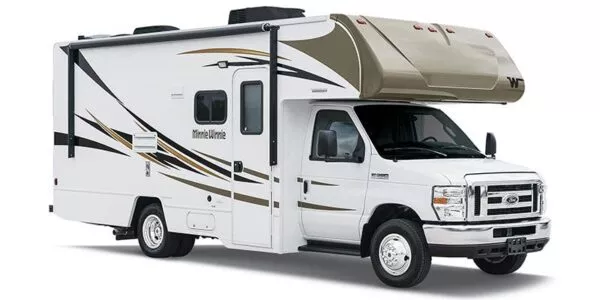
And the first one on my recommended list is Winnebago. In fact, when people think about Winnebago, I think in their mind they see a Class C RV.

That’s because Winnebago and a Class C is almost synonymous in the minds of many people.

And there’s been a model that Winnebago has put out for many years now. It’s really solid and reliable. It’s the Minnie Winnie. And this is a model that I can highly recommend to you in the full-size Class C market.

Used Class C RV - Winnebago Minnie Winnie
Winnebago Minnie Winnie

Next up on my list is Entegra. Now most people probably think Entegra just makes Class A RVs. But that’s not true.

In fact, they put out some nice Class C’s as well. And my recommendation is that you consider the Entegra Odyssey. It’s a very fine full-size Class C RV that’s well made.

Used Class C RV - Entegra Odyseey
Entegra Odyssey

What To Expect From Smaller Class C RVs

OK, now let’s talk about the smaller classes. These are the ones that are really getting popular now.

There’s a very hot market for them these days. They look almost like vans in many ways. And they’re generally built on a Mercedes chassis.

I personally feel that these smaller RVs should be called a Class B plus. But since many people refer to them as small Class C RVs, I will include them here.

They’re usually only about 25-26 feet long. And they come with a diesel engine. That’s something a lot of people like because it gives them a little bit better fuel economy.

Now there’s usually only about four to five floor plans to choose from though. And it won’t sleep quite 10 people in most cases. But you can usually get six to sleep in the smaller Class C’s without too much issue.

So what makers, manufacturers and models do I recommend in this smaller Class C or B+ category?

My Smaller Class C Recommendations

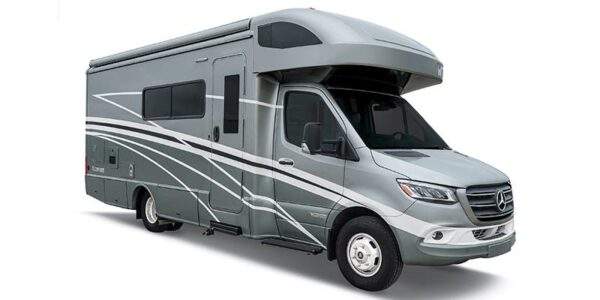
Well, once again Winnebago is a good brand to consider. They make the Navion in this size category. And again it has a Mercedes chassis that a lot of people are looking for.

Winnebago Navion
Winnebago Navion

Next up is Entegra. They also make a smaller Class C. And I’m going to recommend the Qwest in their lineup.

Entegra Qwest - used Class C RV
Entegra Qwest

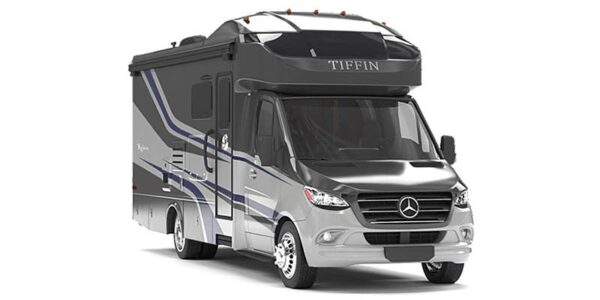
Finally, I’m going to add Tiffin into this mix. And you may be thinking that Tiffin only makes Class A RVs. Well believe it or not, they also make a Class C model too.

It’s a very good small Class C that’s built on the Mercedes chassis. And it’s called the Wayfarer.

If you find a used Wayfarer Class C RV, it could very well be a good choice for you. Especially if you’re looking for a smaller used Class C RV motorhome.

Tiffin Wayfarer
Tiffin Wayfarer

Well, that’s my list of the top three brands and models of used Class C RV motorhomes. Both full-size and smaller.

Now is that all the quality recently used Class C’s that are out there? Oh no! In fact, Winnebago and Entegra build more models than just the ones I covered here.

And any of those models would be a very good choice too. Because those companies build a good quality product when compared with their competition.

Now Tiffin only builds the one Class C RV at this point. But Winnebago covers a wide range of Class C RVs. And any one of them would be a good choice too.

How to buy a used Class C RV the right way

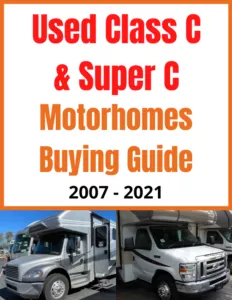
Best Used Class C RV Motorhome Guidebook

But there are also other fine RV manufacturers in the used Class C market too. In fact, I have made a thorough list of all of the recently used Class C RV motorhomes that I recommend.

This list is useful for buying a used Class C RV from the past 4 years or so.

And that list is found in my guidebook that you can view here. It’s a very thorough listing of all of the Class C brands and models I recommend.

Used Class C and Super C guidebook

The guidebook will help you:

1 – Know who the best quality manufacturers are in the Class C and Super C segments of the RV industry

2 – Rank those top quality manufacturers in order

3 – Compare the models of used Class C and Super C’s against one another by price

4 – Get the most important facts about each RV model to compare with others in their price range (all price ranges are covered)

Each model is linked to their own web page where even more information can be gathered (a time saver)

And you will be able to contact me and ask any questions you like about the buying process for recently used Class C RVs.

You can also download my guidebook on smaller Class C motorhomes, or what I call Class B plus RVs here

Conclusion

I hope you enjoyed my list of the top 3 used Class C RV motorhomes.

But do you have any recommendations for a quality used Class C RV motorhome that you would like to recommend?

If so, please leave it in the comments below this article. I would love to hear what you have to say!

Have safe and happy travels my friends.

The Top 5 RV Maintenance Tips You Need To Know

In this article you’ll find my top five RV maintenance tips. You know, if
you want your RV to last, you’ve got to maintain it.

It’s just a fact of life and one that we can’t change. But here’s the really good news!

Roughly eighty percent of the maintenance tasks on an RV can be done by the average RVer. So you don’t need to be an RV tech or even be mechanically inclined.

Almost anyone can learn how to take care of the maintenance tasks around their RV.

So with all that in mind, let’s get started on my top five tips for RV maintenance then.

Watch my video on the top 5 maintenance tips for RVs

RV Maintenance Tips – Number One

And number one is a big one! And that is – have a list for your maintenance tasks around the RV.

Oh, I know we all kind of like to do things by memory. Usually because we just don’t want to sit down and write it out a lot of the time.

But you know what? If we do it that way, we’re going to miss some things. We’re going to not do some things when they need to be done. And sometimes we may even forget to do it all together.

So it’s really important to have a list. And it doesn’t have to be a fantastic, unbelievable kind of list either. Just simply write it out.

Just put down the things you need to maintain on your RV. And maybe separate them out into sections for monthly, quarterly, semi-annually, and annually.

That way it will remind you to do those tasks as they are needed. Then put in the date when you did each task too.

And then all you’ve got to do is take a a real quick look at your maintenance list. You will then know when you did that maintenance task last.

And also when it’s coming up on the schedule again. It’s really kind of simple. It just takes a little bit of effort on our part to sit down and get
that list together. But it’s really important!

RV Maintenance Tips – Number Two

My second tip – include the engine and the drivetrain on your RV maintenance list.

Yes, I know that many RVers take care of their RV itself really well. But they don’t really think about the engine and drivetrain nearly as much.

Now you may be saying, “well I don’t have a motorhome”. But even if you have a towable RV, there’s an engine and a drivetrain somewhere that pulls that RV around.

So no matter what RV you have, there’s going to be an engine and drivetrain that needs some maintenance.

What I’m saying is, make sure that you stay up with that mechanical maintenance. Because if you don’t, then you’re going to be sitting for a while eventually.

You need to keep that engine and drivetrain in very good working order to get your RV around. So include it on your maintenance list that you write out.

RV Maintenance – Tip Number Three

My third tip is – about how long you should go between service intervals on these maintenance tasks.

And of course, it’s hard to say how long maintenance intervals should be for everybody. The reason why is because there’s so many different types of RV’s.

And they can have all kinds of components and items in them that need maintenance. So maintenance intervals can be very different from one RV to the other.

That means that there’s a need for you to know what your particular RV needs. As far as maintenance intervals go.

Now in order to get that information, I highly recommend to get familiar with the manuals for the items and components in your RV. And also for the engine and drivetrain.

Again this is something not a lot of people really like to do. But it’s very important!

Set about right away to getting the manuals for things such as your water heater. Also for your furnace, roof, air conditioners, and your engine and so on. Get those manuals now!

You may say, “how can I do that?” Because maybe you didn’t get the manuals when you purchased your RV.

But the truth is that these days, you can find just about any manual you want online. And download it to have it on hand when it is needed.

Then just go in the manual to the maintenance section. And it will tell you how to maintain pretty much anything about that component.

Then all you’ve got to do is just follow those guidelines. Once again, I highly recommend to do what the manual tells you to do for maintenance
intervals.

And use what they recommend for any fluids or lubricants too. Because there’s a reason why they tell you to do that.

Maintenance Tip Number Four

Now for tip number four – have a good set of working tools. That way you can take care of a lot of the maintenance for your RV yourself.

Now I made a video about this in the past, and this video provides a very good basic place to start for a good RV toolkit.

And you don’t need to go crazy. It’s not going to cost you a ton of money to get started on a good RV tool kit.

But you do need to have certain tools to perform maintenance tasks
around the RV. So get yourself a good tool bag. And then take care of the tools that you buy.

My Last RV Maintenance Tip

Now for tip number five, and this is a really good one. There’s no excuse these days for not knowing how to maintain anything on your RV. Why?

Because if you don’t know how to do it, just go to YouTube and make a search for that particular maintenance item.

Search my YouTube channel for videos on RV maintenance tips

Like how to clean out your water heater, or clean off your roof. Or perhaps sanitize your fresh water tank. Or clean your awning. Things like that.

All of this can be found in videos on YouTube. So there’s no excuse for not being able to do it.

They’ll show you how to do it and and give you good ideas. Maybe even some good shortcuts too.

I know I consult YouTube videos all the time myself. So be sure to make good use of YouTube for RV maintenance tasks.

But you can also use websites too. There’s a lot of websites that lay it out for you step by step. And that can be very valuable.

But of course, I know that a lot of us like to see it done on video. So maybe use information on websites along with YouTube videos.

Conclusion

Well, those are my top five RV maintenance tips. Now let me say this. As an RV inspector, I have seen the poor results of not doing RV maintenance over and over again.

And let me tell you, some of it is just shocking. In fact, I have seen a five-year-old RV that looked like it needed a complete overhaul. From top to bottom. In just in five years.

Why? Because the owners had just basically neglected it. They hadn’t really done anything for it.

And it doesn’t take long for your RV to start breaking down. Especially if it doesn’t get the right maintenance that it needs.

Now I know that RV maintenance is not an exciting topic for many people. There’s not a lot of folks out there that are just itching to learn more about RV maintenance.

But in all honesty, it is one of the most important subjects that any RVer can learn about. Once you learn it, you’ll know it.

And you’ll have that skill going forward, and it’ll be a great thing. Just remember it doesn’t take a lot to learn.

So follow the tips I’ve given you in this article. Then your RV will continue taking you on fun travel adventures in the years to come.

Well that’s it for now. Have safe and happy travels my friends. Until next time…

Get My FREE Camping Guide

“The Top 5 Ways To Save Money On Campground Costs”

Get My Newsletter

Save on RV repairs

Get the best RV gear

Learn about RV life

RV tips and tricks

And get my free guide – The Top 5 Ways To Save Money On Campground Costs”