
Motorhome VS 5th Wheel – Who Wins?

A motorhome vs 5th wheel comparison is the heavyweight title match between RVs. These are the big boys of the RV world.

And usually those who are making this comparison want lots of space and conveniences.

There is a real fascination with RV minimalism these days. And a lot of RVers turn to a quality travel trailer like Airstream or a Class B RV to fit that need.

But when you start to compare fifth wheels and motorhomes, you are probably looking for much more. And these larger style RVs can deliver in spades.

So which of these type of RVs is best for you? That’s hard to say unless you look over the advantages of each one and compare it with your needs and wants.

And what you need in an RV may be completely different from what most others desire. So make the choice that is best for you and your circumstances alone. If you do, you can’t go wrong!

Table of Contents

(Watch my videos on this subject by clicking on the images above)

So here is my list of the best advantages of each in this motorhome vs 5th wheel showdown.

Reasons Why You Should Buy A Motorhome
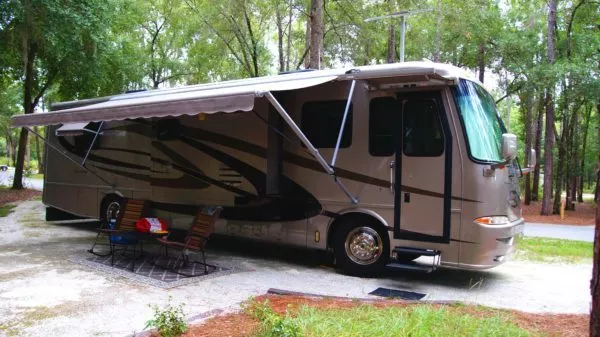
A Class A  diesel pusher motorhome
A diesel pusher motorhome that compares well with a 5th wheel

Disclosure: Please note this post may contain affiliate links. This means – at no additional cost to you – I earn a commission if you make a purchase using our affiliate links. I only link to products and companies I use and feel comfortable recommending. The income goes toward supporting the free content on this website.

When we are talking about motorhomes, we could be talking about any RV that has a motor for driving built into it.

But in this article, when we say motorhome, we are talking about a Class A RV. Simply because that is the size of motorized RV that best compares with 5th wheels.

So here are some of the best reasons why buying a Class A motorhome is a good idea:

  • Probably first on my list is that everything is done for you. You don’t have to match a trailer with a tow vehicle and make sure that all of the weight considerations match. As long as you can verify that there is plenty of cargo storage in the motorhome, the rest of the weight matters are handled already.
  • Motorhomes are super convenient for traveling. Passengers can even use the bathroom while going down the highway. My wife loves this feature!
  • Motorhomes usually have more storage capabilities. At least the larger diesel pushers do.
  • Set-up and tear-down at campgrounds is a breeze in a motorhome. If the weather is bad when you arrive, just put the jacks down and fire up the generator. Then wait until better weather comes to hook up your water, electric and sewer. In the meantime, have a convenient cocktail!
  • Speaking of generators, the ones that come standard in a Class A motorhome are usually perfectly mated to your rig. This is a big advantage over installing one after you buy a 5th wheel RV.
  • Campground maneuverability is usually better in a motorhome too. It saves having to know how to back up a towed vehicle. Especially if you aren’t used to that sort of maneuvering.
  • All the living space in a motorhome is usually on the same floor. Rarely do you encounter any stairs in a Class A.
  • Your driving-around-town vehicle that you tow can be much smaller and fuel efficient. 5th wheel tow vehicles have to be big and bulky. And they aren’t very fuel efficient for everyday driving either.
  • If a dangerous situation arises around your motorhome, just fire up the RV and drive off. There is no need to go outside and expose yourself and others to the danger. This is not a scenario that happens very often, but if it does, you may appreciate this kind of security.
  • The expansive view while driving down the highway in a Class A motorhome is a joy to behold. If it is a diesel pusher, it will be quiet and cool too since the engine is in the back. And there is plenty of moving-around room for occasional stretches.

Reasons Why You Should Buy A 5th Wheel

A typical large fifth wheel
A 5th wheel that compares favorably with a large motorhome

So that list of Class A motorhome advantages sounds pretty good, huh? Well, there are plenty of 5th wheel benefits too. And here they are:

  • First on the list is that 5th wheels usually have more room and living space than motorhomes. This is because the slides on a fifth wheel are deeper and make the RV wider when they are deployed.
  • The ceilings are also higher in a 5th wheel. This gives the feeling of even more roominess. In fact, the living room in a 5th wheel often feels like you are living in an apartment. If space is important to you, this is huge!
  • The initial purchase price of a fifth wheel is much lower than a comparably sized motorhome. This is true even if you factor in the tow vehicle as well. A well-appointed new 5th wheel along with a solid tow vehicle will cost about $100,000 – $150,000. A similarly well-appointed new motorhome will often cost $175,000 – $300,000.
  • If you ever have to get your engine repaired, you can still live in your 5th wheel while it is being done. A motorhome will require you to stay elsewhere until the repair is finished. Sometimes the repair facility can make arrangements for you to stay in your motorhome on-site. But don’t count on it.
  • Repairing the diesel engine in your tow vehicle will usually be easier to arrange and cost less. A motorhome’s diesel engine will usually have to be repaired by a facility that specializes in those commercial engines. Whereas most garages and dealerships can handle the repairs on a Chevy, Ford or Dodge diesel truck.
  • Whoever does the cooking will probably appreciate having a kitchen island in a 5th wheel. These are rarely found in motorhomes.
  • There is a great variety in the floor plans that you can get with a 5th wheel. With all of that space to play with, the RV designers can really get their creative juices flowing.
  • If you want to change your RV living area, you can just sell the 5th wheel. You don’t have to sell your tow vehicle as well. But if you sell a motorhome, the whole package goes together and you lose all the mechanical maintenance you have done on it.
  • Highway safety is better with a 5th wheel too since the tow vehicle will most likely have airbags. Most motorhomes do not have these safety features built-in.

Reasons For Either A 5th Wheel Or Motorhome

There are several areas where the comparison of motorhome vs 5th wheel is just simply a tie too. In other words, the advantages and disadvantages are about the same for both. Let’s take a look at some of these now:

  • The cost of vehicle insurance for motorhomes is greater than a fifth wheel to be sure. But you have to insure two vehicles with a 5th wheel (including the tow vehicle) so it’s basically a wash.
  • Fuel costs for both motorhomes and fifth wheels are similar too. Both use big engines that haul lots of weight. So they both burn a lot of fuel.
  • They both depreciate at about the same rate. Of course, the cost of a motorhome is usually higher. So you will lose more money overall in depreciation with a motorhome.

Results Of A Motorhome VS 5th Wheel Comparison

So which one is best for you? Well, it all depends on which advantages mean the most to you in your RV travels.

I recommend taking plenty of time to visit RV dealers and sample both motorhomes and 5th wheels in person.

Look at lots of them. See which features appeal to you the most. Ask lots of questions. Imagine yourself in both types of these RVs.

Usually you will find that a clear winner becomes apparent after a while of doing this kind of on-site research. That’s what we did and we are happy with our purchase.

I wish you well in your RV search and I hope that these tips and ideas have been helpful.

Please subscribe to my monthly newsletter to get more in-depth RV comparisons and information like this. I promise to treat your email inbox with the utmost respect. No spamming here!

Do you have more ideas that can added to this discussion on motorhomes vs 5th wheels? Then please comment below and tell us which features of these rigs are important to you!

As always, have safe and happy travels my friends!

RV Fuel Station Discount Card Saves $$$$

Whenever I find something that is really helpful for my fellow RVers, I try to get the word out quickly. And this is one of those times that I can help you save lots of money on RV diesel fuel.

A relatively new RV fuel station discount card is available for RV owners driving diesel engines. And the word is that the savings on diesel fuel is really dramatic.

Marc and Julie Bennet are one of the top RV bloggers and YouTubers in this industry. I have been following them for some time because they are genuinely helpful and glad to share their RV knowledge with everyone.

And they just made a recent blog post and YouTube video on this new RV fuel discount card program. I asked them if I could pass on the savings to my blog readers and they said that would be great.

The Bennets wrote one of the best books about the RV lifestyle we’ve seen. And we got it as soon as it was released. I loved it so much that I gave it a 5 star review on Amazon.

I wholeheartedly recommend this book to anyone who wants to learn more about RVing. There is something here for everyone from newbies to experienced RV owners.

Click on this link to get Amazon reviews on the book “Living The RV Life: Your Ultimate guide to Life On The Road”

(My affiliate link does not cost you any extra if you choose to buy this book)

Now here is the information you need on this diesel fuel discount program.

Watch my video about RV fuel savings

Disclosure: Please note this post may contain affiliate links. This means – at no additional cost to you – I earn a commission if you make a purchase using our affiliate links. I only link to products and companies I use and feel comfortable recommending. The income goes toward supporting the free content on this website.

Table of Contents

Fuel Discount Program Details

The company who runs this RV fuel station discount program is TSD Logistics, a trucking company whose main office is in Texarkana, TX. They have a fleet of 115 trucks.

Of course, it’s no secret that over-the-road truckers often get special discounts on fuel prices. Especially at certain national fuel station chains. And TSD Logistics wants to lower its fuel costs but doesn’t want to add more trucks to its fleet to do that.

So they decided to open their fuel discount program to include RVers. This allows the company to reap the rewards of buying fuel in higher volume. But they are able to keep their costs the same.

It’s pretty ingenious really. And as RV owners we all benefit as well. It’s a win-win for everyone.

In fact, as more RVers join the program, the company is able to buy diesel fuel at even better volume discounted prices. This means that the cost of RV diesel fuel can continue to drop even further at the pump as more people join the program.

The only limitation is the discount is only available on diesel fuel. If your RV burns regular gas, this program will not work for you.

How To Use The RV Fuel Station Discount Card

To join the program you need to apply to TSD Logistics for their card. Usually it arrives in about 3 – 4 weeks, although there are ways to get it sooner.

Our experience with applying for the card was that we received the card in the mail just two weeks after applying. Of course, you may get different results depending on how busy they are filling existing card request applications when you apply.

When you receive your card, download their EFS card app and pair it with your card. This is actually a very simple process. I had it completed in about 5 minutes.

Now you can search for fuel stations near you that accept the TSD discount program on your phone or tablet. When you find the best price in your area, go to that station and pull into the truck lane section for fuel.

Once at the pump, insert the card into the fuel pump and fill your tank. When you are done, the whole transaction will appear on your EFS card app.

The next day the amount of the transaction will be deducted from your bank account. To cover the costs associated with running a program of this size, TSD Logistics will take a small fee. The fee is 10% of the total discount you received.

So if you received a .60 per gallon discount, they will take .06 per gallon for program maintenance. That still leaves you with a savings of .54 per gallon!

The average savings per gallon according to TSD Logistics is about .40 – .60 per gallon. But Marc and Julie Bennett experienced some savings as high as .85 per gallon. This is not chump change.

This is especially true if you have a large motorhome and go through lots of diesel fuel. There are other RV fuel discount programs out there, but not much with this kind of real-world savings. And it is usable in over 16,000 locations throughout the US!

(Please support my site: The above links are to some of the best RV travel books I can recommend. Again, it is affiliate linked to Amazon. But it doesn’t cost you any extra to buy these great publications from my affiliate link.)

What Should You Do?

If you haven’t heard of Marc and Julie Bennett, my advice is to visit their page and sign up for their newsletter. You can also watch them on Youtube at this link.

They are always helping out the RV community in one way or another. And you will benefit by following them online too. Here is the link to their webpage where you can get even more details about this RV fuel station card discount program.

From there, I think you would be wise to sign up for the program and start saving on diesel fuel costs as soon as possible.

I have already signed up myself and apparently a backlog of applications is coming in to TSD Logistics quickly. So don’t delay! Here is the link to the TSD Logistics sign-up page.

Just make sure that you credit “RVLove” as the referrer. This makes sure that the Bennets get the credit for introducing you to this program.

The Bennets uploaded a YouTube video that explains the major details about this program as well. You can view it at the link below:

Conclusion

I want to emphasize that I am not affiliated with this program in any way. And I don’t profit by it in any way either if you sign up. It’s just a great deal for all RVers who use diesel fuel.

When you consider that one of the largest monthly expenses for RV travel is the fuel costs for our RVs, this card is a no-brainer. Diesel engines do cost more to maintain than gas engines. And gas costs less at the pump than diesel fuel.

But with this card you can start to close the gap in fuel costs between gas and diesel engines. And who doesn’t want to save money on RV travels and adventures?

Please sign up for my newsletter while you are here and comment below on your RV fuel expense experiences. I am always adding to the list of important RV themes and subjects on this website for those in the RVing community. So visit again soon!

As always, have safe and happy travels my friends!

How To Use An RV Electrical Adapter At Home

If you like to plug in your RV at home before a trip, you have plenty of company. It makes it easy to get some of the appliances, like the refrigerator, going in advance. And if you need the lights or want to power up some devices or the batteries, you can do that too. So this article will help explain how to use an RV electrical adapter at home safely.

Disclosure: Please note this post may contain affiliate links. This means – at no additional cost to you – I earn a commission if you make a purchase using our affiliate links. I only link to products and companies I use and feel comfortable recommending. The income goes toward supporting the free content on this website.

Why Is An RV Electrical Adapter Needed At Home?

Most RVs come with either a 30 amp or 50 amp electrical system. And when you go to a campground, they are all set for either one.

But sometimes you have to use an electrical adapter to plug in your RV at the campground . This is because you may have a 50 amp RV but the campground only has a 30 amp service available.

Or you may have a 30 amp RV and only 50 amp campsites are available. Either way, an electrical adapter is needed in these cases. You can learn more about these kind of RV electrical adapters and check out the user reviews at the links below:

Click here for a 50 amp to 30 amp RV plug adapter

Click here for a 30 amp to 50 amp RV plug adapter

(These are affiliate links for the products on Amazon. It does not cost you any extra to buy the product using my affiliate link if you choose to do so)

So what happens when you plug in your RV to your electrical service at home? Well, most residential houses do not have a 30 amp or 50 amp service.

In fact, most of them will only have either a 15 amp or 20 amp electrical line that you can plug into. So clearly, another adapter is needed to be able to plug the RV in to your electrical service at home safely.

How To Make The Connection

The electrical service at your home is different from that found at a campground. And the electrical plug is not the same either. So clearly, you will need another RV electrical adapter to make the connection at home.

Fortunately, adapters for 50 amp to 15 amp services are available. The same is also true for 30 amp to 15 amp electrical adapters. So if you choose to power your RV at home, be sure to have the correct adapter on hand to do so.

Of course, if you have a 30 amp or 50 amp RV electrical service installed at home, these will not be needed. You can learn more about the 15 amp electrical adapters that I recommend at these links:

Click here for 15 amp to 50 amp RV plug adapters

Click here for 15 amp to 30 amp RV plug adapters

(These are affiliate links for the products on Amazon. It does not cost you any extra to buy the product using my affiliate link if you choose to do so)

Don’t Forget To Use RV Extension Cords

One other point to remember. Don’t forget to use the proper extension cord for your electrical connection if one is needed.

The wiring in your extension cord needs to be up to the task of delivering the full amperage to your RV if needed. So don’t just grab a cheap extension cord for this task.

It’s best to use an RV extension cord that matches the power draw of your electrical line. This will just make sure to keep things safe while your RV is plugged in.

If you are on a 15 amp line, use a 15 amp RV extension cord. If it’s a 30 amp or 50 amp line, use the matching extension cord there as well. You can learn more about the RV extension cords for each amperage at the links below:

You can click here for a 15 amp RV extension cord

Or you can click here for a 30 amp RV extension cord

Click here for a 50 amp RV extension cord

(These are affiliate links for the products on Amazon. It does not cost you any extra to buy the product using my affiliate link if you choose to do so)

Your RV’s Power Usage At Home

One final note needs to be made about plugging your RV in to your home electrical system. And that is that you can make the connection safely, but you must monitor and adjust your power usage in the RV.

For instance, 50 amp RVs are designed to be able to use 12,000 watts of power simultaneously. That’s why they have 2 air conditioners and all those appliances in them. 30 amp RVs are designed to use only 3600 watts of power at the same time. Usually there is only one air conditioner and fewer appliances in those RVs.

Now when you plug in to a 15 amp service at home, you can only use 1800 watts of power simultaneously. This is a big step-down for a 30 amp RV and a huge step-down for a 50 amp RV.

So you have to make sure that you are only using enough appliances or devices in your RV that will not overload the 15 amp line. This means that air conditioners are out.

And many large wattage appliances are out. So it may be possible to power your refrigerator on electric along with a few lights. You may also be able to charge up some of your devices and use small appliances too.

But if you go beyond this, you will probably be tripping electrical breakers regularly. So make sure you conserve power as much as possible when plugged in to a 15 amp line.

I hope this helps you learn more about how to properly plug your RV in to your home electrical system.

Have safe and happy travels my friends!

Get My FREE Camping Guide

“The Top 5 Ways To Save Money On Campground Costs”

Get My Newsletter

Save on RV repairs

Get the best RV gear

Learn about RV life

RV tips and tricks

And get my free guide – The Top 5 Ways To Save Money On Campground Costs”