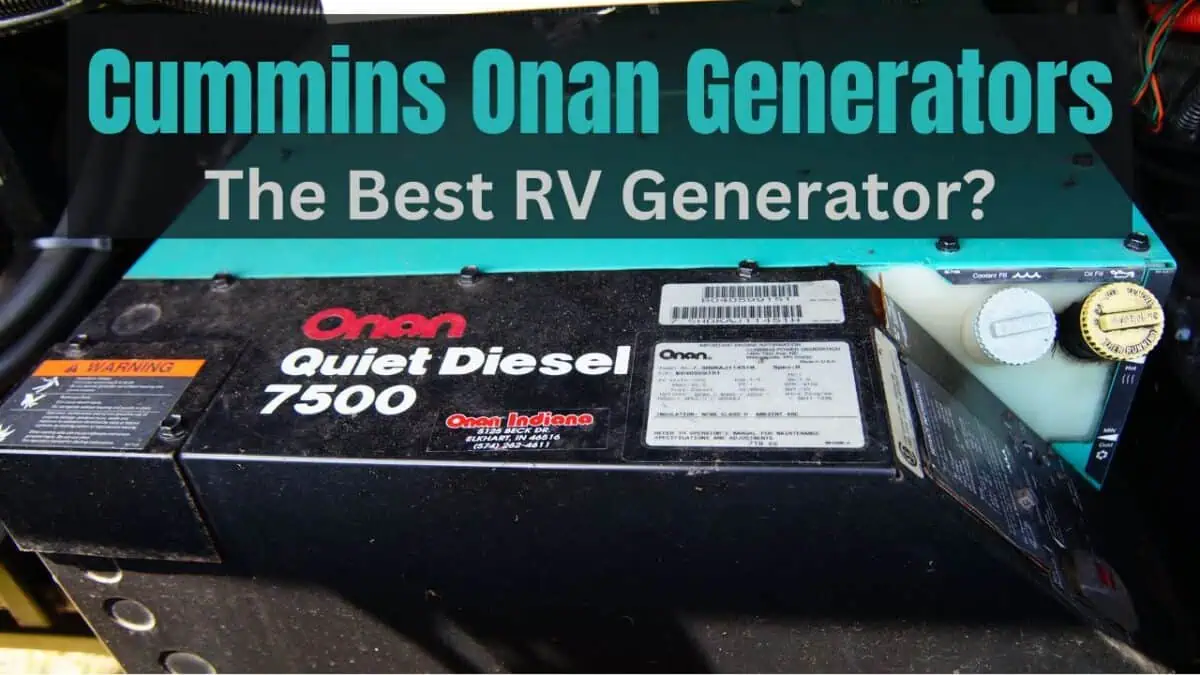
Cummins Onan RV Generators – Are They The Best You Can Buy?

This article is about Cummins Onan RV generators. Are they really as good as so many people claim?

And if you have one, how do you take care of it and maintain it to make it last?

Watch my video on Cummins Onan RV generators

Table of Contents

Why A Generator Is A Good Thing To Have

Now if you do a lot of boondocking, a generator is often considered to be essential equipment in your RV.

A generator is a great piece of equipment to have when boondocking

And that’s true even if you have a lot of solar equipment installed. Especially on some of the hotter days in the summertime.

That’s when you’re going to be very happy that you can run your roof air conditioners to stay comfortable.

And when you do, you’re going to need a generator to run them for any length of time.

Because there are periods where you could go days without much sunshine.

And when that happens the effectiveness of your solar power system is really diminished.

Do You Really Need A Generator In RV Parks?

But even if you mostly stay in RV parks and campgrounds, a generator can still be very helpful.

Cummins Onan RV generators can even be useful in RV parks too

Especially in those times when the power goes out in the park or campground you are in.

In fact, we’ve had that happen a lot to us in our travels. And when it did, we were happy that we had a generator on hand.

Also, maybe you’re just traveling somewhere and you decide to stop and stay overnight. And you choose a spot that’s not in a park or campground.

Well then, a generator will make that so much more pleasant and comfortable.

What Size Generator Should You Have For Your RV?

Now for many RVers, if you have a 30 amp service in your RV, a portable inverter generator will work just fine for you.

Many 30 amp RVs can be served well by a portable inverter generator

But what about larger RVs? What about RVs like diesel pusher motorhomes? Or a Super C, or larger fifth wheels and so on?

Well, many of them have 50 amp electrical services installed in their RV.

So what happens if you want to run everything in that RV? Like you do when you’re hooked up to shore power?

In that case, you’re probably going to need a larger generator. One that’s capable of supplying the needs of a 50 amp RV.

Larger RVs are often served best by a larger Cummins Onan diesel generator

And that is where Cummins Onan RV generators really shine.

What You Should Know About Cummins Onan RV Generators

So now let’s talk just a little bit about the company itself. Onan has been making generators since 1926.

And that means that they’re coming up on a hundred years of making generators.

Cummins bought them in 1986. So they have had ownership for almost 40 years now.

And at this point, Cummins Onan has 85 percent or so of the market share of generators in RVs. Wow, that is really an impressive statistic!

And these days, if you buy a new motorhome or a larger fifth wheel, the chances are that you’re going to find a Cummins Onan RV generator in it.

So the question is, why are they so popular? And why do manufacturers like them so much?

Well, let’s find out about the pros of Cummins Onan RV generators first.

Cummins Onan Generators – Pro #1

And the first pro is that they are relatively quiet. So what do I mean by relatively quiet?

Well honestly, smaller inverter generators may be quieter decibel wise.

However, when you run a Cummins Onan generator, you’ll notice that the tone that it puts out is very low.

So an inverter generator may have fewer decibels with the overall sound it creates.

But the sound that comes from the Cummins generator may not be as noticeable to most people.

So that’s why they are what I call relatively quiet.

Cummins Onan Pro #2

Now the second pro is about maintaining your Cummins Onan RV Generator.

And if you do, they are super reliable, and they will last an incredibly long time.

In fact, a Cummins Onan generator will probably outlast the RV that they are installed in. And that’s an amazing thing to be able to say!

Cummins Onan Pro #3 – What About Repairs?

Now the third pro is that if you have to work on them, parts are usually readily available.

Also, you can find repair facilities and technicians almost anywhere in the country.

Of course, there’s lots of Cummins facilities that you could use for service and repairs.

But there’s also quite a few independent facilities and repair techs that can work on Cummins Onan generators too.

So if you need a repair on your Cummins Onan generator, it shouldn’t be a major problem to find a service tech who can handle the job.

Cummins Onan Diesel Generators Pro #4 and 5

OK, our next pro is that they’re very flexible. They can come in diesel versions, gasoline versions, and even LP versions.

Cummins Onan RV generators come in a variety of sizes and versions

And that leads us into pro number five. That it is that they make it very convenient for you as an RV owner.

Because often, they have a remote start. And that means that you don’t have to go out and start the generator manually when you need power.

Especially like you very often have to do with many portable inverter generators.

Also, they’re usually able to run off the fuel that you already have in your RV.

So for instance, we have a diesel pusher motorhome. And our Cummins Onan generator runs off the diesel that’s in our fuel tank.

And as long as we’re above a quarter tank of fuel, it just keeps running along nicely.

So I don’t have to even think about carrying fuel for the generator. Not unless my motorhome’s fuel tank gets down to that quarter tank mark.

And that’s very convenient as many RVers struggle to find space for generator fuel.

Well, those are all good things about Cummins Onan RV generators.

Cummins Onan Diesel Generators Con #1

Now what about the cons? Well, the number one con of a Cummins Onan generator is that they are big. And they are also very heavy.

So that means that they can’t be moved around like a portable inverter generator.

And so, that is something you have to plan for if your generator was not installed at the factory.

Cummins Onan Con #2

Now the number two con is they usually need lots of space in your RV.

A Cummins Onan RV generator can be very large and require a lot of space

Now we all know that space and weight is at a premium in most any RV.

So you’ve got to find somewhere to put that Cummins Onan RV generator.

A spot where it will be in its permanent location from then on. And that can be a challenge in some rigs.

Cummins Onan RV Generator Con #3

OK, the third con is that they have to be exercised regularly. Yes, if you’re going to get good service out of them you need to use them.

And that is especially true of the diesel and gas versions that you often see in RVs.

Cummins Onan Con #4 – What About Cost?

OK, the final con we’re going to talk about is that they can be costly to replace.

Oh yes, even the smaller Cummins Onan RV generators will start around $3000.

And they can go up to almost $15,000 for the bigger units. For the 12,000 watt generators and so on.

But there is a flip side of that too. Because remember I said that usually they outlast the RV they’re installed in.

So you don’t have to replace them very often. However, if you do need to replace one, you definitely will have a serious expense then.

The Results Of My List Of Pros And Cons

Well, that’s my list of both the advantages and disadvantages of Cummins Onan generators.

So I invite you to just compare the pros and the cons that we’ve covered in this article.

And if you do, I think you’ll agree that Cummins Onan generators really are a great choice for many RVers.

There’s a lot of really good points on the positive side of this subject.

And I would say, there are more pros than there are cons for most RVers. Especially if you have a larger RV with lots of power hungry equipment.

Cummins Onan RV Generators Maintenance

OK, now let’s talk a little bit about maintenance. So how do you keep these big generators going?

And the number one thing I talked about earlier is to exercise them. And that means you have to use them regularly to keep them in good shape.

A Cummins Onan diesel generator will need to be exercised regularly

In fact, about once a month you need to crank up that generator and run it.

In addition to that, you need to put it under an electrical load too. So what do I mean by that?

Well, you need an electrical draw that’s pulling a lot of power to exercise them properly. And that will make the generator really work.

Now to do that, you could turn on an air conditioner or two in the RV.

And if you do that, you’ll definitely get that generator working. But you could also use the electric element in your water heater too.

Or electric hair dryers. You know, things along that line that pull a lot of electrical current.

Yes, you need to get that generator up and really humming along to exercise it properly.

And if you do that for a couple of hours or so, then you can turn those items off and let it cool down.

Once again, this should be done about once a month when you’re not using the generator regularly.

Cummins Onan Maintenance Schedule

Now the next thing you need to do to maintain them is watch the maintenance schedules.

Especially for things like oil filters, air filters and spark arrestors. All of those need to be given attention fairly regularly.

So whatever your manual from Cummins Onan tells you to do for your generator, follow that very carefully.

And then there are also some items that need to be taken care of on a basis that’s a little bit longer.

Things like flushing the coolant and changing your fuel filter, and so on. You need to be religious about caring for those things on time.

Do not neglect a Cummins Onan RV generator. Instead, make sure that you take care of it throughout its life of service.

And replace the items that need to be replaced as they come up. Also, keep a record of what you’ve done and stay on schedule.

If you maintain your generator properly, you can expect it to work well for many years.

Who Should Maintain Your Cummins Onan Generator?

Now some of the tasks that you can do on Cummins Onan generators can actually be done by do-it-yourselfers.

And that means all of you guys out there that know your way around engines.

So if you love tools and working on things, well there’s nothing super difficult about maintaining a Cummins Onan Generator for you.

But for the vast majority of the rest of us? Probably, maintaining and repairing your Cummins Onan generator is best done by qualified repair techs instead.

Ones that are familiar with Cummins Onan repair and maintenance needs.

In fact, there’s a few things that even I don’t try to tackle when it comes to my RV.

Now I’ll do a lot of the things that have to be done for maintenance. But when it comes to the chassis and the generator, I’m going to let the pros do it instead.

Of course, that’s just my personal decision about performing maintenance on my generator. But it’s up to you to decide how you want to do it.

Conclusion

OK, here’s my final statement on Cummins Onan RV generators.

Personally, I love our 7500 watt diesel generator. It has worked so well and it has been so reliable for us in our travels.

In fact, we haven’t had the first problem with it in our ownership of the RV.

So for me, I personally believe that Cummins Onan generators really are just as good as so many people claim they are.

And I highly recommend them to others who need a plentiful and reliable source of power for their RV.

As always, have safe and happy travels my friends!

The Best RVs For Full Time Travel Trailer Living

This article is about the best RVs for full time travel trailer living. And how to know which ones you should buy.

Now most travel trailers you see out there are not made for full time travel.

They’re just made for occasional or part-time use. For things like weekends every now and then and for vacations.

And as long as they’re used that way, they are pretty much just fine for what you need.

But full time travel trailer living puts a lot of extra stress on any RV. And it does it in various ways.

Watch my video on full time travel trailer living

Table of Contents

Full Time Travel Trailer Living – The Effects Of Highway Travel

For instance, there’s usually a lot more trips going down the highway in full time RV life.

So what happens to RVs as they’re going down the highway that much?

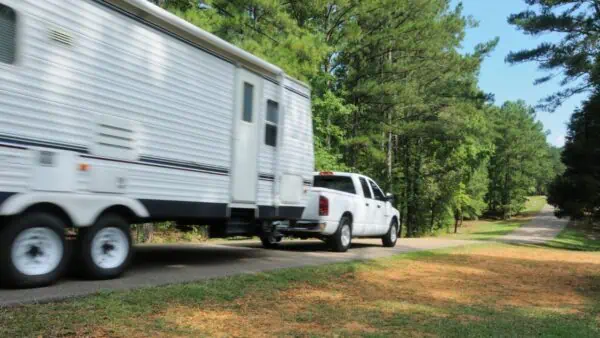
Most travel trailers are not built for full time travel

Well, they get shook a lot, don’t they? And it happens to travel trailers even more than most other RVs.

That’s because they kind of tend to bounce a little bit as they go down the road.

So earthquake forces are applied to these travel trailers that easily shakes things loose in the RV.

But there’s even more daily stress that full time travel trailer living puts on these RVs.

The Everyday Stress Put On In Full Time Travel Trailer Life

There’s also the everyday use of the RV too. So there’s more use of the furniture, the RV fixtures, more walking on the floors, etc.

And these sorts of things can cause an RV to start to break down from the constant added stress.

They just break down a lot faster than they normally would if used only occasionally.

And the big reason for that is because these kinds of RVs weren’t really built for that kind of use.

So using them on a full time basis is going to disappoint you over the long haul.

What About Travel Trailer Build Quality?

But the other thing to remember is that travel trailers are also deliberately built to be as affordable as they can possibly be.

In fact, they are considered the entry-level RV for the whole industry. And certainly for towable RVs.

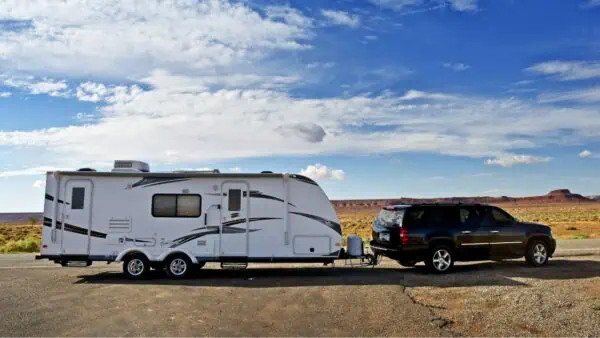
Most travel trailers are entry-level RVs

So as a result of that, higher quality materials and better quality building methods are often not really found in travel trailers in general.

And so, that is why when you see full-time RVers, you’ll notice that they often choose other kinds of RVs.

The Most Common RV Choices For Full Time RV Life

Many of them choose RVs like Super C’s, or higher end class A’s. Also fifth wheels or Class B’s are commonly used by full time RVers.

Now the reason why is because these kind of RVs are more often made for full-time travel. They are built better from the ground up.

And so, many fulltime RVers choose them for that purpose. Because they are built to take the rigors of everyday full-time travel and living better.

So the real question is, are there any RV manufacturers out there that are building a product for full-time travel trailer living?

And the good news is that the answer to that questions is yes. But there’s not a lot of those kind of RV builders out there.

And there’s certainly not as many as you’ll find in some other categories of RVs. But there are some.

And so in this article we’re going to be discussing some of these unique brands.

RV builders that make a product that could be used for full time travel trailer living. And I’m going to cover three of those builders.

Of course, that doesn’t mean that there are only three RV manufacturers you should consider. If you’re looking for a full time rig.

But these brands will get you started in the right direction for full time travel trailer living.

Full Time Travel Trailer Life – Choice #1

And the first one on the list is Airstream. Because Airstream just simply makes travel trailers that are a cut above the competition.

Airstream RVs are made to a higher standard than most travel trailers

And when you look at Airstream’s website, you’ll find an interesting claim.

They say that about 70 percent of the Airstreams that have ever been made since the 1930s are still in use today.

Now that is an amazing statistic! And what other travel trailer builder can make a claim that’s even remotely similar to that?

So that is a very good reason why we see a lot of full-time travelers in Airstreams going down the road.

It’s simply because Airstream is built with better quality materials. And it’s built with better quality construction methods too.

But now, the flip side of Airstream is that they really aren’t cheap, and that’s for sure.

But they are a quality RV travel trailer. So if you are considering full time travel trailer living, then give serious consideration to Airstream.

Choice #2 For Full Time Travel Trailer Life

Now next on our list is Oliver. And Oliver is really the gold standard of fiberglass travel trailers.

Oliver's fiberglass shell is great for full time travel trailer living
Oliver’s fiberglass shell is great for full time travel trailer living

Now fiberglass travel trailers have limitations though. In fact, you can only build them up to about 25 feet in length.

And sure enough, Oliver only offers travel trailers up to 23 feet in length.

But the quality is so good in the product they build that it really can last you a lifetime.

So in other words, you could go out and you could buy a lower quality travel trailer. And you could save a lot of money initially that way.

But you could also go through four or five of them in a row as they wear out.

Or you can just choose an Oliver, and keep it for the rest of your life. What would you rather do? Because that’s how good their quality is.

Also, they’re light enough to be towed by a wide range of vehicles as well. And that’s very attractive to a lot of people.

However, a real issue here is that they can only be a maximum of 23 feet long.

So they’re not really made for family travel quite so much. But they are great for couples who want to travel and camp on a full-time basis.

Especially if they don’t need a lot of space. OK, let’s move on to number three on our list.

Choice #3 For Travel Trailers That Are Built For Full Time Life

And that’s Outdoors RV. Now with the first two manufacturers we covered in this article, Airstream and Oliver, you’re not going to get any slides in an RV.

They just don’t even offer them. You just get the travel trailer alone.

And for many people, that’s just fine. Because whenever you introduce a slide room to an RV, there’s more complexity involved.

And of course, therefore more opportunity for things to go wrong with it as well.

But Outdoors RV does offer slide rooms in their travel trailers. And for many other people this a good thing.

You can get more living space in an Outdoors RV

Because maybe you feel like you need a little bit more living space. Your just a little claustrophobic in an Airstream or an Oliver.

Well then, consider an Outdoors RV for full time travel trailer living instead.

And they are well known for making a very high quality product too.

What About Four Season Capability?

In fact, they build what could be considered a true four season RV.

And when a builder makes a four season RV, automatically the materials that will be used in that RV are going to be better.

Also, the building methods they use are going to be better as well.

And Outdoors RV backs all of that up with even a better warranty too. Better than you find from most other travel trailer manufacturers.

Also, there’s tons of happy Outdoors RV owners out there already.

Owners that are very vocal about their support for the company and for the product that they bought too.

So Outdoors RV is well worth a good solid look for full time RV life.

OK, so those are the three that I wanted to cover in this article today. Airstream, Oliver and Outdoors RV.

But once again, that doesn’t mean that’s all the full time travel trailers out there.

No, it just means that this is a good place to get started in the right direction.

More Brands For Full Time Travel Trailer Living

And there are many other travel trailer manufacturers that I can recommend. These are just 3 of the ones on my full list.

So if you would like to see all of the travel trailer builders on my recommended list, here’s what you can do.

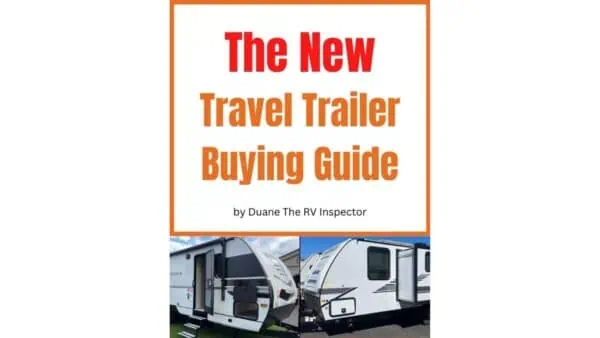
Just download my new travel trailer brands guidebook by clicking here or on the image below.

The new travel trailer buying guide

Of course, not all of the manufacturers on that list build a product that can stand up to full time RVing.

But many can. And I would be happy to help you find a brand that fits your needs and budget.

Just contact me when you download the guidebook, and I’ll give you personal assistance.

Also, I feel that you will get the best results when you couple the travel trailer brands guidebook with my new RV buying guide.

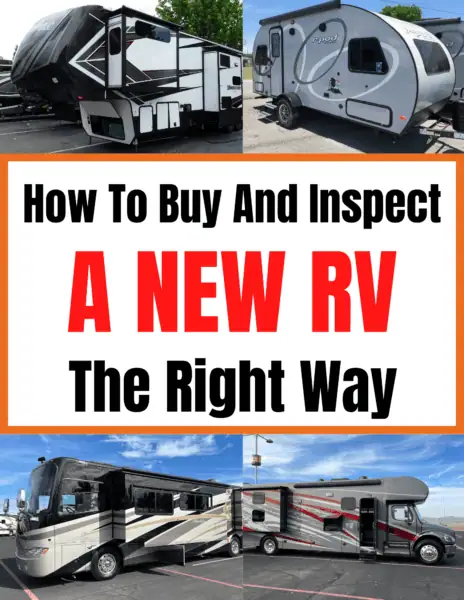
You can download that by clicking here or on the image below.

How to buy new RVs the right way

So the better brands guidebook helps you know which brands are building with better quality.

But the new RV buying guide will show you how to buy an RV the right way.

It will help you save lots of money on the purchase and make sure the RV you get is a good one.

And once again, I make myself personally available to help answer any questions you have when you download any of my guidebooks.

An Important Reminder About Buying Any RV

But let me remind you of something as I always do in articles like this.

And that is to make sure that you get a certified RV inspector to go through any RV that you buy before you take ownership.

Never buy any RV without getting it inspected first

And that way you can be sure that what you’re getting is generally ready to go.

You can know that it’s in tip-top shape. It’s ready to get right out there and use and enjoy right away.

And that’s another big point to make sure that you’re happy with the purchase you make.

Conclusion

Now it’s true that full time travel trailer RVs are going to cost you more initially.

I’m not going to tell you anything other than that. So it means that you’re going to have to spend more.

That is, if you want to get an a travel trailer that’s really built for full-time travel.

But the flip side of that is they are not going to give you nearly as many problems in day-to-day use.

They’re not going to be breaking down on you as fast. Especially as a travel trailer that’s not built for the stresses of full-time living.

And in the end, that can make your full-time travel and experiences so much more enjoyable.

So choose wisely in the travel trailer field. And if you do, you will be glad that you did.

Have safe and happy RV travels my friends!

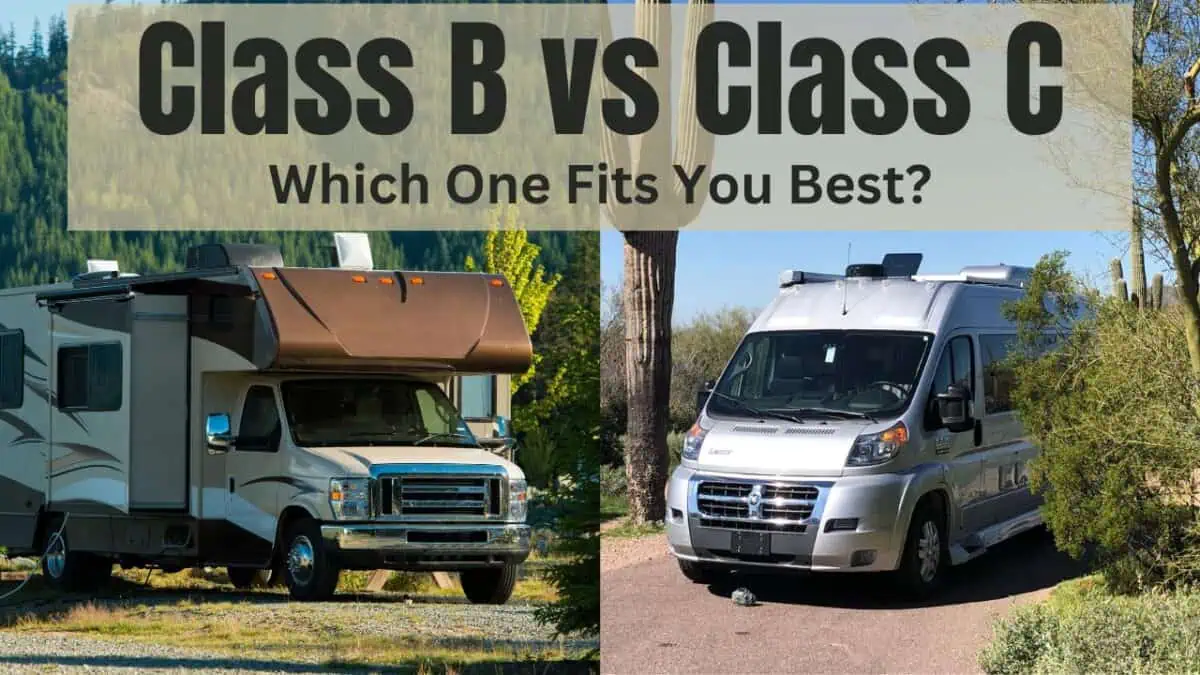
Class B vs Class C RVs – The Pros And Cons Of Either Choice

This article is about Class B vs Class C RVs. And the pros and cons of choosing either one of them.

Of course, both of these kinds of RVs are very good for people who don’t want a big RV.

They just don’t want an RV the size of a class A. They want something smaller and more nimble instead. And both of these kinds of RVs will fit that bill.

But there are pros and cons for choosing either a Class B or Class C RV. So let’s go ahead and get started on covering them now.

Watch my video comparing Class Bvs Class C RVs

Table of Contents

Class B vs Class C – Pro #1

And let’s start with the class B pros. The number one pro of a Class B is that is so much easier to drive than many other RVs.

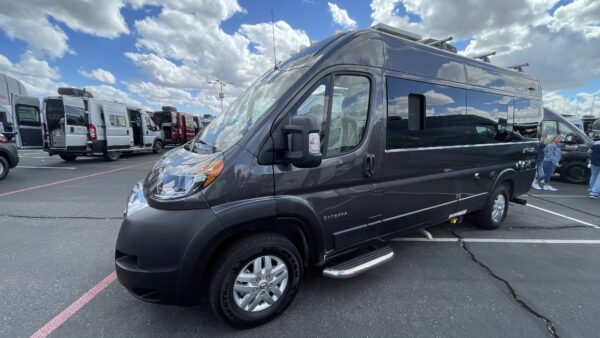
A typical Class B Campervan

(Here is a link to one of the largest manufacturer of Class B RVs – Winnebago )

In fact, if you’ve ever driven a passenger van of some type, then you’re probably going to feel pretty much at home in a Class B RV.

It’s more like driving a car. And that is really good for those that are new to RVing in general.

And it’s also good for those that are a little intimidated about driving the bigger RVs. So that’s a real pro for many to consider.

Pro #2 – What About Fuel Mileage?

The second pro is better fuel mileage. Especially when compared to other RVs.

In fact, many class B RV owners report about 18 to 25 miles per gallon in their RV travels.

Now of course a lot depends on how you’re driving it and the size of the RV itself. Also whether it’s mostly highway or around town driving.

But generally speaking, somewhere between 18 and 25 miles per gallon is great. So much better than most larger RVs out there.

Pro #3 For Class B Camper Vans

Number three on the pro list is that you usually don’t need any kind of vehicle to take along with you on your RV trips.

And that’s because the class B also drives around town very easily. It can fit in most parking spaces too.

So in many cases you don’t need an extra vehicle for running errands around town. And that’s a big pro!

Class B vs Class C – Pro #4

The next pro is how easy it is to maintain on the outside of the RV.

Especially since it’s a passenger van that an RV builder has converted to be an RV.

So it has a metal exterior that came from the auto manufacturer. Without joints and seams that need constant maintenance.

And that means that the roof and the outside of the van is so much easier to maintain.

It’s just so much easier to prevent any kind of water leaks than a regular RV might be.

Pro #5 – This Is A Big One!

Now next on the pro list is that it fits in almost any RV campsite.

And that means that you shouldn’t have any problem getting some kind of reservation at most RV campgrounds.

Class B RVs fit easily in most campsites

Also, Class B RVs are really great too for older campgrounds. For those that don’t have really big campsites.

And they work especially well for national parks and state parks too.

The Last Class B Pro – One You May Not Have Thought About

OK, the last pro for the class B in this article is the ability to stealth camp in it. And you might wonder what “stealth camping” means anyway?

Well let’s suppose that you are an RVer that doesn’t like to make a lot of reservations.

You like to be able to choose where to stay overnight at the last minute. And go where you want to go.

Well, the problem with that is that you may not be able to get a last minute campground reservation.

So what a class B RV allows you to do is camp in town somewhere instead.

Perhaps on a well-lighted street. Or in a parking lot. You can spend overnight there and nobody would even know that you’re camping there.

That’s because the van looks from the outside just like a passenger van to many people.

And that kind of overnight camping is called stealth camping. It’s something that a lot of people like to do with their Class B RV.

Class B vs Class C – Class B Con #1

OK now let’s move on to the cons of the Class B RV. And the number one con is how tight the living area is.

Yes the RV is usually only about 19 to 25 feet in length at the most. And very often there’s no slide rooms either.

So it’s a very tight living area. And you need to really go through a Class B and experience that for yourself.

Very tight living spa
Very tight living spaces

You need to decide if that’s going to be enough living space for you or not.

And it’s often a con for many RV buyers. Now the second con is about when you leave your campsite.

Con #2 – What About Day Trips?

Let’s say you’re going to be making a trip for errands or a day trip in your RV.

Well you’re going to have to break camp every time that you leave and go somewhere in a Class B.

And that means you’ve got to unhook your sewer, water and electric connections before you leave.

Then when you come back, you have to re-hook it all up again. And this goes on every single time you go somewhere in your RV.

Of course, some people don’t find this to be a big issue. But others find it very irritating. So it’s something to consider before buying a Class B RV.

Class B Con #3 – What About Storage?

And now the third con is that there’s very little storage space inside and outside of the RV.

So if you buy a Class B van you will often need to get used to a minimalist lifestyle.

Now for many that’s actually a pro for them because that’s what they want to do. They want to simplify their life with the RVing experience.

But not being able to store many of the things you really want to carry with you could be a con. So it’s important to consider that.

Con #4 – This Is A Big One For A Lot Of People!

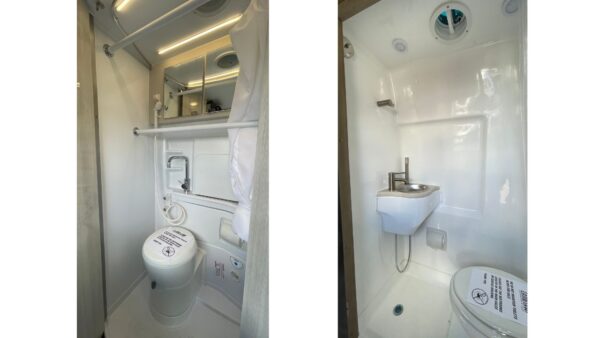
OK, the next con is that the toilet and the shower are often combined into one.

It’s some thing called a wet bath, and it’s very cramped for many people.


Typical wet baths
Typical wet baths

And the larger you are, the more difficult it will be to adjust to this Class B feature. And this can certainly be a con for many.

Class B vs Class C – Class B Con #5 – Tank Sizes

The next con is that Class B RVs often have very small holding and waste tanks.

And that can shorten the time that you can spend boondocking in rural areas.

That’s because the fresh water tank will empty quicker than bigger RVs.

And the waste tanks will fill up faster as well. This necessitates a trip somewhere to get more fresh water and to dump your waste too.

Of course, it’s mainly just an inconvenience, but it’s something to consider if you like to boondock a lot.

Con #6 – Cost

Now the last con for a Class B RV is that it often costs more than class C RVs.

In fact, the Class B RV costs more per square foot than any other RV out there.

And that’s because they have to take all this technology and put it in such a small area.

Also it’s because the RV builder didn’t make the outside shell of the RV.

Instead, they had to take what the auto builder made and then converted it into an RV.

And that requires more effort and more expense to be able to do that.

All right, so those are the pros and the cons of the Class B. Now let’s move on to the class C RV instead.

Class C Pro #1

And the number one pro for the class C is having a lot more living area than the class B RV.

An example of a Class C RV

(Here is a link to one of the largest manufacturer of Class C RVs – Winnebago )

This is often so because you get slide rooms with many class C RVs. And that opens up the living area consiberably.

Also the length can be much longer too, up to 35 feet. And the interiors are usually taller too. They just have more headroom in most cases.

A big pro is a lot more living space

So for you taller folks, you’ll find it a lot more comfortable in a class C RV.

Class B vs Class C – Class C Pro #2

Now the next pro is that you can accommodate more people in a class C RV. Especially for overnight camping.

This is because the Class C is just made that way. It’s kind of made for families in many cases. So it will sleep a lot more people.

You can usually have a lot more sleeping options

The class B is generally going to be comfortable for one to two people at a time.

But beyond that, it gets really tight. However, the class C RV can usually handle a lot more people for sleeping arrangements.

Pro #3 – Storage

OK, the third pro is there is usually much more storage space inside and outside in the Class C.

So if you like to carry a lot of other things with you, this could be very important for you.

Class C Pro #4 Is About The Bathroom

The next pro is that you will have a more normal bathroom. I’m talking about there being an actual sink, toilet and shower that are separate from one another.

A Class C bathroom
A Class C bathroom

Also you have a little walk around space in the bathroom too. But don’t get the impression that the bathroom is very big, because it’s not in most Class C’s.

But it’s almost certainly going to be much bigger than the average class B RV wet bath.

Pro #5 – What About Boondocking?

The next pro for the Class C RV is having larger holding tanks. Yes now we’re getting into where your water and waste tanks are actually of some size.

And they can be really usable for boondocking if you like to do that a lot.

Class C Pro #6 – Cost

OK, the last pro is that Class C RVs usually cost less than a class B.

One reason is that the Class C has been made for years and years. So the technology is very established.

They know what they’re doing with it and it doesn’t cost as much to manufacture. And that lower cost is a big attraction to many RV buyers.

Class B vs Class C – Class C Con #1

Now let’s move into the cons of the Class C RV. And number one is that they usually have worse fuel mileage than the class B.

In fact, a lot of Class C owners report somewhere between 9 and 12 miles per gallon.

Of course, that’s still better than many class A’s out there. But it’s worse than the average class B van.

Con #2 – Traveling

Now the second con For Class C RVs is that you may indeed require a second vehicle to carry with you on your RV travels.

That’s because most class C’s are not as easy to maneuver around town.

They’re often longer, so they won’t fit in parking spaces as easy as a Class B van will.

So very often you’ve got to take a second vehicle to be able to maneuver well. Especially when running errands around town and day trips.

Class C Con #3 – Ride And Handling

The third con is that very often the cabin is going to be more noisy when you’re driving in it.

One reason for that is that the larger engine will often be more more noisy.

Also the ride of a Class C usually is a little rougher than the class B RV.

Remember that Class B RVs usually ride like a passenger vehicle in many cases.

Well, Class C’s are a little bit rougher than that. Sometimes quite a bit rougher.

So you definitely want to do some test rides first before you decide on your purchase.

Class B vs Class C – Class C Con #4

OK, the next con is that in many cases the cabin of a Class C is lower to access.

That means that you have to go down into it to get into the seats. So that means that those seats on the front are not usable for anything other than driving.

An example of a Class C cockpit

In fact, the whole cabin area is wasted space for actually living in. Whereas in the class B you can often just turn those chairs around.

And when you do, you have a seating area for use in the house part of the RV too.

Con #5 – Driving

Now the next con is that a Class C RV is not as easy to drive around as the class B.

Yes, it’s not as maneuverable or as as nimble in daily traffic situations.

Of course, it’s often much better than many class A RVs. But the nod for being able to maneuver an RV definitely goes to the class B over the C.

The Last Con For Class C RVs

Now the final con for a class C is there is generally more maintenance involved overall.

And when I say maintenance, I’m talking about more tires and bigger tires.

Also the RV roof is going to be a real RV roof with joints and seams. And they will have to be sealed and inspected from time to time.

There is a lot more I could mention in the area of RV maintenance too. But I think you see the point.

Generally speaking, there’s more maintenance that’s going to go on with a Class C RV. Not a ton more, but more.

All right, those are my list of pros and cons for both the class B and the class C RV.

Conclusion

At this point it’s probably a good idea to go back through this article again. Because I have covered a lot of pros and cons here.

So write down the pros and cons and then try to find the pros that fit you best. The ones that seem to fit your style of RV travel and camping best.

Also review the cons. And take note of the ones that you really don’t want to have to deal with.

Then mark the pros and cons that are the ones that are really more important to you.

And if you do that, usually you’ll begin to see what will work best for you. And you can make a clear choice between either the class B or the class C RV.

That way you can choose the RV type that works best for you overall.

Have safe and happy RV travels my friends!

Get My FREE Camping Guide

“The Top 5 Ways To Save Money On Campground Costs”

Get My Newsletter

Save on RV repairs

Get the best RV gear

Learn about RV life

RV tips and tricks

And get my free guide – The Top 5 Ways To Save Money On Campground Costs”