
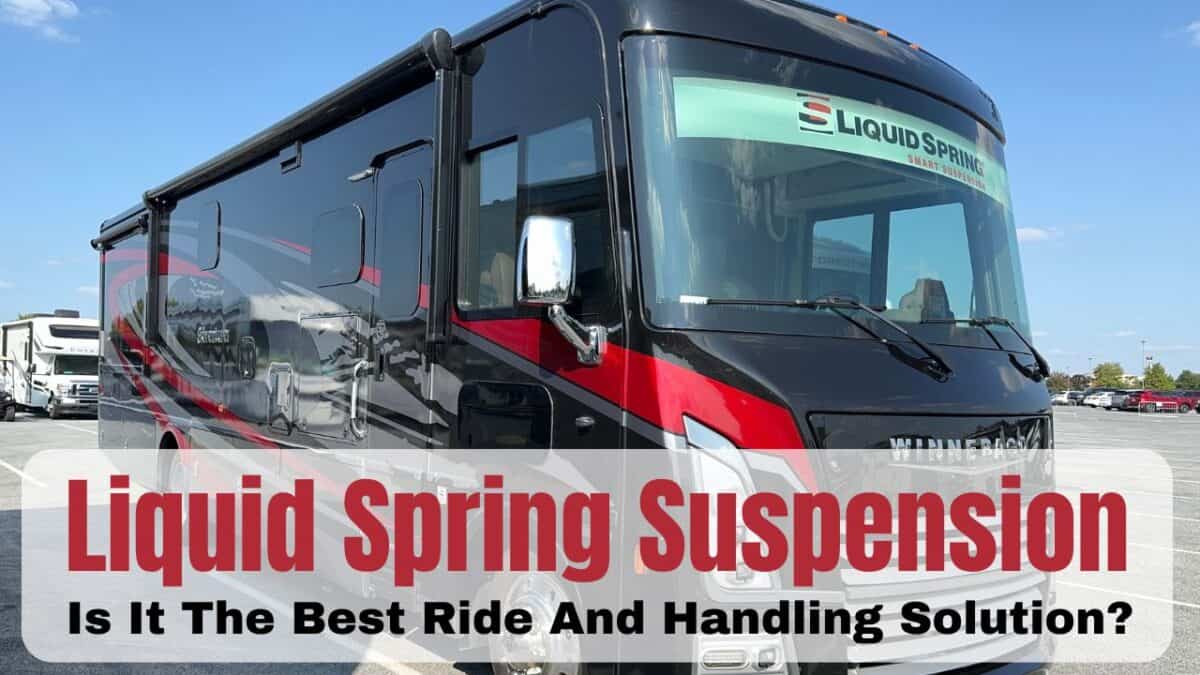
So is the LiquidSpring motorhome suspension upgrade worth it or not?
Well, gas-powered motorhomes offer several important advantages.
They generally cost less than diesel pushers, and can be serviced by more repair facilities.
They also use familiar Ford or Chevrolet commercial chassis that have proven themselves over many years.
But ride quality and handling can be a different story.
In fact, many gas motorhome owners complain about a harsh ride, excessive body roll, steering corrections, wind sensitivity, and the push-and-pull effect caused by large trucks passing on the highway.
And although several aftermarket suspension upgrades can help, they don’t completely change the basic suspension under the RV.
But LiquidSpring motorhome suspension upgrades take a much different approach.
You can watch my video on LiquidSpring by clicking on the image below.
Instead of adding another component to the factory suspension, it replaces the original suspension with a computer-controlled system that continuously responds to driving conditions.
Now I had heard many positive reports about LiquidSpring, but I wanted to experience it for myself.
So at the 2024 Hershey RV Show, I took test drives in two very different motorhomes equipped with the system.
And in this article, I’ll explain how LiquidSpring motorhome suspension works and what I noticed during those test drives.
And I’ll also discuss which motorhomes may qualify for the system, and whether this expensive motorhome suspension upgrade could make sense for you.
Quick Answer: Is LiquidSpring Suspension Worth It?
A LiquidSpring motorhome suspension can be worth considering if you own a motorhome that you genuinely love, but are unhappy with its ride and handling.
In fact, it can dramatically improve ride comfort, reduce body roll, and give the driver more control over how soft or firm the suspension feels.
However, an aftermarket installation may cost around $30,000, based on the estimate I received at the 2024 Hershey RV Show.
So it makes the most sense for owners who can afford the upgrade and plan to keep their RV for several years.
And also for those who want a more complete solution than shocks, sway bars, steering stabilizers, or other less expensive products can provide.
What Is A LiquidSpring Motorhome Suspension?
LiquidSpring is a computer-controlled suspension system that replaces the factory suspension on compatible motorhome chassis.

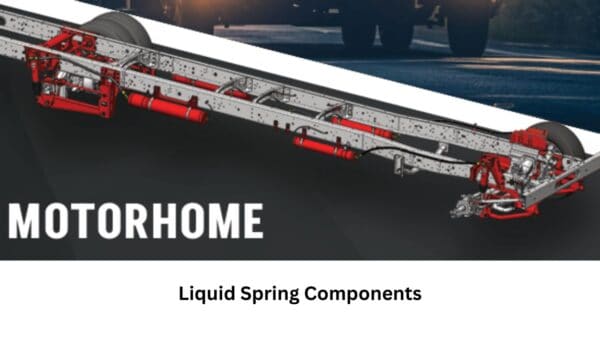
It uses a compressible fluid and electronic controls to adjust the suspension’s response to changing road and driving conditions.
So this isn’t simply another shock absorber, helper spring, or stabilizer added to the existing suspension.
It is a much more extensive conversion that changes how the RV rides and handles.
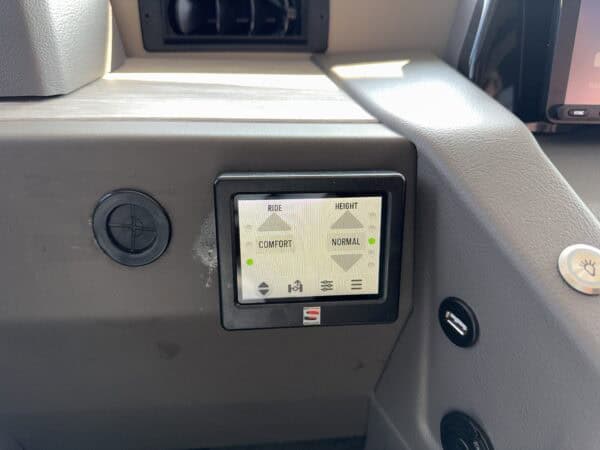
And the driver can even select the desired suspension setting from a control module installed near the driver’s seat.
Meanwhile, the system’s computer continuously monitors the motorhome and adjusts the suspension while the RV is moving.
It’s also important to realize that LiquidSpring technology has already been used in demanding commercial and emergency-vehicle applications.
That matters because motorhome owners understandably want to know whether an advanced suspension system has been tested beyond the RV market.
How the LiquidSpring Motorhome System Works
A conventional motorhome suspension uses steel springs, shocks, sway bars, and other mechanical components to support the vehicle and control movement.
Those components are selected to handle the chassis’s expected weight and operating conditions.
But a motorhome can experience many different conditions during the same trip.
So a suspension setting that feels comfortable on a straight, smooth highway may feel too soft on a winding road or during strong crosswinds.
And a LiquidSpring motorhome suspension is designed to adjust to those changing conditions.
Its onboard computer monitors information such as vehicle speed, steering input, braking, road movement, and ride height many times per second.
Then the system changes the suspension response as needed.
For example, the motorhome can ride more softly when traveling straight on a relatively smooth road.
But when the driver turns, brakes, encounters a crosswind, or enters another situation requiring greater stability, the system can firm the suspension.
And that ability to balance comfort with handling is one of the system’s greatest advantages.
The Driver Control Module
A control module is installed within reach of the driver. And it allows the driver to select from three suspension settings while traveling.
The controls are pretty straightforward, so you don’t need to understand all the technology operating in the background.
You simply choose the setting that best fits the driving conditions.

However, the driver is not manually controlling every suspension adjustment.
Because the computer continues making rapid automatic changes within the selected mode.
Automatic Ride-Height Control
The system also maintains and controls the motorhome’s ride height.
And this can help keep the coach at its intended operating position despite changes in weight distribution and driving conditions.
Maintaining the correct ride height can contribute to more predictable handling.
And it may also reduce some of the leaning and excessive movement that motorhome owners experience with traditional suspensions.
Why Gas Motorhomes Can Be Difficult to Drive
Most gas motorhomes are built on commercial truck or van chassis.
These chassis are strong, dependable, and capable of carrying substantial weight, which makes them a logical foundation for an RV.
However, they were not originally designed to deliver luxury-car ride quality.
In fact, a commercial chassis needs to support a heavy load, so the suspension may feel stiff and unforgiving.
So when an RV manufacturer adds a tall, wide motorhome body, the resulting vehicle can also be affected by body roll, crosswinds, uneven road surfaces, and passing trucks.
Ford F-53 Class A Motorhomes
The Ford F-53 chassis has been widely used under gas-powered Class A motorhomes.
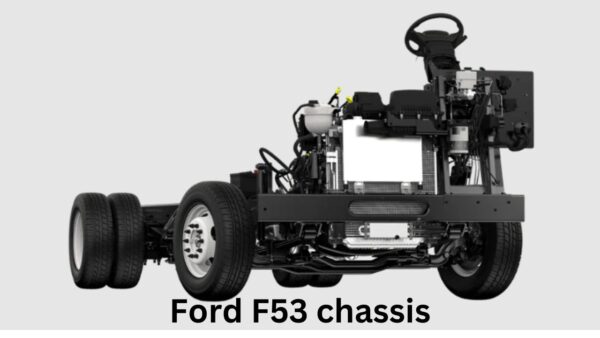
And it is capable and reliable, but owners frequently look for ways to improve its ride, steering feel, and resistance to sway.
Some F-53 motorhomes ride better than others because wheelbase, weight distribution, tire pressure, coach construction, and loading all affect the driving experience.
But even a properly loaded motorhome may still feel like the commercial vehicle it is.
Ford E-Series Class C Motorhomes
Many Class C motorhomes are built on Ford E-350 or E-450 cutaway chassis.
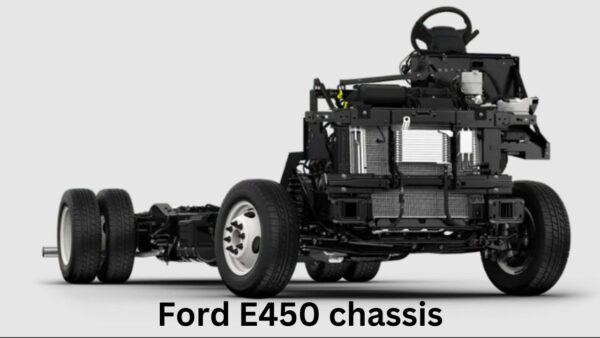
And these vehicles may feel more familiar to drive than a large Class A motorhome, but ride and handling complaints are still common.
The rear suspension can feel harsh, especially when the motorhome travels over bridge joints, potholes, or uneven pavement.
And depending on the coach design and weight distribution, the driver may also experience wandering or instability.
Super C Motorhomes
A Super C motorhome is built on a heavier commercial truck chassis.

And this provides substantial towing and weight capacity, but those capabilities can also come with a firmer ride.
In addition, some Super C models are also designed for rough-road or off-road use.
And as a result, the suspension may feel particularly stiff during ordinary highway travel.
Less Expensive Motorhome Suspension Upgrades
But a LiquidSpring motorhome suspension isn’t the only way to improve a motorhome’s ride and handling.
In fact, most RV owners begin with less expensive upgrades, and that is usually a sensible approach.
The right combination depends on the chassis and the specific problem you are trying to solve.
So it is important to diagnose the complaint before purchasing parts.
Upgraded Shock Absorbers
Better shock absorbers can improve the control of suspension movement.
They may help reduce bouncing, porpoising, and repeated movement after the motorhome crosses a dip or uneven section of pavement.
However, shocks do not carry the motorhome’s weight or completely change the suspension design.
So they may improve certain behaviors without solving every ride and handling complaint.
Heavier Sway Bars
Upgraded sway bars can also reduce body roll as the motorhome turns or encounters uneven road surfaces.
And they can also make the coach feel more stable when wind or passing trucks push against its large sidewalls.
But a stiffer sway bar can sometimes transfer more movement from one side of the suspension to the other.
So there can be a tradeoff between roll control and ride comfort.
Steering Stabilizers
A steering stabilizer may help the motorhome track more consistently and return the steering toward center.
And it can also provide additional control if a front tire fails.
However, a stabilizer should not be used to hide an alignment problem, worn steering components, incorrect tire pressure, or improper weight distribution. Those issues should be corrected first.
Rear Track Bars
A rear track bar helps control side-to-side movement between the chassis and rear axle.
And this can be useful when the driver feels as though the rear of the motorhome is moving sideways and requiring constant steering correction.

Track bars can make a noticeable improvement in the right situation.
But once again, they address a particular kind of movement rather than replacing the entire suspension.
SumoSprings and Other Helper Springs
Helper springs can provide additional support and may improve stability, reduce sag, and limit excessive body movement.
Also, they are relatively simple compared with a complete suspension replacement.
And for many motorhome owners, combining carefully chosen components can produce a worthwhile improvement at a much lower cost than a LiquidSpring motorhome suspension.
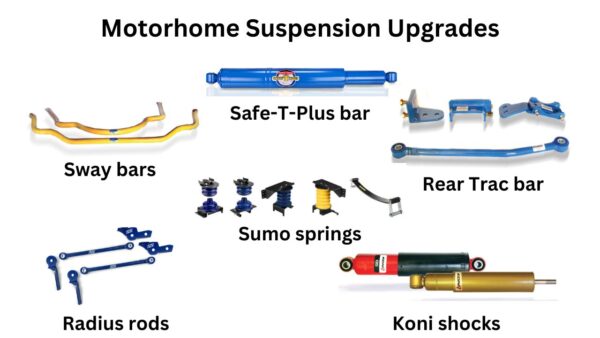
However, these upgrades generally improve the factory suspension one piece at a time.
And LiquidSpring takes a more comprehensive approach by replacing it.
My LiquidSpring Test-Drive Experience
At the 2024 Hershey RV Show, I arranged to test-drive two motorhomes with Wayne Wells, who was LiquidSpring’s national product manager at that time.
Because I wanted to try the system in motorhomes known for having firm or challenging suspensions.
And the first one was a Nexus Super C with off-road capabilities.

Of course, that kind of motorhome needs a strong suspension, but the result can be a stiff ride on normal paved roads.
The second was a Winnebago Adventurer gas-powered Class A motorhome.

And this gave me a chance to experience LiquidSpring on the Ford F-53 chassis used by many Class A owners.
And after driving both motorhomes, I was impressed.
Because the difference was not a minor change that required imagination to notice.
Instead, the system provided a substantial improvement over the kind of factory ride and handling normally associated with these chassis.
Changing the Ride While Driving
One of the most impressive features was the ability to change the suspension setting at the touch of a button.
I could select a softer or firmer ride without stopping the motorhome.
So that means the driver doesn’t have to accept one permanent suspension compromise.
You can choose more comfort while cruising and then select greater firmness when driving conditions require additional control.
Of course, no suspension can eliminate every bump, gust of wind, or movement from a large vehicle.
But LiquidSpring made both motorhomes feel more composed and comfortable during my test drives.
My Independent Opinion
Now I am not affiliated with LiquidSpring in any way, and the company did not pay me for my review.
I just wanted to experience the system because I had heard so many positive reports about it.
And after the test drives, I understood why owners speak so highly of the technology.
So based on what I experienced, I can say that a LiquidSpring motorhome suspension delivers a meaningful improvement in both ride quality and handling.
LiquidSpring Comfort, Normal, and Sport Modes
But the system also offers three driver-selectable settings commonly identified as Comfort, Normal, and Sport.
And each one changes the balance between a soft ride and firmer handling.
Comfort Mode
Comfort mode provides the softest ride of the three settings.
So it’s useful when you are cruising on a relatively straight road and want the suspension to absorb more of the pavement’s harshness.
In fact, the sensation reminded me more of the softer ride people often associate with a diesel pusher.
However, the motorhome’s size, chassis, tires, loading, and road conditions will still affect the final result.
Normal Mode
Normal mode provides a middle ground between maximum comfort and maximum firmness.
And it may be the setting many drivers use for ordinary travel.
The system still responds automatically to steering, braking, and road conditions though.
So Normal mode doesn’t mean the suspension stops adjusting.
Sport Mode
Sport mode creates a firmer suspension response.
And it can be especially useful on winding roads, in windy conditions, or when frequent truck traffic is affecting the motorhome.
The firmer setting helps control body movement and makes the RV feel more stable.
And because the setting is available from the driver’s seat, you can select it as conditions change.
How Much Does LiquidSpring Cost?
Cost is the biggest obstacle for most motorhome owners.
And when I asked about aftermarket installation at the 2024 Hershey RV Show, I was told to expect a price of approximately $30,000.
However, that figure should be viewed as a general estimate from that time, not a guaranteed current price.
The actual cost can vary with the chassis, installation facility, labor rates, system configuration, and any additional work the motorhome requires.
So before making a decision, request a written estimate for your exact RV and chassis.

You should also ask what is included in the price, how long the installation will take, and what warranty coverage applies.
Factory Installation May Cost Less
Some RV manufacturers have offered a LiquidSpring motorhome suspension as a factory-installed option on selected motorhomes too.
And a factory installation may cost less than converting an RV after it has already been built.
Availability can change by manufacturer, model, and model year, though.
So if you are ordering a new motorhome, ask both the RV manufacturer and dealer whether LiquidSpring is available for that particular model.
Buying it as a factory option may also simplify financing because the cost can potentially be included in the RV purchase.
However, financing an expensive option means paying interest on it, so consider the total long-term cost.
Which Motorhomes Can Use LiquidSpring?
LiquidSpring systems have been developed for several motorhome chassis, but availability depends on the exact chassis configuration and model year.
And a system being available for one version of a chassis does not automatically mean it will fit every RV built on that platform.
Applications have included certain versions of the following chassis:
- Ford F-53 Class A chassis
- Ford E-350 and E-450 Class C chassis
- Chevrolet and GMC 3500 and 4500 Class C chassis
- Ford F-550 and F-600 Super C chassis
- Ram 5500 chassis
- Chevrolet Silverado 5500 chassis
- International MV chassis
Because product offerings can change, confirm compatibility directly with LiquidSpring or an authorized installer.
Provide the RV’s year, make, model, chassis information, gross vehicle weight rating, wheelbase, and vehicle identification number when requesting confirmation.
And don’t schedule an installation based only on a general online chassis list.
The installer needs to verify that the system is approved for your specific motorhome.
Who Should Consider LiquidSpring?
LiquidSpring is not going to make financial sense for every motorhome owner.
But for the right person, it may solve one of the most frustrating parts of RV travel.
Owners Who Love Their Current Motorhome
Suppose you like your motorhome’s floor plan, storage, features, size, and overall condition.
And you want to keep it, but you dislike how it rides and handles.
Well, in that situation, spending money to improve the existing RV may be preferable to trading it.
Because a newer motorhome could cost far more, and there is no guarantee that its factory suspension would satisfy you.
Owners Planning to Keep Their RV for Years
And the longer you keep the motorhome, the more opportunities you have to benefit from the upgrade.
But a $30,000 suspension installed shortly before selling the RV may be difficult to justify.
However, if you expect to keep and travel in the coach for many years, you can spread the value of greater comfort over a longer period.
That doesn’t make the system inexpensive, but it may make the investment easier to justify.
Drivers Troubled by Sway or Harshness
Some owners are physically exhausted after driving a motorhome that requires constant steering correction.
And others find that a rough ride causes fatigue or makes travel uncomfortable for passengers.
So an improvement in ride and handling may provide more than simple luxury.
It could make the motorhome more enjoyable to use and encourage owners to continue traveling.
New-RV Buyers Considering a Gas Motorhome
LiquidSpring may also interest shoppers who prefer the price and practical advantages of a gas motorhome but want better ride quality.
It could allow them to buy the gas coach they prefer without moving all the way up to a diesel pusher.
However, compare the complete prices carefully.
Once an expensive suspension option and other upgrades are added, the difference between the gas coach and competing motorhomes may become smaller.
Who May Not Need LiquidSpring?
If you are generally satisfied with how your motorhome drives, there may be no reason to spend this kind of money.
An expensive upgrade should solve a real problem, not simply give you another feature.
And LiquidSpring may also be difficult to justify if you use the RV only a few times each year, plan to sell it soon, or are already close to the chassis’s weight limitations.
Also, if the handling complaint comes from incorrect tire pressure, poor alignment, overloading, worn components, or improper weight distribution, those problems need to be corrected first.
A motorhome should be weighed at all four corners when possible, and tire pressure should be set according to the tire manufacturer’s load-and-inflation information.
And the chassis, suspension, steering, tires, and alignment should also be inspected before assuming that a major suspension conversion is the answer.
LiquidSpring Versus a Diesel Pusher
Of course, diesel pushers are known for smooth ride quality because many use air suspension, longer wheelbases, heavier chassis, and rear-mounted engines.
But they also tend to cost more to purchase and can be more expensive to maintain.
So a gas motorhome with LiquidSpring may provide a useful middle path.
Because you can retain the gas-powered chassis while gaining a much more sophisticated suspension.
However, it will not turn a gas Class A motorhome into a diesel pusher in every respect.
Engine location, noise, braking systems, weight capacity, drivetrain design, chassis construction, and overall handling characteristics will still be different.
So the goal should not be to create a diesel motorhome disguised as a gas coach.
The goal is to make a compatible gas motorhome more comfortable and controlled.
What to Consider Before Installation
Before spending tens of thousands of dollars on any suspension system, take enough time to verify that it is the right solution.
First, have the motorhome inspected for worn steering and suspension components.
Also confirm its alignment, actual loaded weight, tire condition, tire pressure, and weight distribution.
Next, compare LiquidSpring with less expensive upgrades that address your specific complaint.
If a rear track bar or steering stabilizer would solve the primary problem, a complete suspension replacement might be unnecessary.
Then ask an authorized installer these questions:
- Is my exact motorhome and chassis compatible?
- What is the complete installed price?
- Are wheel alignment and calibration included?
- How long will the installation take?
- What maintenance does the system require?
- What warranty applies to parts and labor?
- Where can the system be serviced while traveling?
- Will the conversion affect chassis or RV warranties?
- Does it change cargo-carrying capacity or vehicle weight?
- Are replacement parts readily available?
- Can I test-drive a similar motorhome before buying?
Finally, take that test drive if at all possible. Suspension comfort is subjective, and you need to experience the difference before deciding whether it is worth the price to you.
Frequently Asked Questions About LiquidSpring Suspension
Does LiquidSpring replace the factory suspension?
Yes, LiquidSpring is a major suspension conversion rather than a simple add-on such as a steering stabilizer or upgraded shock absorber.
The exact components replaced will depend on the chassis and system application.
Can LiquidSpring improve a rough motorhome ride?
Yes, improving ride quality is one of its main benefits. During my test drives, both the Super C and gas Class A motorhome rode noticeably better than I would normally expect from their original chassis designs.
However, results can vary with the RV, road conditions, weight, tires, and driver expectations.
Does LiquidSpring help with sway?
The system is designed to improve suspension control and can reduce excessive body movement.
Its firmer Sport setting can be helpful in crosswinds, on curving roads, and around passing trucks.
But no suspension can make a tall motorhome completely unaffected by wind.
Drivers still need to slow down or stop when conditions become unsafe.
Can the suspension setting be changed while driving?
Yes. The driver can choose among Comfort, Normal, and Sport settings using the control module near the driver’s seat.
Meanwhile, the system’s computer continues making automatic adjustments within the selected mode.
How much does LiquidSpring cost for a motorhome?
At the 2024 Hershey RV Show, I was told that an aftermarket installation could cost around $30,000.
But prices can change and vary by chassis, system, installer, and labor requirements.
Contact an authorized installer for a current written quote for your specific RV.
Is LiquidSpring available as a factory option?
It has been offered as a factory option by some motorhome manufacturers on selected models.
However, availability can change from one model year to the next.
So ask the manufacturer or dealer to confirm whether it is available on the exact motorhome you are considering.
Does LiquidSpring require maintenance?
Any advanced mechanical, hydraulic, or electronically controlled system should be inspected and maintained according to its manufacturer’s requirements.
So ask about scheduled maintenance, fluid service, diagnostic procedures, and replacement-part availability before purchasing.
And keep the system’s service documentation with the motorhome for future owners and repair facilities.
Will LiquidSpring increase my motorhome’s resale value?
It may make the motorhome more appealing to buyers who understand and want the system.
However, you should not assume that you will recover the entire installation cost when the RV is sold.
The best financial justification is usually the comfort and handling benefit you receive while you own and use the motorhome.
Should I install LiquidSpring or begin with cheaper upgrades?
In most cases, it makes sense to identify the specific handling complaint and correct any underlying problems first.
Shocks, sway bars, track bars, steering stabilizers, or helper springs may provide enough improvement for much less money.
To learn more about those less expensive option, click on the image below.

However, if you want a more complete transformation and intend to keep the motorhome, LiquidSpring deserves consideration.
Where can I test-drive a motorhome with LiquidSpring?
RV shows, participating dealerships, manufacturers, and LiquidSpring installers may offer demonstration vehicles or test-drive opportunities.
So contact them in advance because a suitable motorhome may not always be available.
A test drive is one of the most important steps because ride quality is something you need to experience personally.
Conclusion
LiquidSpring is one of the most impressive motorhome suspension upgrades I have experienced.
And during my test drives, it provided a noticeably smoother ride while giving me the ability to select firmer handling when road conditions called for it.
But the cost is substantial, so it is clearly not for everyone.
In fact, many motorhome owners can improve their driving experience with less expensive shocks, sway bars, steering stabilizers, track bars, or helper springs.
However, if you love your motorhome, dislike its factory ride, and plan to keep it for years, LiquidSpring could make that RV much more enjoyable to drive.
And it may also appeal to new-RV buyers who want the advantages of a gas motorhome without accepting the typical gas-chassis ride.
But before making the investment, correct any existing chassis problems, obtain a detailed installation quote, confirm compatibility, and ask about service and warranty coverage.
Most importantly, arrange a test drive. I can tell you that I was impressed, but only you can decide whether the improvement is worth the cost for your RV, travel plans, and budget.
That’s it for now. Have safe and happy travels, my friends.