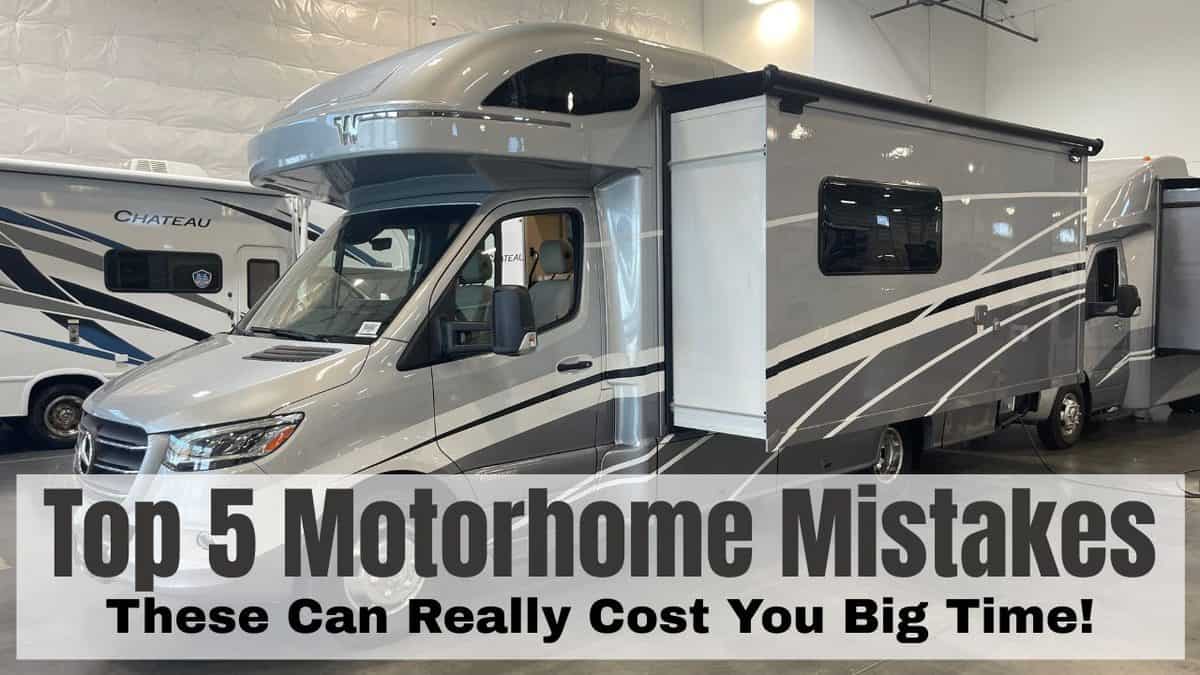
Let’s talk about how to avoid some of the most common motorhome buying mistakes that many RV shoppers make every day.
Because buying a motorhome should be exciting. You’re thinking about the places you’ll visit, the freedom to travel, and the convenience of taking your own home along for the ride.
But that excitement can also lead to some expensive motorhome buying mistakes. A beautiful coach can become a major disappointment when it doesn’t fit your needs or comes with repair bills you weren’t prepared to handle.
As a certified RV inspector, I want you to enjoy your motorhome from the beginning. And that means doing some homework before you sign the paperwork.
So let’s discuss five mistakes I see motorhome buyers make and how you can avoid them.
1. Falling in Love With the Wrong Motorhome
It happens all the time. Someone walks into a motorhome, sees the beautiful cabinets, comfortable furniture, and attractive floorplan, and immediately starts imagining it parked at their favorite campground.
Before long, they’ve decided this is the one. And they haven’t learned much about the manufacturer, the construction quality, or what owning that motorhome will involve.
The colors, layout, storage, and luxuries certainly matter. After all, you need to feel comfortable in the RV you buy.
But in my opinion, nothing is more important than the quality of that motorhome and the brand that builds it. A pretty interior won’t make up for poor construction and constant problems.
Learn About Motorhome Categories First
Before you focus on individual coaches, learn the differences between Class A, Class B, Class C, and Super C motorhomes. Then decide which category fits the way you plan to travel and camp.
Are you planning occasional weekend trips, extended vacations, or full-time RV living? Will you mostly stay in developed RV parks, or do you want to camp away from hookups?
Also consider the size you feel comfortable driving and the space you have available for storage at home. A motorhome needs to work for your actual circumstances.
The more clearly you understand your needs, the easier it becomes to eliminate RVs that would be a poor match.
Research Quality Before Shopping for Luxuries
Once you’ve chosen a category, investigate which manufacturers have a reputation for building better products. Learn about construction methods, materials, and the differences between models.
And when you’re buying used, pay attention to the specific model year and ownership history. A manufacturer’s reputation helps you narrow the field, but the individual coach still needs careful evaluation.
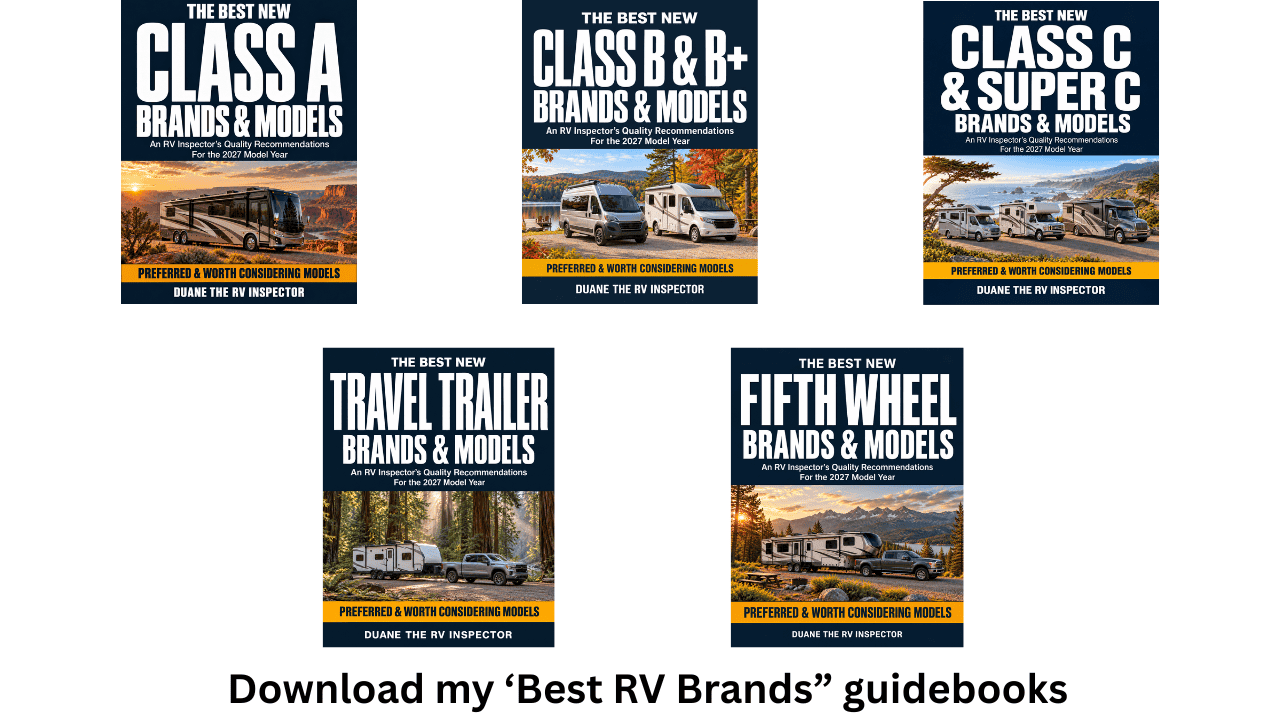
My best RV brands and models guide page can help you find the appropriate resources for the motorhome category you’re considering.
I personally examine motorhomes at national, regional, and local RV shows, as well as dealerships. That research helps me put together guidebooks that point buyers toward the brands I feel deserve serious consideration.
The goal is to find a quality motorhome that also has the layout and features you enjoy. Take your time getting there.
2. Listening to the Wrong People
One of the most common motorhome buying mistakes I see all the time is asking the wrong people to make your buying decision for you.
Someone posts a question on social media asking which motorhome to buy. Then the recommendations start pouring in.

One person loves a particular brand, another says it’s terrible, and someone else insists that an entirely different motorhome is the only sensible choice. Before long, the buyer is more confused than when they started.
Unfortunately, social media contains plenty of misinformation and outright falsehoods. And even an honest recommendation may have little to do with your situation.
Put Owner Opinions in Context
An owner’s experience can be useful, especially when it includes specific information about repairs, construction, or customer support.
But ask yourself how that experience applies to the motorhome you’re considering. Are they discussing the same model, a similar year, and the same kind of use?
Someone who takes two short trips each year may have very different needs from someone traveling full-time.
So use owner feedback to identify questions worth investigating. Then look for documentation, consistent patterns, and independent evaluations before reaching a conclusion.
Remember Who the Salesperson Works For
I also see buyers put far too much faith in what a dealership salesperson tells them.
Please understand that the salesperson is not an objective party in this transaction. Their job is to sell you an RV.

And in my experience, some will tell buyers almost anything they want to hear to get that sale. You should not let a confident sales presentation replace your own research.
If you’re told that the motorhome is exceptionally well built, fully inspected, or ready to travel, ask for details. Get important promises in writing and verify the condition independently.
You can learn more about this problem in my article about RV dealer claims buyers need to question.
Follow a Buying Process
The best way to reduce confusion is to have a process before you start shopping seriously.
That’s why I created my New RV Buying Guide and Used RV Buying Guide. They explain how to approach the purchase and evaluate an RV before taking ownership.
Brand research helps you decide what deserves a closer look. A buying process helps you determine whether the particular motorhome in front of you deserves your money.
3. Skipping Fluid Analysis on a Used Motorhome
When people examine a used motorhome, they often concentrate on the living area. But the engine, transmission, and generator deserve just as much attention.
These components can produce some of the most expensive repairs you’ll face as a motorhome owner.
And unfortunately, a clean engine compartment or a smooth-sounding engine doesn’t tell you everything about their internal condition.
That’s why I strongly recommend fluid analysis before buying a used motorhome.
Which Fluids Should You Test?
My recommendation is to arrange testing of the engine oil, engine coolant, and transmission fluid. If the motorhome has a generator, include its oil and its coolant if it has a liquid-cooled engine.
An air-cooled generator won’t have coolant to sample, so the testing needs to match the equipment actually installed.
Fluid analysis involves collecting samples and sending them to a qualified laboratory. Depending on the test, the results can reveal abnormal wear metals, contamination, or problems with the fluid itself.
That information can provide an early warning about a developing problem before it becomes obvious during ordinary operation.
Use the Results Along With Other Evidence
A qualified mechanic can provide valuable information about the motorhome’s mechanical condition. And fluid analysis adds another source of information about what may be happening inside those components.
However, one laboratory report cannot predict every failure or guarantee that an engine or transmission is healthy.
Ask the laboratory what background information it needs, follow its sampling instructions, and review any concerns before completing the purchase.
Also request maintenance records. The more you know about the equipment’s service history, the better prepared you’ll be to understand the overall picture.
My RV inspection guide explains how fluid analysis fits into the broader evaluation of a motorhome.
Don’t Forget the Generator
Buyers sometimes treat the generator as an accessory rather than another engine that needs attention.
But if you depend on it for air conditioning, battery charging, or other electrical needs away from hookups, its condition matters a great deal.
Have its operation evaluated, review its service records, and include the appropriate fluid testing. You don’t want to discover an expensive generator problem on your first camping trip.
4. Underestimating Motorhome Maintenance and Repair Costs
Many buyers calculate the payment, insurance, fuel, and campground expenses before purchasing a motorhome.
But maintenance and repairs? Those often get much less attention.
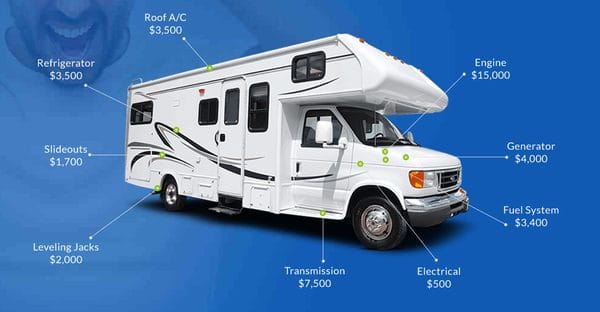
A motorhome combines a living space with an engine, transmission, and chassis. That adds a whole dimension of upkeep beyond the house systems found in a travel trailer or fifth wheel.
And if you buy a diesel motorhome, a major engine or drivetrain repair can be especially costly.
Budget Beyond the Purchase Price
Before buying, find out what routine service involves for that particular coach.
Consider engine and generator servicing, transmission maintenance, cooling-system care, tires, batteries, brakes, and the other equipment installed on the motorhome.
Then remember the house side. Appliances, plumbing, electrical equipment, slideouts, roof sealants, and other components also require attention.
There always seems to be something to maintain, adjust, or repair on a motorhome. So leave room in your budget to take care of it properly.
My article about RV maintenance and repair costs explains why these expenses deserve attention before you buy.
Consider a Quality Service Contract
I especially recommend that motorhome buyers consider a good extended warranty before purchasing.
Personally, I prefer the term “service contract,” because that more accurately describes the product. It can transfer part of the financial risk of a covered breakdown from you to the contract provider.
And what if you pay for a service contract and never need a major repair?
I think that’s great. You’ve enjoyed your motorhome without a major breakdown, along with the peace of mind the coverage provided.
But if a covered major repair does occur, you may be very glad you purchased that protection.
Understand the Coverage Before You Buy
A service contract does not eliminate every ownership expense.
Review the actual agreement for covered components, exclusions, deductibles, maintenance requirements, claim procedures, and payment limits. Routine maintenance and pre-existing problems are among the exclusions buyers need to understand.
So you still need money available for regular upkeep and expenses the contract doesn’t cover.
I recommend Wholesale Warranties as a place to investigate motorhome service contracts. In my opinion, they have earned a strong reputation among full-time RVers, and you can discuss the available options for your particular motorhome.
The time to understand those options is before a breakdown happens.
5. Buying Without an Independent NRVIA Inspection
Of all the motorhome buying mistakes on this list, skipping an independent inspection is one I especially want you to avoid.
It’s amazing how often buyers simply accept the seller’s description of the RV’s condition.
That seller may be a private owner or a dealership. Either way, they have an interest in completing the sale.
What you need is an independent third party working for you.
Choose a Certified NRVIA Inspector
My recommendation is to hire a certified NRVIA inspector before completing the purchase.
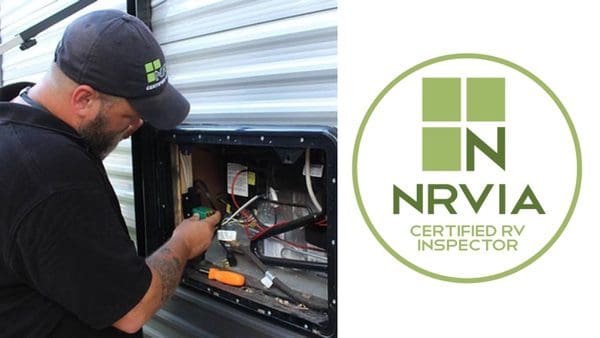
Ask for the inspection agreement, the points of inspection, and a sample report. NRVIA itself recommends reviewing those details so you understand the service you’re purchasing.
A thorough inspection should help you understand the condition of the accessible RV structure, equipment, and systems. And the written report gives you something far more useful than someone saying, “It looks good to me.”
But please don’t choose an inspection simply because it’s the cheapest one available.
A bargain inspection that barely examines the motorhome can leave expensive questions unanswered. This is an area where I strongly recommend paying for thorough work.
Confirm the Mechanical Inspection Scope
Also understand that an RV inspection and a detailed mechanical evaluation are different services.
NRVIA’s standards describe a visual and operational inspection of readily accessible components. The inspection is not technically exhaustive and does not guarantee future performance.
For a motorhome, discuss whether you also need a qualified chassis technician to evaluate the engine, transmission, brakes, steering, and suspension.
Arrange fluid sampling separately if it isn’t included. Don’t assume that every service you want is automatically part of the inspection price.
Resolve Important Findings Before Taking Ownership
When the report arrives, read it carefully and ask questions about anything you don’t understand.
Then determine which problems need repair, what those repairs may cost, and whether you still want the motorhome.
You may negotiate repairs, negotiate the price, or decide to walk away. But you’ll be making that decision with much better information.
For more help choosing someone, read my article about RV inspectors and how to find them.
Frequently Asked Questions About Motorhome Buying Mistakes
What should I research before buying a motorhome?
Start with the motorhome category that fits your travel plans, then research manufacturers, construction quality, and ownership costs.
After narrowing your choices, evaluate each individual coach’s condition, maintenance history, and suitability for your needs.
Should I get fluid analysis on a used gas motorhome?
Yes, I recommend fluid analysis for used gas motorhomes as well as diesels. Expensive engine, transmission, and generator problems aren’t limited to diesel coaches.
Ask the laboratory or inspection provider which samples and tests are appropriate for that motorhome.
Is a dealership inspection enough?
I recommend hiring your own independent certified NRVIA inspector rather than relying solely on the dealership’s inspection.
You need a clearly defined inspection and a written report prepared for you before completing the purchase.
Does an extended warranty replace a repair budget?
No. A service contract can help with covered breakdowns, but you still need money for maintenance, deductibles, excluded repairs, and other expenses.
Read the agreement before purchasing so you understand exactly what protection you’re getting.
Should a new motorhome receive an independent inspection?
Yes, I recommend an independent inspection for new motorhomes too.
Being new does not prove that every component was installed correctly or that every system operates as it should.
Conclusion: Buy With Knowledge and Confidence
Avoiding these motorhome buying mistakes starts before you fall in love with a particular coach.
Learn which motorhome category fits your needs, research quality, and be careful whose advice you follow.
If you’re buying used, investigate the engine, transmission, and generator with appropriate mechanical evaluations and fluid analysis. And make sure your ownership budget includes maintenance, repairs, and any service contract you choose.
Finally, get a thorough inspection from an independent certified NRVIA inspector before completing the purchase.
A little patience now can help you avoid a great deal of frustration later. And it puts you in a much better position to buy a motorhome you can enjoy without making some of the most common motorhome buying mistakes.
Have safe and happy travels, my friends!