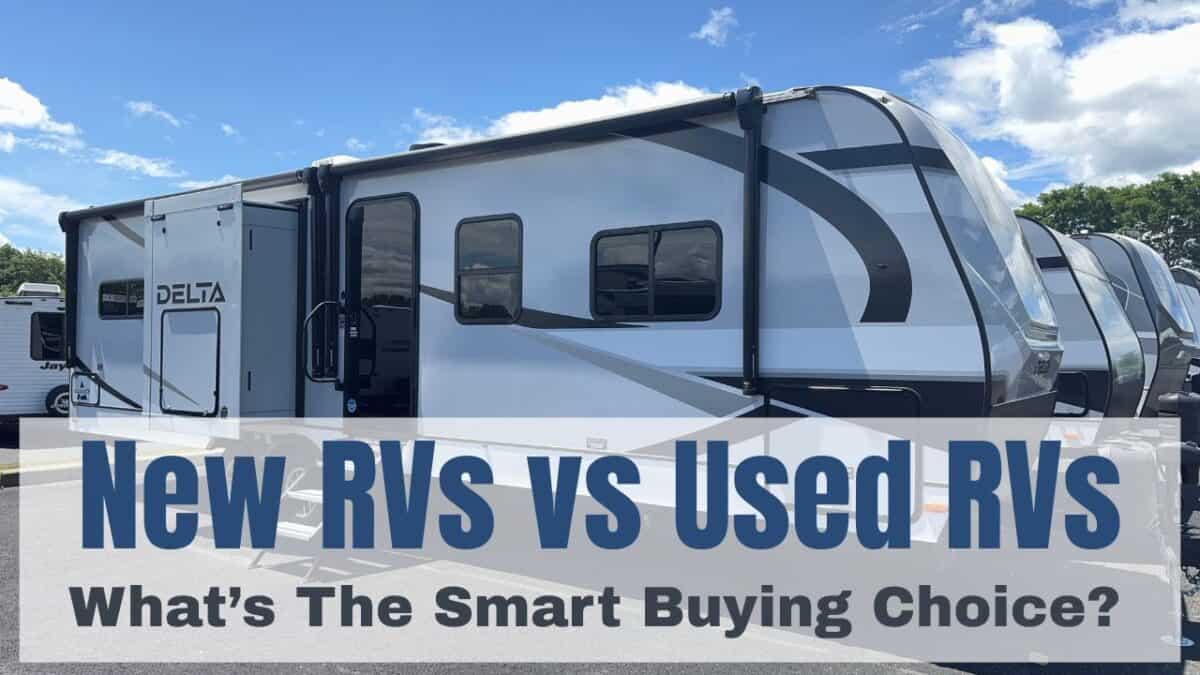
Should you buy a new or used RV? It’s one of the biggest questions RV shoppers face, and there is no single answer that works for everyone.
On one hand, you may have heard plenty of horror stories about brand-new RVs.
But on the other hand, you probably don’t want to inherit someone else’s neglected RV and discover that you bought an expensive money pit.
So the smart choice is not automatically new or used. It depends on your budget, your tolerance for repairs, the features you want, and how long you expect to keep the RV.
Is It Better to Buy a New or Used RV?
The quick answer is that a new RV may be better if you want a known ownership history, factory warranty coverage, current features, and modern styling.
However, a used RV may be smarter if you want a lower purchase price, less depreciation, more choices, and the opportunity to buy a higher-quality brand within your budget.
Most importantly, the condition of the specific RV matters more than whether it is new or used.
Either choice can work very well when you follow the right buying process, verify the condition, and pay a fair price.
Advantages of Buying a New RV
Buying a new RV has several clear advantages. For many buyers, those benefits are worth the higher initial cost.
You Control the RV’s Care From Day One
When you buy new, you know the RV’s complete history because you are its first owner.
You can protect the roof, seals, appliances, tires, batteries, and other components from the very beginning.
And you never have to wonder whether the previous owner ignored a leak, skipped maintenance, overloaded the RV, or stored it improperly.
That known history can provide real peace of mind.
You Receive Factory Warranty Coverage
A new RV normally includes a manufacturer’s warranty for a limited period, although the length and coverage vary by brand.
If a covered component fails, the warranty may reduce or eliminate the direct repair cost.
But remember that a warranty is only as useful as the service available to support it.
So before buying, ask who will perform warranty work, how appointments are scheduled, and how long repairs usually take.
You Avoid an Unknown Smoking or Pet History
For buyers with allergies or strong sensitivities, this can be an important advantage.
A new RV should not contain lingering smoke, pet odors, dander, or damage caused by a previous owner’s animals.
Of course, a well-kept used RV may also be clean and odor-free. However, buying new removes much of the uncertainty.
You Can Get the Latest RV Features
New RVs often include the latest floor plans, electrical systems, solar preparation, control panels, appliances, safety equipment, and convenience features.
Some of those improvements can make travel more comfortable and RV systems easier to use.
And if appearance matters to you, a new RV is more likely to have current colors, fabrics, cabinetry, and interior styling.
You will not need to renovate simply to make the RV feel like your own.
You May Have More Ordering Choices
Depending on the manufacturer and dealer, buying new may let you choose a floor plan, interior package, exterior color, or factory-installed option. That can be helpful when you have very specific needs.
However, a special order can require patience and careful verification.
Never assume the factory delivered every option correctly just because the RV is new.
Disadvantages of Buying a New RV
The benefits of a new RV are appealing, but they come with important tradeoffs.
And those disadvantages should be part of your decision before you sign a contract.
A New RV Usually Costs More
A new version of a particular RV will usually cost more than a similar model that is a few years old.
And the difference can affect your monthly payment, sales tax, insurance, and the amount of cash you have left for travel and repairs.
Still, buying new can make financial sense if you choose carefully and keep the RV for many years.
The expensive pattern is buying new, trading frequently, and repeatedly absorbing the steepest part of the depreciation curve.
Early Depreciation Can Be Significant
RVs generally lose value over time, and the fastest depreciation often occurs during the early years of ownership.
The exact amount depends on the brand, model, condition, market, and price you paid.
So negotiate based on realistic market value rather than the manufacturer’s suggested retail price alone.
A large advertised discount does not automatically mean you are receiving a good deal.
Warranty Repairs May Take Time
A factory warranty can protect your wallet, but it cannot guarantee a fast repair.
Some owners wait weeks or even months for an appointment, parts approval, parts delivery, or completion of the work.
And that delay matters if the RV is sitting at a dealership during the camping season.

Therefore, the dealer’s service reputation can be just as important as the sales price.
A New RV Can Still Have Defects
New does not mean perfect. RVs can leave the factory with loose plumbing connections, sealant problems, electrical issues, appliance faults, cosmetic damage, or components that were installed incorrectly.
For that reason, arrange a thorough pre-delivery inspection and make sure every system is tested before accepting the RV.
Ideally, any important problems should be corrected before the final paperwork is completed.
The Dealer Experience Can Be Frustrating
Most new RVs are purchased through dealerships, and the quality of that experience varies widely.
High-pressure sales tactics, confusing fees, add-on products, and rushed walk-throughs can make the process unpleasant.
So slow the process down, read every document, and be willing to walk away.
The excitement of a new RV should never push you into a bad financial decision.
Advantages of Buying a Used RV
For many shoppers, a well-maintained used RV provides the best balance of quality and cost.
It can also open the door to brands and models that would be unaffordable when new.
The Initial Purchase Price Is Usually Lower
The most obvious benefit of buying used is the lower purchase price.
If a newer RV exceeds your budget, you can look a few years further back until you find a suitable model at a comfortable price.
That can help you enter RVing without overextending yourself.
It may also leave room in your budget for a professional inspection, immediate maintenance, insurance, storage, campground fees, and travel.
Depreciation Is Often Slower
A used RV will continue to depreciate, but the rate is often less severe after the first few years.
As a result, you may lose less value during your period of ownership.
However, condition still has a major effect on resale value.
A clean, dry, well-maintained RV with records will usually be easier to sell than a neglected unit, regardless of age.
The First Owner May Have Corrected Early Problems
Many RVs need adjustments and repairs during their early ownership period.
With a good used RV, the first owner may already have corrected factory issues and learned how to make everything work properly.
But do not assume that every problem was repaired correctly.
Ask for service records, review receipts, and verify the quality of any modifications or repair work.
Upgrades and Extras May Be Included
Private sellers often add solar equipment, batteries, suspension upgrades, towing accessories, mattresses, storage improvements, or other useful items.
When the owner changes RV types, some of those extras may be included in the sale.
And that can save you considerable money compared with purchasing and installing the same upgrades later.
Still, inspect each modification to confirm that it is safe and appropriate for the RV.
You Have More Model Years to Choose From
When shopping new, you are mainly comparing the current model year and perhaps a few leftover units.
Used RV shoppers can compare many years, floor plans, discontinued models, and different construction eras.
That larger selection may help you find a floor plan or feature that is no longer available.
And it also gives you more opportunities to wait for the right RV instead of settling for whatever is on a dealer’s lot.
You May Be Able to Afford a Better-Built RV
A limited budget does not necessarily mean you must buy a lower-quality new RV.
In fact, you may be able to purchase an older, higher-quality brand for the same money or less.
The key is finding one that has been maintained properly.
Age by itself does not tell you whether an RV is a smart purchase because condition and care are far more important.
Disadvantages of Buying a Used RV
Used RVs can offer excellent value, but they also carry risks that must be managed carefully.
Skipping the verification process is how a bargain can become an RV money pit.
The RV May Have Hidden Problems
Many RV owners do not maintain their units as carefully as they should.
Roof leaks, water damage, worn tires, neglected sealant, overloaded axles, electrical modifications, and appliance problems may not be obvious during a quick walk-through.
So never judge a used RV by clean upholstery and shiny exterior fiberglass alone.
Verify its condition, review maintenance records, and have an independent professional inspection performed before purchase.
There Is Usually No Factory Warranty
Once the factory warranty has expired, repair costs normally become the owner’s responsibility.
A major appliance, generator, leveling system, slide mechanism, engine, or transmission repair can be expensive.
An extended service contract may shift some of that risk, but coverage varies and exclusions matter.
Read the contract carefully rather than assuming every failure will be covered.
Older RVs May Lack Newer Features
A used RV may not include the latest solar capability, connectivity, safety equipment, control systems, or interior design.
And some buyers simply do not enjoy the colors or styling found in older units.
However, many features can be added later. Decide which items are truly essential and which ones are inexpensive conveniences that should not control the entire purchase.
Age-Related Replacements Can Add Up
RVs eventually reach a stage when several components approach the end of their expected service life.
Tires, batteries, sealants, awning fabric, appliances, suspension parts, and other items may all need attention within a short period.
Even if everything works during the showing, some replacements may be close.
Therefore, consider the RV’s age, service records, and likely near-term expenses when deciding what it is really worth.
How to Decide Between a New and Used RV
Once you understand the pros and cons, the decision becomes more personal.
The following priorities can help you identify which choice is right for you.
Buying New May Be Best If:
- You want to control maintenance and care from the first day.
- You value factory warranty coverage and are comfortable navigating dealer service.
- You need a current floor plan, feature, technology, or interior style.
- You plan to keep the RV long enough to spread the higher cost over many years.
- You are prepared to inspect a new RV carefully instead of assuming it is defect-free.
Buying Used May Be Best If:
- You want a lower purchase price and less exposure to early depreciation.
- You want a higher-quality brand that would be outside your budget when new.
- You prefer a larger selection of model years and floor plans.
- You are willing to verify the maintenance history and pay for a professional inspection.
- You can maintain a repair reserve for items that are not covered by a warranty.
Compare the Total Cost, Not Just the Selling Price
The purchase price is only one part of RV ownership.
Also consider financing, taxes, insurance, registration, towing equipment, storage, maintenance, repairs, upgrades, and depreciation.
And leave enough financial breathing room to use the RV after you buy it.
A motorhome or trailer that consumes the entire budget can quickly turn enjoyable travel into financial stress.
The Right RV Buying Process Matters Most
Online discussions often make it sound as though every new RV is poorly built or every used RV is hiding a disaster.
That kind of drama gets attention, but it does not help buyers make a careful decision.
The truth is that good RVs are available in both markets.
The goal is not to find a perfect RV. The goal is to eliminate the wrong ones and identify a reliable RV that fits your needs and budget.
Start by choosing the right RV type and narrowing your search to brands and models with a good track record.
Then compare realistic market prices, investigate the seller or dealer, review documents, and verify the RV’s condition.
Finally, use a professional RV inspection as an independent check before the purchase is completed.
New RVs can have factory defects, and used RVs can have hidden damage, so neither should receive a free pass.
Frequently Asked Questions
Is It Financially Better to Buy a New or Used RV?
A used RV is often less expensive initially and may depreciate more slowly. However, a neglected used RV can require costly repairs, while a carefully chosen new RV kept for many years may provide good long-term value.
How Old Should a Used RV Be When I Buy It?
There is no ideal age for every RV. Focus on the brand, construction, maintenance history, storage conditions, current condition, and availability of replacement parts rather than using age alone.
Do New RVs Need an Independent Inspection?
Yes. A new RV can have defects in its plumbing, electrical systems, sealants, appliances, slides, and other components.
So an independent inspection can identify problems before final acceptance.
What Is the Biggest Risk When Buying a Used RV?
Hidden water intrusion and the damage it causes are among the most serious concerns. Poor maintenance, aging tires, unsafe modifications, and components nearing replacement should also be evaluated.
Can I Buy a Warranty for a Used RV?
You may be able to purchase an extended service contract for an eligible used RV. However, review the coverage limits, exclusions, deductibles, claim process, and repair requirements before deciding whether it is worthwhile.
Should a First-Time RV Buyer Choose New or Used?
Either can work for a first-time buyer. A new RV offers a known history and warranty, while a carefully inspected used RV may reduce the initial cost and leave more room in the budget for travel and unexpected repairs.
Conclusion
So, should you buy a new or used RV? Either one can be the smart choice when it matches your priorities and you use a disciplined buying process.
Choose new if you value a known history, current features, and factory coverage.
Choose used if you value a lower price, slower depreciation, more selection, and the chance to buy a better-built RV within your budget.
Most importantly, do not let excitement or online horror stories make the decision for you.
Compare the real costs, verify the condition, and buy the RV that can serve you well for years to come.
Have safe and happy travels, my friends.