
Let’s talk about some of the most common Thousand Trails membership complaints that you are likely to come across online.
You know, some RV subjects seem guaranteed to start a debate. And judging by the comments I receive whenever I discuss campground memberships, Thousand Trails is certainly one of them.
Some RVers love it, while others want nothing to do with it. If you research Thousand Trails membership complaints online, you’ll quickly find people criticizing park conditions, membership costs, campground locations, and reservation availability.
But do those complaints tell the whole story?
We’ve used an upgraded Thousand Trails membership during roughly six years of full-time RV travel. And our experience has been overwhelmingly positive.
That doesn’t mean every complaint is wrong or every park is wonderful. But I think understanding how the system works—and who it works best for—explains much of the disagreement.
So let’s examine the complaints I hear most often and what we’ve experienced ourselves.
Our Experience With Thousand Trails
Our membership, together with our Encore access, has allowed us to stay at parks across much of the country.
We’ve traveled throughout the South, up the Eastern Seaboard, and through many inland areas of the eastern United States. So my opinions come from staying in quite a few different campgrounds.
However, I haven’t had nearly as much experience with the parks along the West Coast. So I’m not going to pretend that I’ve personally evaluated every campground in the system.
Also, our membership benefits should not be confused with those of every membership offered today. Before buying, verify the specific parks, reservation privileges, and travel rules included in your agreement.
For a broader explanation of the program, you can read my Thousand Trails membership review.
Complaint #1: “The Thousand Trails Parks Are in Terrible Condition”
This is probably one of the most common Thousand Trails membership complaints that I hear most often.
And I agree that some Thousand Trails parks need attention. I’m not going to argue otherwise.
But based on our travels, the vast majority of the parks we’ve visited have been just fine. At the time of the video this article is based on, there were only two that we wouldn’t return to until improvements were made.
That’s a very different experience from the impression you might get by reading only the most negative comments.
Rustic Camping Is Different From Resort Camping
I think expectations explain a lot of the dissatisfaction.
Most Thousand Trails parks we’ve visited are what I would call rustic. They’re often in rural settings, with more of a camping atmosphere than a luxury-resort atmosphere.
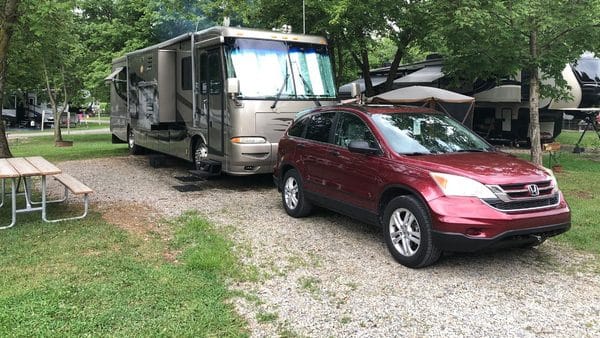
You may find gravel or dirt campsites instead of concrete pads. And the roads may be unpaved rather than smooth asphalt.
For us, that usually isn’t a problem. We’re looking for a comfortable place to park our RV while we get out and explore the surrounding area.
But if you expect every campground to look like a high-end motorcoach resort, you’ll probably be disappointed.
I would describe much of Thousand Trails as more camping than glamping. Knowing that beforehand makes a big difference.
Some Parks Have Excellent Amenities
That doesn’t mean the system lacks attractive parks or enjoyable amenities.
We’ve enjoyed Thousand Trails Orlando, and Hershey in Pennsylvania is one of our all-time favorites. We’ve also had very good experiences at Encore properties in Arizona, including Mesa Spirit and especially Monte Vista.
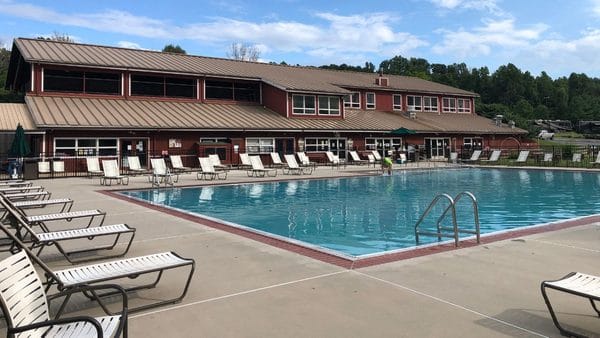
Those parks show why I don’t think it’s reasonable to judge the entire network by one disappointing stay.
At the same time, rustic conditions and neglected maintenance are different things. An unpaved campsite may be perfectly acceptable, while a park that needs repairs deserves criticism.
My Lake Conroe campground review gives an example of how we weigh the good and the not-so-good during an actual stay.
Visit Several Parks Before Judging the System
I sometimes hear someone say they visited one Thousand Trails park, disliked it, and never tried another.
Well, perhaps that particular campground really wasn’t very good. But one visit still doesn’t tell you what the whole system is like.
If you’re considering membership, try several parks that fit your travel plans. You’ll get a much better feel for whether the overall experience suits you.
Complaint #2: “The Upgraded Memberships Cost Too Much”
An upgraded membership is a financial commitment. So I understand why buyers want to know whether it will pay off.
But looking only at the membership price misses the most important question: How much will you actually use it?
In my opinion, the biggest savings opportunities are for part-time and full-time RVers who spend substantial time on the road.
Campground expenses can take a large bite out of an RV travel budget. And a membership that replaces enough separately purchased campground nights can make a meaningful difference.
Start With a Regional Camping Pass
Before stepping up to an upgraded membership, I recommend considering a regional Camping Pass.
That gives you an opportunity to experience several participating parks without immediately committing to a more expensive membership level.
However, read the pass rules carefully. A regional pass and an upgraded membership do not necessarily provide the same stay lengths, booking windows, or ability to move directly between parks.
Thousand Trails’ membership comparison describes different benefits for its Camping Pass and enhanced memberships, so compare the actual agreement you’re considering.
Then use the pass enough to make an informed decision. Visiting several campgrounds will tell you much more than judging the system from a brochure.
Calculate Your Effective Nightly Cost
Here’s a simple way to evaluate the numbers.

Add the membership costs attributable to the period you’re comparing, including any required dues, add-ons, purchase costs, or financing charges. Then divide that total by the nights you realistically expect to use.
For illustration only, suppose your total membership-related cost for a year were $2,000.
| Nights used during the year | Membership cost per night |
|---|---|
| 200 nights | $10.00 |
| 100 nights | $20.00 |
| 50 nights | $40.00 |
These are hypothetical calculations, not a quote for a current Thousand Trails membership.
But they show the principle clearly. The same membership can represent excellent value for someone who uses it frequently and much less value for someone who rarely camps.
Also include any additional campsite charges when calculating your actual cost. And make sure the nights you’re counting are possible under the membership’s stay and reservation rules.
What Does “$0 a Night” Really Mean?
One reason we’ve appreciated Thousand Trails is that many of our stays have involved no additional nightly campsite charge after paying our membership expenses.
That’s what I mean when I talk about staying for $0 a night. It doesn’t mean the membership itself was free.
Also, some affiliated properties or premium sites carry additional charges. Thousand Trails’ Camping Pass and Trails Collection information explains that fees and separate program rules can apply.
The savings can still be substantial. Just compare complete costs rather than assuming every stay has exactly the same price.
Check the Hookups Too
Most of our stays have included water, electric, and sewer hookups.
However, not every campground or campsite has sewer connections. At the parks where we encountered that situation, honey wagon service was available, and we didn’t find it especially difficult to manage.
That describes our experience rather than a promise about every park today.
Check the hookups, dump facilities, honey wagon availability, and any associated fees before booking. Then decide whether the arrangement works for your RV and camping habits.
Complaint #3: “They Don’t Have Parks Where I Want to Go”
Of all the Thousand Trails membership complaints, this one is true in an important sense. Thousand Trails does not provide convenient membership camping everywhere you might want to travel.
Its campground network has a stronger presence in some regions than others. And that matters when you’re deciding whether to buy.

However, I’ve never considered it necessary for a camping membership to cover every destination on our travel list.
Compare the Campground Map With Your Travel Plans
Before purchasing, look at the participating campground locations and compare them with your intended routes.
Are there parks near places you genuinely want to visit? Could you comfortably spend enough time there to get value from the membership?
Also distinguish Thousand Trails campgrounds from properties available through an Encore or Trails Collection arrangement. Access depends on the membership and additional programs you actually purchase.
Use the official Thousand Trails campground listings to check locations rather than assuming a park is included because it shares a familiar brand name.
And remember that a campground being available somewhere in a state doesn’t necessarily make it convenient to your destination.
You Can Still Stay Outside the System
What if you want to visit Yellowstone, Glacier, Zion, or another destination where your membership doesn’t provide a convenient campground?
My approach is simple: Stay somewhere else for that part of the trip.
Then use Thousand Trails again when your travels bring you back near participating parks.
That has never seemed like a major problem to me. We don’t need one membership to handle every camping night in order for it to save us money overall.
My article about whether Thousand Trails fits your travel plans discusses why location can make such a difference in membership value.
Complaint #4: “I Can’t Get a Reservation”
Reservations are another frequent source of Thousand Trails membership complaints.
Our experience has been different. We’re planners, and by using our booking privileges in advance, we haven’t had serious problems arranging our stays.
The membership we discussed in the original video provided a reservation window of about four months. That gave us time to organize our trips rather than search for an opening at the last minute.
Understand Your Reservation Window
Different memberships provide different advance booking privileges.
And the rules for an affiliated campground program may differ from those for the main Thousand Trails network.
For example, Thousand Trails’ Trails Collection information explains that affiliated-resort reservations depend on availability and that its reservation window may differ from your underlying membership.
So don’t assume that one booking window applies to every park you can access.
Read the rules, understand when you can reserve, and use that opportunity when planning important stays.
Planning Ahead Has Worked for Us
We like knowing where we’re going and having reservations arranged beforehand.
That travel style works well with a campground membership. It gives us time to organize routes and make adjustments if our first choice isn’t available.
However, planning ahead is not a guarantee that every park will have space on every date.
My point is that advance planning has worked very well for us. It’s one of the main reasons our experience has been positive.
Spontaneous Travelers May Be Less Happy
If you prefer driving until you feel like stopping and finding a campground that afternoon, Thousand Trails may be a less comfortable fit.
There’s nothing wrong with traveling spontaneously. But it helps to recognize that a membership system with reservation rules may require a different approach.
I discuss the benefits of planning and slowing down in my full-time RV living lessons.
Who Is Thousand Trails Best For?
So obviously, there are both legitimate and somewhat exaggerated Thousand Trails membership complaints.
So in my opinion, Thousand Trails works best for RVers who want to control campground costs and will use the membership regularly.
It also helps if you enjoy rustic surroundings, can adjust to differences between parks, and are willing to plan ahead.
You don’t have to demand the best of everything to enjoy a campground. Sometimes a comfortable campsite in an interesting area is exactly what you need.
But be honest about your preferences before purchasing.
If you want luxury resort conditions at every stop, dislike making reservations ahead of time, or rarely travel near participating parks, you may be unhappy with the membership.
That doesn’t change the value it has provided for us. It simply means that your travel habits need to match what you’re buying.
Get Help Comparing Membership Options
If Thousand Trails sounds like a good fit, I recommend speaking with Joanna and Patrick Parizo.
They’re membership specialists I’ve personally worked with, and they’ve helped many of my subscribers and followers.
My experience with them has been friendly and helpful, without a high-pressure sales approach. Ask them to explain the choices, restrictions, total costs, and any discounts available.
Contact Joanna & Patrick Parizo by email at [email protected]
Or you can call them at 631-921-1674 or 352-396-6835.

You can also find their contact information in the “How To Save On Thousand Trails Memberships” section of my Thousand Trails review.
Then take the time you need to decide. The goal is to purchase a membership that suits your travel plans.
Frequently Asked Questions About Thousand Trails Membership Complaints
Are Thousand Trails campgrounds poorly maintained?
Some parks we’ve visited need improvements, but most have been perfectly acceptable to us. Our experience does not support treating the entire network as poorly maintained.
That is one of the Thousand Trails membership complaints that I feel is grossly exaggerated.
So just look at recent information about individual parks and distinguish rustic surroundings from maintenance problems.
Is Thousand Trails worth it for part-time RVers?
It can be, especially for RVers who take extended trips and spend enough nights at participating parks.
Compare the complete membership cost with realistic usage and the campground expenses you would otherwise pay.
Does every Thousand Trails campsite have full hookups?
No. We’ve usually had full hookups, but some parks or sites lack sewer connections.
Verify the facilities and any waste-tank service arrangements before reserving.
Does buying an upgraded membership guarantee reservations?
No. A longer booking window gives you more time to plan, but availability still matters.
Understand the rules for both your main membership and any affiliated campground program.
Should I try a Camping Pass before upgrading?
That’s my recommendation for someone who hasn’t experienced the system.
Visit several parks, learn the rules, and decide whether you enjoy the camping experience before making a larger commitment.
Conclusion: Match the Membership to the Way You Travel
There are legitimate Thousand Trails membership complaints. Some parks need work, the network doesn’t cover every destination, and reservations require attention.
But those issues haven’t prevented us from enjoying the membership or appreciating the savings.
For budget-conscious RVers who camp regularly, enjoy rustic surroundings, stay flexible, and plan ahead, I believe Thousand Trails deserves serious consideration.
Try several parks, compare the costs, and understand exactly what your membership includes. Then decide whether it fits the way you want to travel.
Have safe and happy travels, my friends!