RV House Batteries – Comparing The Top 3 Choices

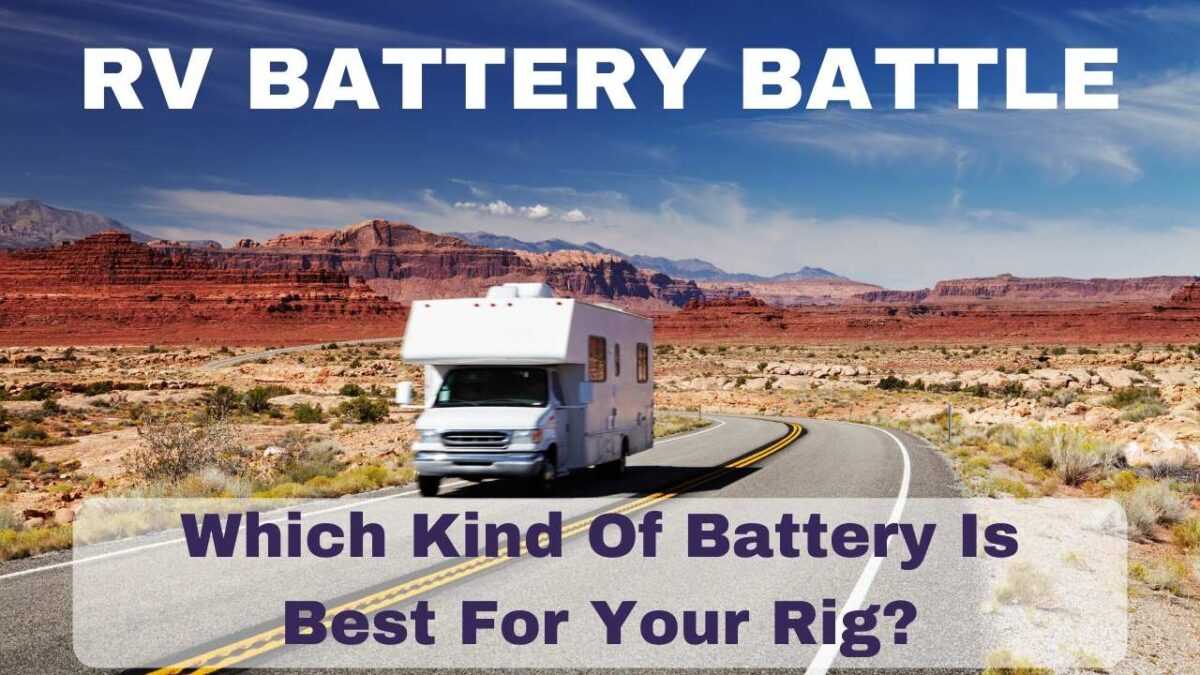
RV house batteries are a major power source for your RV living space.

If you have a motorhome, you probably have another set of batteries. They start the engine and run all kinds of chassis related items. And they are usually called the chassis batteries.

But the batteries that power your living space are designed to provide steady 12 volt power for a long time. They are not usually used for cranking an engine.

So what are your choices for RV house batteries? Let’s take a look at them now.

Watch my video about the top 3 choices for RV batteries

Disclosure: Please note this post may contain affiliate links. This means โ€“ at no additional cost to you โ€“ I earn a commission if you make a purchase using our affiliate links. I only link to products and companies I use and feel comfortable recommending. The income goes toward supporting the free content on this website

Table of Contents

Lead Acid RV House Batteries

Many RVs come with 12-volt lead acid house batteries when they are new. But RV owners often replace them with golf cart batteries instead. Especially if they plan on doing much boondocking.

Golf cart batteries are designed to provide a lot of power for a long time. So that makes them an ideal choice for RVs as well.

But they usually come in 6 volt versions instead of 12-volts. So it takes two 6-volt golf cart batteries to replace one 12-volt battery.

And they are very heavy because they have much thicker lead plates than 12-volt batteries. So you have to be able accommodate the extra size and weight.

Now let’s talk about the pros and cons of golf cart 6-volt lead acid batteries.

Watch my Youtube video on RV house batteries

Lead Acid Battery Advantages

  1. They are usually the lowest cost battery that you can use for your house battery bank.
  2. They are easy to find. You can get lead acid batteries in lots of places. Auto parts stores, Walmart, Sam’s, Costco, and other stores often carry them.
  3. The technology is old but it is also very reliable if you care for them. Do the regular maintenance on these batteries and they will reward you for it.

Lead Acid Battery Disadvantages

  1. They are very heavy. You will need a stout storage area for them. And the weight becomes more of an issue with every battery that you add.
  2. You can only regularly discharge a lead acid battery safely to about 50%. You may occasionally discharge them to as low as 20%, but don’t do it often. This means that you only have about half the stored power of the battery available to you.
  3. They require regular monthly attention to replace the water that has evaporated in the charging process. And always use only distilled water in lead acid batteries. This keeps the impurities in tap water from attaching to the lead plates. If they do, they can lower the battery efficiency quite a bit.
  4. Lead acid batteries produce toxic gasses during the charging process. So this means that they must be well vented. Storing them inside the RV is NOT a good idea.

Absorbed Glass Mat RV House Batteries

Absorbed Glass Mat or AGM batteries solve some of the negative issues with lead acid batteries.

These batteries are not filled with a water and acid solution. Instead, each cell uses a solid glass mat that is absorbed with the proper solution to charge the battery plates.

So let’s start with the pros of AGM batteries when they are used for RV house batteries.

Click here for AGM RV house batteries

AGM Battery Advantages

  1. No water in each battery cell means much less maintenance.
  2. Not nearly as much toxic gassing takes place with an AGM battery. But it’s still enough to prevent them from being used safely inside the RV.
  3. You can mount them in almost any position because there is no liquid solution to leak out.
  4. They charge faster than regular lead acid batteries in most cases.
  5. They can be discharged to 20% of battery capacity more often. I wouldn’t do it on a regular basis, but they can take more deep discharges more easily.
  6. Low self-discharge rate while in storage and not being used.

AGM Battery Disadvantages

  1. They can cost nearly twice as much as most lead acid batteries.
  2. The battery charger used for charging must be able to be used for AGM batteries.
  3. They are sensitive to being overcharged. So make sure you have a good quality battery charger for AGMs.
  4. They also must be installed in a vented exterior compartment. Even though off-gassing is lower than with lead acid batteries, it still exists with AGMs.

Lithium RV House Batteries

RV Lithium batteries are getting more popular in RVing circles by the day.

They are especially in favor with RVers who like to dry camp or boondock.

They do have a lot of advantages on their side. And they actually are practically the perfect RV house batteries. But they have just one big disadvantage that we will cover.

So let’s start with the positives about RV lithium batteries.

Click here for RV lithium batteries

RV Lithium Battery Advantages

  1. They are much lighter than any other kind of RV house batteries. Much lighter!
  2. There is pretty much no maintenance need as they are in use.
  3. They can be installed in any position. There is no liquid to leak out, so no need to be placed upright.
  4. No off-gassing. This means that they may be stored inside the RV and many RVers use them that way. Of course, that opens up a lot more options for battery storage.
  5. They last a very long time. Usually 3 – 5 times as long as other types of batteries, or even more.
  6. They charge up to four times faster than other types of RV house batteries.
  7. You can discharge them up to almost 100% repeatedly without damage to the battery. This means that you get the full use of the rated power for each battery.
  8. Very low self-discharge rate when not in use.

The RV Lithium Battery Disadvantages

  1. There is one big disadvantage of RV lithium batteries at this time. And that is the cost. They often cost 8 – 10 times what a lead acid battery costs to buy. So buying a full bank of lithium batteries is very expensive.
  2. Usually can’t be charged while the temperature around the battery is below freezing. Of course, if they are stored inside, that’s usually not a problem.

RV House Batteries Comparison Conclusions

So having covered the pros and cons of the three most popular types of RV house batteries, what can we say?

Generally speaking, lead acid RV house batteries are great for RVers that spend most of their time in campgrounds. They also are good choices for those who are RVing on a budget as they are much cheaper than other battery types.

But you have to be willing to do regular maintenance on both them and the battery cables to keep them in shape.

AGM batteries are very good choices for full-time RVers and those who like to boondock a lot. They are a great choice for a solar panel systems too. You just have to be able to afford the extra initial cost.

RV lithium batteries answer almost all of the disadvantages of the other two battery types, but they are very expensive. The good news is that the costs seem to be lowering as they become more accepted. So hopefully, they will eventually become much more affordable for most RVers.

They are very good choices for full-time RVers and boondockers who have a large budget to work with. And they are practically made for use in RV solar systems.

A couple of very important extra points need to be made here.

First, don’t mix and match battery types. That’s a big no-no!

And make sure that you get a high quality multi-stage RV battery charger for charging. Doing so, will reward you with a long and productive battery life.

I hope this information on RV house batteries helps you understand your choices better.

Have safe and happy travels my friends!
Should You Buy A New Or Used RV? The Pros And Cons

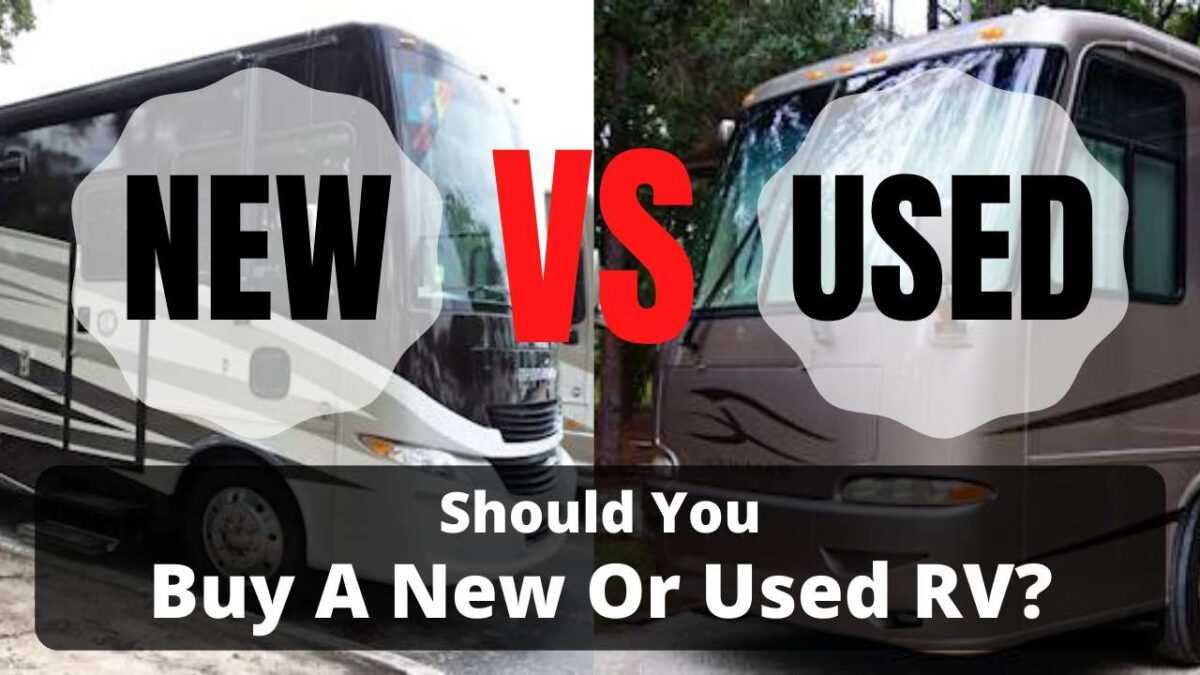
Many RVers struggle with the idea of whether they should purchase a new or used RV.

And the truth is that there is no answer to that dilemma that works for everyone.

A lot depends on what your personal priorities are in an RV. For instance, cost of the RV, warranty coverage, better amenities, and more can come into play.

And what is a high priority for some, is low on the list for someone else.

So let’s lay out the overall pros and cons of whether you should buy a new or used RV. And then you can decide what are the most important issues for your needs.

Watch my video about new vs used RVs

Table of Contents

Buy A New Or Used RV – Pros Of Buying New

  1. One of the best reasons for buying new is that you can know the history of the RV from the first day. There is no guessing about how it was maintained because you have cared for it from day one.
  2. You usually get a factory warranty that is very extensive. These kind of warranties often last about a year from the date of purchase. But they typically cover almost everything on the RV. And that is a huge comfort, especially if you are a new RVer just getting used to having a rig.
  3. Oftentimes new RVs have the very latest technology and features built into them. If that kind of thing is important to you, a new rig could be just what you need. And it can save a lot of money and time by having all the modern items built in from the factory instead of being added later.
  4. If you are allergic to pets and smoking, you can make sure that you don’t have to deal with those issues if you buy new.
  5. Also if you are a long-term RV buyer, you will get more years of solid service simply because it is new. If you buy used, you already have lost some of the best service life of that rig.

Buy A New Or Used RV – Cons of New RVs

  1. If you are questioning what you should buy, consider this – new RVs cost more. An RV will never be more expensive to buy than when it is new.
  2. It’s pretty much like buying a car, the first owner takes the big depreciation hit. So there is an inherent financial penalty for buying a new rig. Very often the depreciation loss can be 20% – 30% or even more.
  3. It may take you a year or more to get all of the bugs worked out of a new rig. It’s sad, but true. Quality control is not the best at many RV manufacturers these days. So you may have a long list of issues that will have to be fixed over the course of the first year of ownership. This requires a lot of patience to see it through.
  4. Higher insurance costs. Of course, the higher the cost of the rig, in most cases the higher your insurance costs will be.
  5. RV dealers can be difficult to work with. Not all RV dealers are solely sales driven without a lot of thought for the customer. But far too many of them are similar to the old proverbial used car dealer in their tactics. Many people find this to be a difficult and tedious process and want to avoid RV dealers altogether.
  6. Newer RVs often are not constructed as well as older RVs. This is especially true of rigs made before 2008, or before the economic crash. RVs built before then often were made to a higher standard at the factory. But in recent years, cheaper parts and materials are being used to lower production costs. This can result in a lower quality product all around.

The Pros Of Buying A Used RV

  1. Save money on overall RV cost and depreciation loss. This is probably one of the biggest reasons many RVers buy a used rig. In fact, the savings alone can make the choice for you. Very often, many thousands of dollars can be saved by choosing an RV that is just a couple of years old.
  2. Most of the bugs should be worked out by the first owner. As mentioned above, the first year of RV ownership is often spent fixing things. If you buy the RV after that warranty period, most likely many of the quality control issues have been repaired.
  3. The previous owner may have added some nice upgrades that you can use. Upgrades are great if they are useful, but they seldom are cost effective at the time of resale. So you may have some really nifty additional comforts built into the RV that doesn’t come as standard equipment.
  4. There are lots more used RVs than new RVs. That simple fact means that you will have plenty more rigs to choose from if you buy used.
  5. You can often buy a higher quality used rig for the same cost as a lower quality new RV. Depending on how far back you are willing to go, you may even get an RV that was top of the line.
  6. Of course, if the cost of RV replacement is less, then the cost of RV insurance will usually be less too. So used RVs tend to carry lower insurance costs as well.

The Cons Of Buying Used RVs

  1. Probably the main reason people don’t want to buy used is their fear that they may be buying a problem RV. They are worried that there may be unseen problems that will only be found after the sale. Of course, having a good RV inspection by a certified inspector can help ease those fears.
  2. There is no factory warranty anymore, so anything that goes wrong is a cost for the new owner. Again, this can be resolved by getting an aftermarket used RV warranty. But a good warranty will cost quite a bit of money too.
  3. The farther you go back into the past to buy an RV, the more dated it will be. The furnishings, the colors, the older technology will be what was standard whenever the RV was new. To bring the RV up to modern standards and appearance may cost quite a bit.
  4. All appliances and mechanical components wear out over time, even if they are well maintained. So if the RV is quite a bit older, you may be faced with a spate of replacements you hadn’t counted on. And even if that’s not the case, the usable life of these RV items is diminished. They won’t last as long as the same items in a new rig.

Conclusion

Lots of RVers buy new rigs and lots of others buy used instead. And both can be very happy with their purchase.

This is because ultimately, the satisfaction of the buyer is what determines whether the transaction was good or not.

If your priorities lead you to buy a newer RV, that’s fine. Enjoy it!

But if your priorities lead to the purchase of a used rig instead, there is nothing wrong with that either.

Hopefully, the pros and cons I listed above can help you to decide what is most important to you in the buying process.

Have safe and happy travels my friends!

The Top 10 RV Travel Safety And RV Road Trip Tips

Whatever type of RV you own, there is a need to practice RV travel safety. That’s because RVs usually weigh more than passenger vehicles. And that means there is more that can wrong fast when you are on the road.

And the bigger and more heavy the rig is, the more attention is needed to operate them safely.

So, with that in mind, here are my top ten tips for RV travel safety:

Watch my video about the top 10 tips for RV travel safety

Table of Contents

#1 – Carry Extra Oil And Coolant

Regardless of the type of RV that you have, it has an engine somewhere that propels it.

And that means that some kind of oil and coolant is needed for safe operation of that engine.

So if a problem develops on the road, you will be glad that you have some extra engine fluids on hand.

And if you do, it can help you get where you need to go to get help and the proper repairs.

#2 – Carry Traffic Cones For RV Travel Safety

If you have a breakdown on the side of the road, traffic cones are an essential safety item. And if you have the collapsible kind, they don’t really take up much room either.

By deploying them out in back of your rig, you are warning approaching drivers that a problem is ahead.

That means that they can begin to move over before reaching you, keeping both your rig and their vehicle safe. And of course, it makes the whole situation more safe for travelers as well.

Some prefer warning triangles instead. And that’s fine too. Just make sure that you have some kind of warning system with you for roadside breakdowns.

#3 – Tire Pressure Check

This is one of the most important safety checks you can make on your rig.

After all, your tires are what actually touches the road as you travel. And if you experience a blowout, it often is not a very good thing in an RV.

So regularly check the pressure in your RV tires and any other tires in use if you are towing.

Here is a link to an article I wrote on tire pressure safety.

It’s better to solve any tire problems before you get on the road than deal with them while traveling!

#4 – Have Roadside Assistance

These days there are some very good choices for roadside assistance for RVs.

The three companies usually used for RV travelers is AAA, Good Sam, and CoachNet.

Truthfully, any of these roadside assistance providers can do a great job for you. And you will be very glad to have them when a breakdown occurs.

So compare their features and what they cover first, and then make your choice.

The only really bad choice you can make is not having some form of roadside assistance at all.

#5 – Use A Departure Checklist For RV Travel Safety

A lot of problems happen on the road because someone forgot to do something before leaving.

And honestly, nobody can remember everything at all times. There is just too much to do to get an RV ready for travel.

So make a checklist of all of the items that you will need to accomplish while departing. And then carefully follow that departure checklist every single time before you leave.

#6 – Perform A Final Walk Around

Even if you have a reliable departure checklist, make sure to perform a final walk around anyway.

It’s amazing how something important can still be left untended even when using a checklist.

So your best defense against omitting something important is to carefully review the entire rig before you leave. If you have a towable RV, this means both the RV and the tow vehicle.

Most of the time, you won’t find a problem. But on those occasions where something was missed you will be glad you did the final walk around!

#7 – Make Good Use Of Rest Areas For RV Travel Safety

Driving an RV rig on the road can wear on you fast. There is a lot that you have to keep track of while on the road.

And it’s easy to become weary and lose your focus when you spend a lot of time behind the wheel. Especially when you don’t take a break!

So try to plan rest stops in your travel schedule to take a break and freshen up.

Maybe get out and take a walk, have a snack, and check over your rig before leaving again.

If you do, you will feel much better and be more alert while piloting your rig.

#8 – Maintain A Safe Driving Distance

We are all taught to maintain a safe distance from the vehicle in front while using our passenger vehicle. But that distance needs to increase even further when driving an RV.

There is usually a lot more weight and bulk in an RV as compared to a personal vehicle. So it takes much longer to bring that much weight to a stop.

And if you haven’t allowed enough room between your rig and the vehicle ahead of you, it can be trouble.

I highly recommend allowing much more room than you think necessary to be safe on the highway.

To accomplish this, I like to drive 5 – 10 MPH below the flow of traffic and well within the speed limit. By doing this, most vehicles will pass you on the left and go far ahead if they return to the right lane.

Whenever there has been a need for a sudden stop, this practice has always kept us safe on the road. Besides, RVing isn’t about hurrying and rushing around.

So drive safely!

#9 – Use Main Roads For RV Travel Safety

The larger your rig, the more important it becomes to stay on main roads. Getting off onto secondary roads can introduce all kinds of challenges.

For instance, many secondary and smaller roads have little to no paved shoulders on the road. This means that you have a much smaller margin for error when driving on them.

And traffic is much easier to negotiate on larger roads and highways too.

But you also have to consider that on smaller roads you could run into unwanted surprises as well. These could be low bridges, low-hanging limbs, or low-hanging wires.

None of these issues are usually found on main roads and highways. So it pays to keep your rig on main roads as much as you can.

#10 – Get Diesel Fuel At Truck Centers

If you have a motorhome or a tow vehicle that has a diesel engine, where you fuel up is important.

It may be tempting to pull into a regular fuel station to fill up. But if you have a larger rig, this is often not a good idea.

You may be able to get into the station, but getting out can be another thing altogether.

Instead, there are many large truck centers like Loves, Petro, T/A, etc. that are better choices.

That’s because they are usually located very close to a main highway with easy on and off ramps. And once inside, you usually have plenty of room to drive around safely without damaging your rig.

And if you use the diesel fuel discount card that I mentioned in this article, it will also save you money.

Conclusion

These 10 RV travel safety and road trip tips have worked very well for us. We use all of them on a regular basis.

And we can confidently say that these RV tips have saved us often in time, money, and much more.

So be sure to stay safe on the road with your rig by using the tips that I have shared with you!

Get My FREE Camping Guide

“The Top 5 Ways To Save Money On Campground Costs”

Get My Newsletter

Save on RV repairs

Get the best RV gear

Learn about RV life

RV tips and tricks

And get my free guide – The Top 5 Ways To Save Money On Campground Costs”