Covid RVs – Should You Buy An RV Made During The Pandemic?

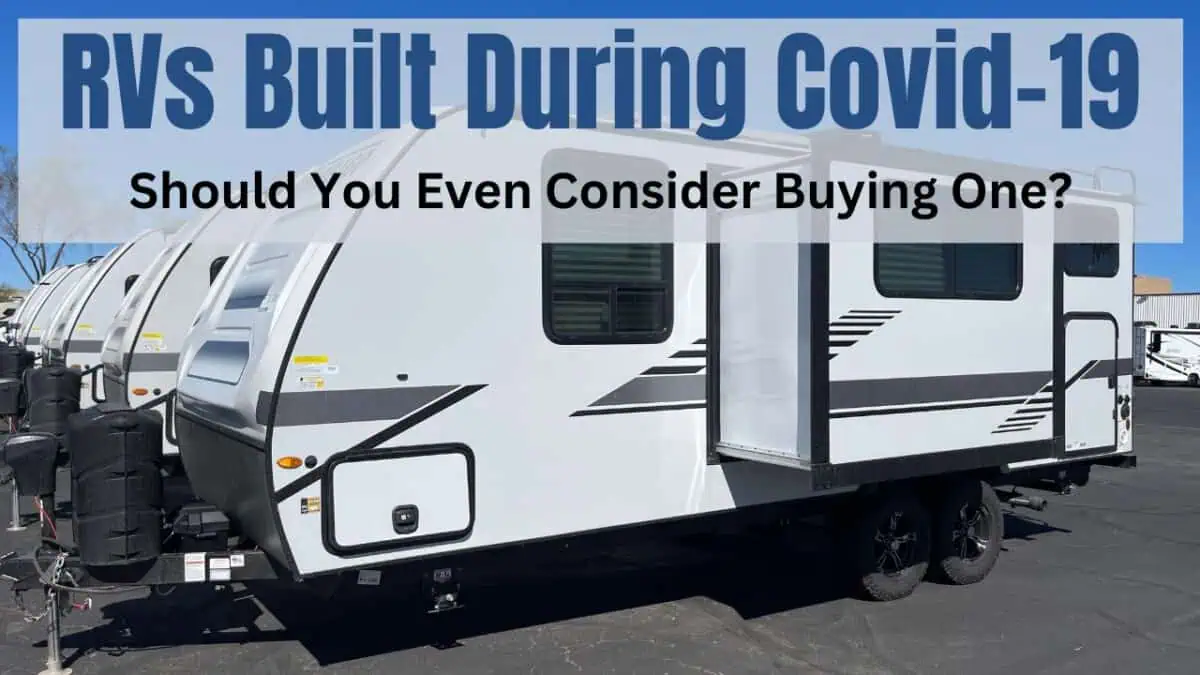
In this article I’ll be talking about Covid RVs. And whether or not you should buy an RV that was built during the Covid pandemic.

This is a fair question because Covid-19 affected so many of our lives at the time. And it also affected a lot of industries as well.

So what about RVs that were built in the Years 2020 to 2022? If you see them on the used RV market, should you even consider them at this point?

Well, there’s no question about the challenges that RV manufacturers faced during those years.

Watch my video on Covid built RVs

Table of Contents

Covid RVs – The Challenges RV Manufacturers Faced

In fact, the challenges were unprecedented in the RV industry’s history. And we have to remember that RVs are made by hand essentially.

So RV builders need to have a very stable and experienced workforce in place.

And that helps make sure that they get top quality results come out of their factory.

But the pandemic ravaged RV manufacturers and their workers. So there was very little worker stability during those years.

Also, supply chain issues hit the manufacturers hard. In fact, we still are dealing with some residue from supply chain issues even now.

Supply chains issues during Covid

So imagine what it was like for RV manufacturers during that time. It was a completely abnormal situation for RV manufacturing.

Unprecedented Demand For RVs During The Covid Years

And while all this is going on, RV dealers are placing more orders for RVs than ever before in history.

That’s because they were having people come in and want to buy RVs in record levels.

Yes, people had figured out that they could socially distance and have a little fun at the same time in an RV.

RV sales went through the roof in the pandemic years

So dealers just started ordering RVs like there was no tomorrow. In order to meet the demand from the buying public.

As a result, RV manufacturers clearly dialed back some of their quality control procedures.

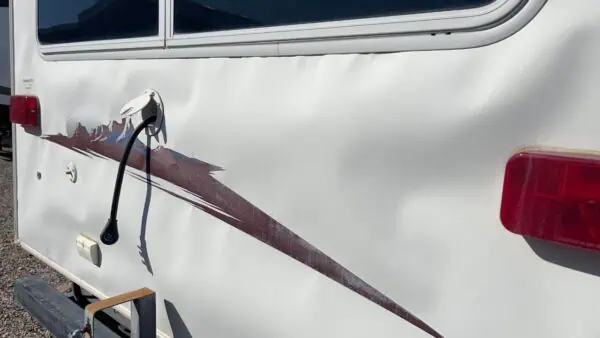
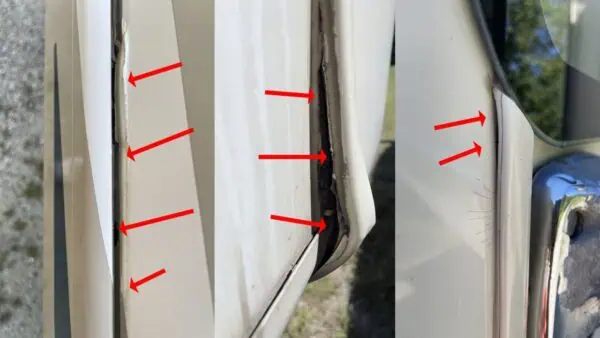
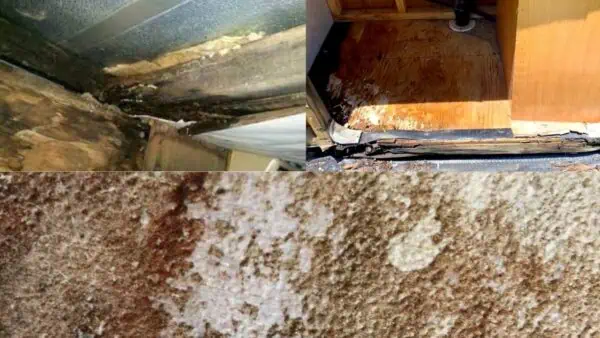
And this resulted in lots of problem RVs going out from the factory. And not being repaired before they got to the RV dealer.

Covid RVs – What About RV Dealers?

Now once the dealers received these RVs, the situation did not improve much.

Because many dealers did very little to solve those problems. And especially the big box dealers, or the nationwide chains.

Lots of RVs were sold with problems that needed attention

All they were focused on was just sales to consumers while they had this demand.

And making sure RVs were in good shape, well that was pushed way down the list of priorities.

So all of this resulted in lots of RV buyers during those years getting very poor new RVs. With subpar quality.

Why Are So Many Covid RVs On The Used Market?

OK, now here we are a little bit farther down the line. And many of those RVers are selling their RVs now.

Of course, they could be selling for a lot of reasons. And some of them very good.

Many buyers of Covid RVs are selling now

But honestly, many are actually leaving RVing or the RV lifestyle altogether.

And that’s because the experience didn’t turn out to be what they thought it was going to be.

Should You Buy Covid Built RVs Then?

So the question is now, should you buy their RV at this point? Should you buy one that was built in the Years 2020 to 2022?

Well, if you want me to make a blanket statement of “yes or no” about that question, you’re probably going to be disappointed.

That’s because there’s not much about RVing that blanket statements cover well.

The truth is that there were some very good RVs that were built during the pandemic years. Not all of them were RVs that had severe problems.

However let me say this. If you choose to buy an RV from those years on the used RV market, I recommend to proceed very carefully. And beware!

That’s because not all of the problems that left the factory were adequately resolved.

Not all of them were fixed by the dealers under warranty the way they should have.

Who Bought Many Of The New RVs Sold During The Pandemic?

And then on top of that, many of those RVs were bought initially by novice RVers. People that really didn’t know much about what they were doing.

And unfortunately, in many cases they didn’t really want to know much about how to maintain their RV either.

They were just focused on getting out there and having fun in it while socially distancing.

So the RVs they have for sale have often not been cared for as well as they should have been.

How Many RV Brands Were Affected By Covid?

Now here’s another important thing to understand. It wasn’t just the lower quality brands that were affected by all of these Covid-related issues.

No, even the better RV brands faced challenges to turn out a quality product.

Even brands that have been known for years to turn out very high quality RVs. They were not immune to Covid’s effects either.

So when you consider an RV from the Covid pandemic years I recommend to proceed very slowly. And very carefully.

So here’s some things that I think you need to do to protect yourself when you buy.

Protect Yourself By Asking For Service Records

First of all, I recommend that you ask for the service records for that RV. I mean it’s only a few years old now.

So there should be service and maintenance records available somewhere on that RV. And especially so if it was a one owner RV.

Ask for service and maintenance records on the RV

Then take those service records and look them over carefully. See what kind of problems were fixed and how serious they were.

And if you know a little bit about RVs, then you can check and make sure that those things were fixed to your satisfaction.

But what if you don’t know much about RVs? Then I recommend you get someone who does, and have them look at it for you.

Have them verify that the problems were fixed and they were fixed properly.

If there are no service or maintenance records, then you have to lean heavily on the next point I cover.

An RV Inspection Is Your Friend With Covid RVs

OK, that’s number one. Now number two is something you should do before you buy any RV. But especially one from the Covid years.

And that is to get a an NRVIA certified RV inspector to go through that RV for you.

Always get an RV inspection before you buy any RV

In fact, that is your best insurance against having hidden problems that you don’t know about.

Of course, getting a certified RV inspector is not always possible. And I have to admit that.

It’s because in some cases there isn’t an inspector close by. Or in other cases, the inspectors are so busy that they may not have time to fit you in.

What If You Can’t Get An RV Inspector To Help You?

Well, if that is the case, then I have created a guidebook that can be helpful for you.
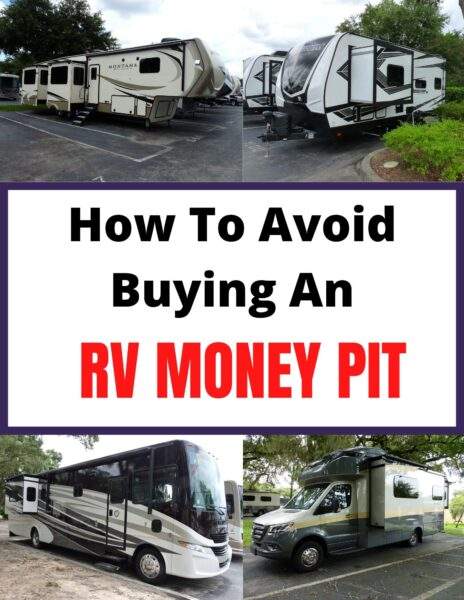
Get my used RV buying guidebook

It will show you how to perform a personal RV inspection on an RV yourself.

Now let me emphasize that this is not going to be anywhere near the depth and thoroughness that an NRVIA certified inspector is going to do.

But it will be far better than just taking the word of the seller that everything is in good shape.

Or just walking around and seeing what you can see to the untrained eye.

How Does My Guidebook Help You?

Yes, this guidebook will explain what you need to test and inspect on an RV. And none of the inspections are hard or difficult to do.

Also, it’ll give you a checklist too. This will make sure that you go down the list and check each one of the things listed.

That way you verify they’re working correctly and not miss anything in the process.

So if you think my guidebook and checklist could be helpful, just click on this link to download it.

What To Do If You Find problems With An RV

OK, suppose you find problems with an RV. Whether it’s through a professional inspection or your own personal inspection.

Then make sure you get those problems fixed before you take ownership of the RV.

Especially if you’re buying it from an RV dealer. Don’t buy that RV and take it off the lot until the problems are fixed properly.

And you have verified that it’s in really workable shape. A functional RV that is ready for RV travel and camping.

Now what if it’s a private owner, and you find problems? Then you can negotiate with them on the issues you found in the inspection.

And they can fix the problems before you buy it and take possession. Or they can give you some money off on the price so that you can do it afterward.

One Final Important Suggestion For Your Protection

Now let me make one final suggestion here for your protection against RV repairs.

Because there were so many problems in RVs during those years. And sometimes in areas that it’s really hard to find.

So you may want to seriously consider getting an extended warranty for that RV.

To help protect you against future issues that may come up later. Because the factory warranty will probably have expired by that point.

So getting an extended warranty gives you added protection. For problems that come up down the line that couldn’t have been found during the inspections.

And if you have a warranty, you’re not going to have this huge repair bill to solve them. Or at least a bill that you will solely be responsible for paying.

So I do recommend considering an extended warranty. Especially when buying Covid RVs.

Therefore I always recommend Wholesale Warranties for a quality extended warranty.

That’s because they’re a trustworthy company in this area. And they have a lot of very good positive reviews from online buyers that you can look over.

In addition, many in the fulltime RVing community have used them for their RVs. Because it helps them manage their RV repair risks and costs.

Now Wholesale Warranties doesn’t just sell you their warranty either. They find the right warranty for you at the right price.

Because they are a broker that works with several warranty companies. And they can help you find the right warranty for your needs.

Conclusion

OK, now those are the suggestions that I feel would help you when buying Covid RVs.

It will help make sure that you get a good RV even if it was built during the Covid years.

So we come back to this question then. Should you even consider a Covid built or pandemic built RV?

Well that’s up to you to decide. But if you follow the guidelines that I gave you here, you will be way ahead of most other used RV buyers.

And most likely you are going to be able to find and buy a good RV from those years.

One that will reward you with many years of good service and happy RV memories.

Have safe and happy travels my friends!
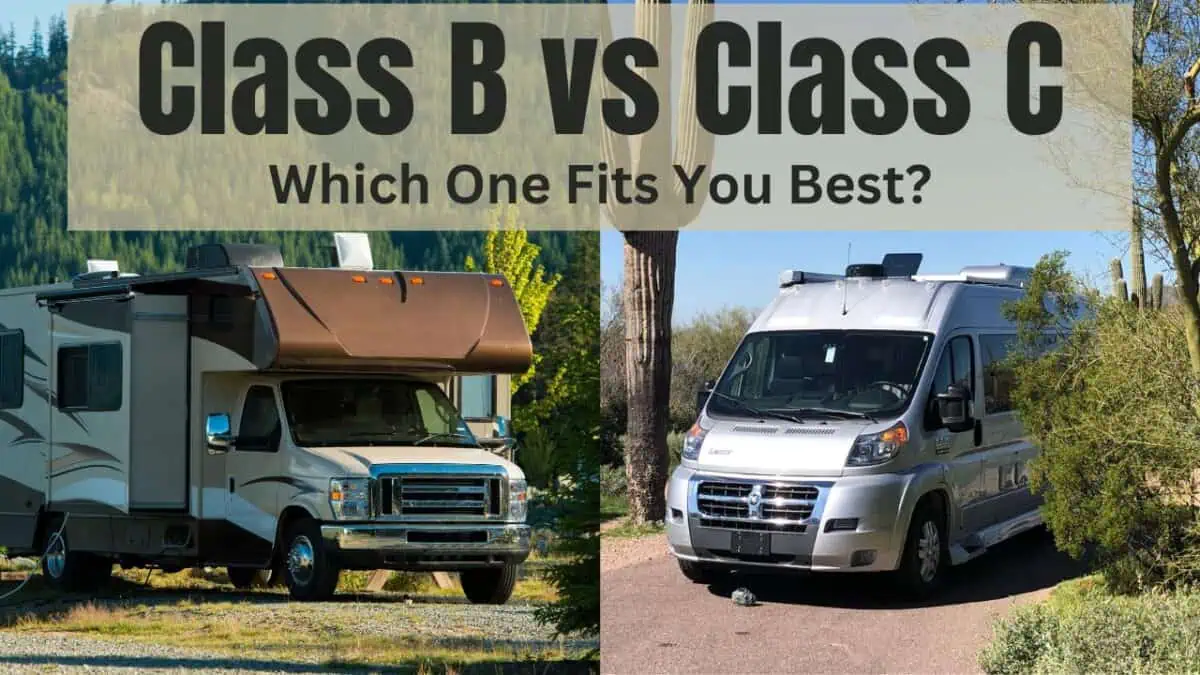
Class B vs Class C RVs – The Pros And Cons Of Either Choice

This article is about Class B vs Class C RVs. And the pros and cons of choosing either one of them.

Of course, both of these kinds of RVs are very good for people who don’t want a big RV.

They just don’t want an RV the size of a class A. They want something smaller and more nimble instead. And both of these kinds of RVs will fit that bill.

But there are pros and cons for choosing either a Class B or Class C RV. So let’s go ahead and get started on covering them now.

Watch my video comparing Class Bvs Class C RVs

Table of Contents

Class B vs Class C – Pro #1

And let’s start with the class B pros. The number one pro of a Class B is that is so much easier to drive than many other RVs.

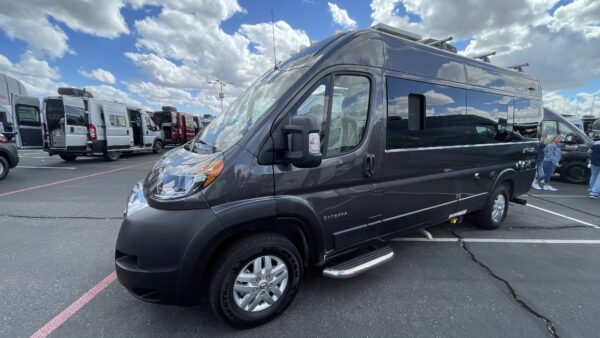
A typical Class B Campervan

(Here is a link to one of the largest manufacturer of Class B RVs – Winnebago )

In fact, if you’ve ever driven a passenger van of some type, then you’re probably going to feel pretty much at home in a Class B RV.

It’s more like driving a car. And that is really good for those that are new to RVing in general.

And it’s also good for those that are a little intimidated about driving the bigger RVs. So that’s a real pro for many to consider.

Pro #2 – What About Fuel Mileage?

The second pro is better fuel mileage. Especially when compared to other RVs.

In fact, many class B RV owners report about 18 to 25 miles per gallon in their RV travels.

Now of course a lot depends on how you’re driving it and the size of the RV itself. Also whether it’s mostly highway or around town driving.

But generally speaking, somewhere between 18 and 25 miles per gallon is great. So much better than most larger RVs out there.

Pro #3 For Class B Camper Vans

Number three on the pro list is that you usually don’t need any kind of vehicle to take along with you on your RV trips.

And that’s because the class B also drives around town very easily. It can fit in most parking spaces too.

So in many cases you don’t need an extra vehicle for running errands around town. And that’s a big pro!

Class B vs Class C – Pro #4

The next pro is how easy it is to maintain on the outside of the RV.

Especially since it’s a passenger van that an RV builder has converted to be an RV.

So it has a metal exterior that came from the auto manufacturer. Without joints and seams that need constant maintenance.

And that means that the roof and the outside of the van is so much easier to maintain.

It’s just so much easier to prevent any kind of water leaks than a regular RV might be.

Pro #5 – This Is A Big One!

Now next on the pro list is that it fits in almost any RV campsite.

And that means that you shouldn’t have any problem getting some kind of reservation at most RV campgrounds.

Class B RVs fit easily in most campsites

Also, Class B RVs are really great too for older campgrounds. For those that don’t have really big campsites.

And they work especially well for national parks and state parks too.

The Last Class B Pro – One You May Not Have Thought About

OK, the last pro for the class B in this article is the ability to stealth camp in it. And you might wonder what “stealth camping” means anyway?

Well let’s suppose that you are an RVer that doesn’t like to make a lot of reservations.

You like to be able to choose where to stay overnight at the last minute. And go where you want to go.

Well, the problem with that is that you may not be able to get a last minute campground reservation.

So what a class B RV allows you to do is camp in town somewhere instead.

Perhaps on a well-lighted street. Or in a parking lot. You can spend overnight there and nobody would even know that you’re camping there.

That’s because the van looks from the outside just like a passenger van to many people.

And that kind of overnight camping is called stealth camping. It’s something that a lot of people like to do with their Class B RV.

Class B vs Class C – Class B Con #1

OK now let’s move on to the cons of the Class B RV. And the number one con is how tight the living area is.

Yes the RV is usually only about 19 to 25 feet in length at the most. And very often there’s no slide rooms either.

So it’s a very tight living area. And you need to really go through a Class B and experience that for yourself.

Very tight living spa
Very tight living spaces

You need to decide if that’s going to be enough living space for you or not.

And it’s often a con for many RV buyers. Now the second con is about when you leave your campsite.

Con #2 – What About Day Trips?

Let’s say you’re going to be making a trip for errands or a day trip in your RV.

Well you’re going to have to break camp every time that you leave and go somewhere in a Class B.

And that means you’ve got to unhook your sewer, water and electric connections before you leave.

Then when you come back, you have to re-hook it all up again. And this goes on every single time you go somewhere in your RV.

Of course, some people don’t find this to be a big issue. But others find it very irritating. So it’s something to consider before buying a Class B RV.

Class B Con #3 – What About Storage?

And now the third con is that there’s very little storage space inside and outside of the RV.

So if you buy a Class B van you will often need to get used to a minimalist lifestyle.

Now for many that’s actually a pro for them because that’s what they want to do. They want to simplify their life with the RVing experience.

But not being able to store many of the things you really want to carry with you could be a con. So it’s important to consider that.

Con #4 – This Is A Big One For A Lot Of People!

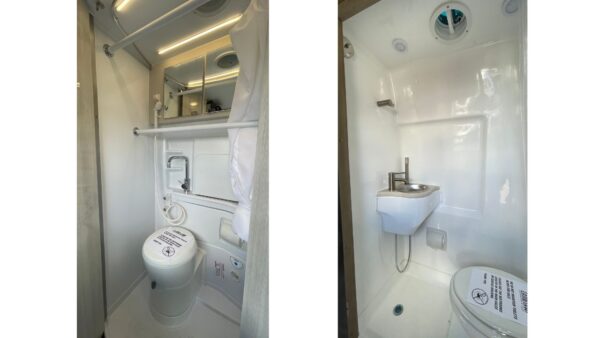
OK, the next con is that the toilet and the shower are often combined into one.

It’s some thing called a wet bath, and it’s very cramped for many people.


Typical wet baths
Typical wet baths

And the larger you are, the more difficult it will be to adjust to this Class B feature. And this can certainly be a con for many.

Class B vs Class C – Class B Con #5 – Tank Sizes

The next con is that Class B RVs often have very small holding and waste tanks.

And that can shorten the time that you can spend boondocking in rural areas.

That’s because the fresh water tank will empty quicker than bigger RVs.

And the waste tanks will fill up faster as well. This necessitates a trip somewhere to get more fresh water and to dump your waste too.

Of course, it’s mainly just an inconvenience, but it’s something to consider if you like to boondock a lot.

Con #6 – Cost

Now the last con for a Class B RV is that it often costs more than class C RVs.

In fact, the Class B RV costs more per square foot than any other RV out there.

And that’s because they have to take all this technology and put it in such a small area.

Also it’s because the RV builder didn’t make the outside shell of the RV.

Instead, they had to take what the auto builder made and then converted it into an RV.

And that requires more effort and more expense to be able to do that.

All right, so those are the pros and the cons of the Class B. Now let’s move on to the class C RV instead.

Class C Pro #1

And the number one pro for the class C is having a lot more living area than the class B RV.

An example of a Class C RV

(Here is a link to one of the largest manufacturer of Class C RVs – Winnebago )

This is often so because you get slide rooms with many class C RVs. And that opens up the living area consiberably.

Also the length can be much longer too, up to 35 feet. And the interiors are usually taller too. They just have more headroom in most cases.

A big pro is a lot more living space

So for you taller folks, you’ll find it a lot more comfortable in a class C RV.

Class B vs Class C – Class C Pro #2

Now the next pro is that you can accommodate more people in a class C RV. Especially for overnight camping.

This is because the Class C is just made that way. It’s kind of made for families in many cases. So it will sleep a lot more people.

You can usually have a lot more sleeping options

The class B is generally going to be comfortable for one to two people at a time.

But beyond that, it gets really tight. However, the class C RV can usually handle a lot more people for sleeping arrangements.

Pro #3 – Storage

OK, the third pro is there is usually much more storage space inside and outside in the Class C.

So if you like to carry a lot of other things with you, this could be very important for you.

Class C Pro #4 Is About The Bathroom

The next pro is that you will have a more normal bathroom. I’m talking about there being an actual sink, toilet and shower that are separate from one another.

A Class C bathroom
A Class C bathroom

Also you have a little walk around space in the bathroom too. But don’t get the impression that the bathroom is very big, because it’s not in most Class C’s.

But it’s almost certainly going to be much bigger than the average class B RV wet bath.

Pro #5 – What About Boondocking?

The next pro for the Class C RV is having larger holding tanks. Yes now we’re getting into where your water and waste tanks are actually of some size.

And they can be really usable for boondocking if you like to do that a lot.

Class C Pro #6 – Cost

OK, the last pro is that Class C RVs usually cost less than a class B.

One reason is that the Class C has been made for years and years. So the technology is very established.

They know what they’re doing with it and it doesn’t cost as much to manufacture. And that lower cost is a big attraction to many RV buyers.

Class B vs Class C – Class C Con #1

Now let’s move into the cons of the Class C RV. And number one is that they usually have worse fuel mileage than the class B.

In fact, a lot of Class C owners report somewhere between 9 and 12 miles per gallon.

Of course, that’s still better than many class A’s out there. But it’s worse than the average class B van.

Con #2 – Traveling

Now the second con For Class C RVs is that you may indeed require a second vehicle to carry with you on your RV travels.

That’s because most class C’s are not as easy to maneuver around town.

They’re often longer, so they won’t fit in parking spaces as easy as a Class B van will.

So very often you’ve got to take a second vehicle to be able to maneuver well. Especially when running errands around town and day trips.

Class C Con #3 – Ride And Handling

The third con is that very often the cabin is going to be more noisy when you’re driving in it.

One reason for that is that the larger engine will often be more more noisy.

Also the ride of a Class C usually is a little rougher than the class B RV.

Remember that Class B RVs usually ride like a passenger vehicle in many cases.

Well, Class C’s are a little bit rougher than that. Sometimes quite a bit rougher.

So you definitely want to do some test rides first before you decide on your purchase.

Class B vs Class C – Class C Con #4

OK, the next con is that in many cases the cabin of a Class C is lower to access.

That means that you have to go down into it to get into the seats. So that means that those seats on the front are not usable for anything other than driving.

An example of a Class C cockpit

In fact, the whole cabin area is wasted space for actually living in. Whereas in the class B you can often just turn those chairs around.

And when you do, you have a seating area for use in the house part of the RV too.

Con #5 – Driving

Now the next con is that a Class C RV is not as easy to drive around as the class B.

Yes, it’s not as maneuverable or as as nimble in daily traffic situations.

Of course, it’s often much better than many class A RVs. But the nod for being able to maneuver an RV definitely goes to the class B over the C.

The Last Con For Class C RVs

Now the final con for a class C is there is generally more maintenance involved overall.

And when I say maintenance, I’m talking about more tires and bigger tires.

Also the RV roof is going to be a real RV roof with joints and seams. And they will have to be sealed and inspected from time to time.

There is a lot more I could mention in the area of RV maintenance too. But I think you see the point.

Generally speaking, there’s more maintenance that’s going to go on with a Class C RV. Not a ton more, but more.

All right, those are my list of pros and cons for both the class B and the class C RV.

Conclusion

At this point it’s probably a good idea to go back through this article again. Because I have covered a lot of pros and cons here.

So write down the pros and cons and then try to find the pros that fit you best. The ones that seem to fit your style of RV travel and camping best.

Also review the cons. And take note of the ones that you really don’t want to have to deal with.

Then mark the pros and cons that are the ones that are really more important to you.

And if you do that, usually you’ll begin to see what will work best for you. And you can make a clear choice between either the class B or the class C RV.

That way you can choose the RV type that works best for you overall.

Have safe and happy RV travels my friends!

Azdel vs Luan – The Surprising Truth In This Controversy

This article is going to be talking about Azdel vs Luan in RV construction.

But first, I made a video about how RVs are made. And you can watch that video here.

That video helps to lay a basis or foundation for what we’re going to cover in this article.

That’s because it explained how that many RV manufacturers are using laminated wall building methods for their RVs these days.

Watch my video on Azdel vs Luan

Table of Contents

Azdel vs Luan – How Are RV Walls Made?

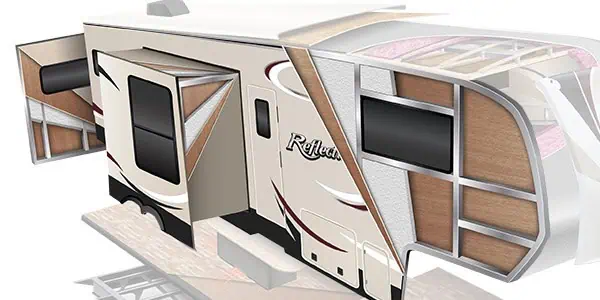
So let me show you what I mean by “laminated walls” in RVs. And as you can see in the following image, there’s a fiberglass panel on the outside of the RV.

An example of laminated RV walls

Then it has a substrate behind it that gives it rigidity. After that, there’s the frame for the wall.

And in between the frame supports is insulation. Finally on the other side of the frame is the interior wall that you see inside the RV.

Now all of those layers are glued together first. And then the whole unit is run through a pinch roller or it’s vacuum bonded together.

So what comes out of that process is one big solid RV wall. There’s no sections to it.

What Is Luan Anyway?

Now for years, the substrate that supports the fiberglass outside panel has been made out of Luan.

So what is Luan anyway? Well, you’ve probably heard the term but just didn’t know what it actually meant.

And the explanation is that Luan is just simply an eighth to a quarter inch plywood board.

Azdel vs Luan - an example of luan plywood panels
An example of Luan plywood panels

It’s very strong but also very light. And therefore it’s a very good RV construction material that has been used for years.

However, it has one big drawback. And that is that if water gets into an RV’s wall, then Luan can begin to break apart.

In fact, it can delaminate away from that exterior wall altogether. And it can even rot inside the wall if the water intrusion goes on long enough.

Now how do you spot delamination on an RV? Well just go down to the end of an RV and look back at the sidewall.

An example of extreme delamination on an RV

If you see some blisters or areas where the fiberglass seems to poke out away from the wall, that’s delamination.

And that’s what we really want to avoid!

Azdel vs Luan – Using Azdel In RV Construction

Now since 2006 Azdel has begun to be used in the industry in many cases instead of Luan.

Especially on the RV’s outside walls to prevent delamination. Of course, Azdel started out being used just sparingly by RV manufacturers.

But it’s progressively being used by more and more manufacturers in the construction of RV walls.

And the question is, well then what is Azdel? The answer is that it is actually a composite sheet of material that’s man-made.

And it is impervious to water or humidity. In fact, you can take Azdel and just submerge it in water for months.

Azdel vs Luan - this is how Azdel is used in RV wall construction
This is how Azdel is used in RV wall construction

And if you did it would look just fine when it comes out of the water. That’s because it simply can’t rot!

So does that mean that Azdel solves all RV water intrusion issues then?

Azdel vs Luan – Does Azdel Resolve RV Water Leak Problems?

Well, I often see lots of comments on the internet from RV buyers that think that’s the case.

And so they refuse to buy any RV that has Luan in the RV’s walls. Because they feel that it’s vastly inferior.

And they are concerned that they’re setting themselves up for water problems if Luan is used in the RV walls.

In fact, they may like everything else about an RV. And the manufacturer may be very well known as a quality manufacturer.

But they’re still not going to buy that RV if it has Luan in the walls. So is that a reasonable stance to take?

Well, the reason for this controversy is that RV marketing people do a great job at marketing.

And marketing people want to make you see all the good things about something. But not necessarily any of the bad things.

Or they will tell you all the good things, but don’t give you the whole story. Or all the details about the other things that apply as well.

So if you listen to RV marketing people. it sounds like Azdel in RV walls is the perfect solution for RV water problems.

However let me make this point very clear. Azdel in exterior RV walls alone will not make your RV waterproof.

And it will not solve all of your water intrusion issues. Why is that?

How Extensive Is Azdel Being Used In RV Construction?

Because let’s just suppose that an RV has Azdel in the sidewalls. That sounds like water problems are solved for that RV, right?

Well, there is something that many RV buyers don’t know. And that is that the vast majority of RV builders still use a lot of wood elsewhere in the RV.

You can find it in the roof, the ceilings, the floors, and in the interior walls of the RV.

So if water gets in, it’s true that when it goes down the RV walls it may not delaminate that substrate from the fiberglass panel like Luan would.

But major damage will still happen in that RV wherever wood is being used.

You see, water doesn’t care if Azdel is in your RV or not. No, water just follows gravity and works it’s way down the inside of an RV.

And most RV leaks actually begin from the roof area. Secondly, followed by windows.

Azdel vs Luan – Delamination Is Not The Main Issue Here

Now suppose you have a water leak that starts to come in from the roof. And the water follows gravity from there.

Well first of all, it can and often does ruin the roof supports in the RV’s ceiling.

Then it can go down the sidewalls. And Azdel will probably help to prevent delamination there.

But then water continues on its way down and often ruins the floor as well as the RV’s interior walls.

So the real issue that we have here in RVs is not just delamination. No, the real issue here is water intrusion.

And the need for RV joint and seam maintenance and care on the part of RV owners.

Are The Marketing Claims Being Made Really Helpful?

Now this is nothing that RV marketing people are going to tell you. They’re not going to talk to you about maintaining your RV.

Or that even if the RV has Azdel in the sidewalls, you’ve got to watch the RV’s joints and seams. And keep them covered with the proper sealant.

Oh no, marketing people are not going to inform you of that. They are just going to try to sell Azdel as a water intrusion cure.

But here is the honest truth. There have been many thousands of very good RVs made in decades gone by using Luan and wood construction.

And many of them are still doing just fine. As long as the joints, the seams, and the windows are sealed with proper sealant.

So what if you plan on maintaining your RV? In other words, you’re going to buy an RV and not be one of those people who just doesn’t ever do anything to it.

Instead you’re going to actually try to maintain it and stay up with joint and seam maintenance.

Maintain your RV joints and seams to combat water intrusion

Well if that’s the case, then Luan will work just fine in your RV’s side walls. Or anywhere else in the RV. It’ll be just fine!

What Happens When You Don’t Maintain Your RV’s Joints And Seams

But now what if you don’t plan on maintaining your RV? You’re just going to go on camping trips and run around with it? And that’s the end of your involvement with that RV?

Well then, you could have a lot worse problems than just delamination.

Remember how water follows gravity? So you could be replacing roof substrates.

Azdel vs Luan - Water damage on an RV's ceiling
Water damage on an RV’s ceiling

Or you could be replacing flooring or interior walls even if your RV has Azdel in the outer walls.

And all of that is very expensive! Yes your exterior walls could still be laminated just fine due to Azdel.

But all of this other damage can be taking place inside your RV because of water intrusion.

And those things can happen if you are not going to care for the joints and the seams of your RV.

Azdel vs Luan – Am I A Believer In Azdel Or Not?

Now let me say this for all of the Azdel fans out there. I personally believe in Azdel. I am a supporter of the use of Azdel in RV walls.

Yes, I want to see more products like Azdel being used throughout RVs. In the roof, the flooring, and the RV’s interior walls too.

In other words, more inorganic products being used in RV construction can only be a good thing.

However, what about choosing an RV these days solely on whether it has Azdel in the side walls?

Well, it doesn’t match the reality of what is needed to fully combat RV water leaks and damage.

Conclusion

So don’t just buy into the advertising ploys of RV marketing people.

Instead, commit to maintaining your RV. Commit to doing the work that needs to be done to keep water out of your RV.

If you do, your RV will last for years. And it’ll give you great service during the time that you own it.

Whether it has Azdel or Luan in the side walls or not!

Have safe and happy RV travels!

Get My FREE Camping Guide

“The Top 5 Ways To Save Money On Campground Costs”

Get My Newsletter

Save on RV repairs

Get the best RV gear

Learn about RV life

RV tips and tricks

And get my free guide – The Top 5 Ways To Save Money On Campground Costs”