4 Season RVs – What Are They And Who Makes Them?

This article is going to be about 4 season RVs. And what it means when an RV is 4 season capable.

Of course, it’s common to find RVs that are labeled just that way, as “four season ready”. But what does that term even mean?

Watch my video on 4 season RVs

Well before I cover what it means, let me tell you what it doesn’t mean first.

What The Term “4 Season RV” Doesn’t Mean

It doesn’t mean that particular RV can withstand pretty much anything nature has to throw at it. Or the most extreme temperatures possible.

Actually four season RV is mainly just a marketing term. And these days RV marketing is kind of like the wild west, in that almost anything goes.

The 4 season RV sticker often mainly just for marketing RVs

So there’s lots of hype out there that’s often not very reliable. Or that exaggerates the truth.

And truthfully, there’s no set standard for what 4 season RVs actually are in the industry.

So because of that, some RV brands just claim almost anything in this area.

But here’s the truth. RVs are not made to handle the extremes of summer and winter temperatures, no matter where you go.

Are RVs Insulated Like Houses?

No, they’re not made for extreme weather like houses or regular homes are.

For instance, RV walls are thinner. And there’s less insulation in general than you would find throughout a stationary home.

Comparing homes with RVs

Also, a house has a solid foundation. So there’s no air traveling up underneath it like you find in an RV.

And we could go on and on about the differences between RVs and home construction.

But then we get back to the question, what does “4 season RV” actually mean? Especially in real world application in the RV industry.

What Does “4 Season RVs” Actually Mean?

Well, here’s what I think. To me, it should mean it should mean that 4 season RVs can simply handle more extreme conditions better than most other RVs.

Now of course, as long as you have a good air conditioner in your RV, summer should not be nearly the kind of challenge that winter is.

Because winter camping can not only be uncomfortable in an RV. Meaning that you just find it difficult to stay warm.

No, actually there is more to consider when that happens. More serious consequences that can happen in extreme cold weather.

And the truth is that when temperatures drop below freezing for an extended period, it can also damage the plumbing inside your RV.

This is not just about comfort then. It also can mean that real damage to your RV can take place.

So what should you look for then in four season RVs? Well let’s talk about that now.

Feature #1 Found In 4 Season RVs

And the first thing that I encourage you to look for in a true four season RV is a better “R factor” of insulation.

Now having said that, I encourage you to be careful in this area. So beware of some of the claims made by RV factories and manufacturers.

Because there are some that just put a thin piece of material in the walls, and claim that the R factor has been increased dramatically.

As if there has been a significant increase in insulation by using that “magic” material. But it’s just not true, it’s bogus!

There is no such magic material in existence. Where taking a thin sheet of it transforms the R factor into much better insulation.

And what I encourage you to do is not only find out what the R factor is in the walls.

But also check on the insulation they have used in the ceilings, floors, and slides as well.

And ask them what makes this RV so much better insulated? How have you increased the insulation’s R factor in these places?

Then listen for the answer. And if they tell you about some magic thin sheet of material, you will know that this is not a true four season RV.

In other words, what you want to know is what makes this RV better insulated?

And then listen for an answer that actually makes sense. One that is reasonable.

Feature #2 For Four Season Capability

Now here’s the second point for determining whether an RV is four season or not.

And that is, does it have double pane windows? This is an important consideration because most RVs have single pane windows.

Double pane windows are important for true 4 season capability

RV manufacturers put single pane windows in most RVs just to keep the price as low as possible.

But what happens when a window with two panes that has a pocket of air sealed in between is used? Well, that’s a much better insulated window!

Now if you spend time in RVs with single pane windows, you will learn why they need to be upgraded. Especially for use in all four seasons.

Because with single pane windows, you can easily have a temperature transfer from inside the RV out, and from outside the RV in.

So double pane windows are very good to have to keep the temperature more constant in an RV.

Also as a side point, they help reduce condensation on RV windows as well.

Feature #3 That Helps In Extreme Cold Weather

OK, the third point to consider is to look for sealed underbellies in 4 season RVs.

In other words, you shouldn’t be able to go under that RV and see exposed pipes.

You know, water and plumbing pipes that are exposed to outside weather. That’s really not good!

The last thing you want in extreme cold weather is frozen pipes in your RV

Instead, you want a sealed and insulated RV underbelly. But a true 4 season RV will go one step further.

It will often have a dedicated heating vent for the underbelly. One that allows hot air from the furnace to get down into the underbelly.

And that will help keep all the plumbing in that area from freezing in very cold weather.

Feature #4 – What About The RV Waste And Water Tanks?

Now our next point to consider for four season RVs has to do with the fresh and wastewater tanks.

Because you really don’t want these to freeze in extreme weather. They will be a mess if that happens, and it will be expensive to repair.

So RV manufacturers often put tank heaters on the waste and water tanks to keep them warm.

Then all you have to do is just press a button inside the RV to turn those heaters on. It’s a simple feature that really helps in extreme cold!

Feature #5 In Four Season RVs

OK, here’s the last point we want to talk about to identify a true four season RV.

And that is to look for both a higher output furnace and air conditioner.

That means that they shouldn’t just be the normal kind of units that are put in most RVs.

Instead, you want a higher output to keep things comfortable inside the RV. And by the way, ducted systems are the best for overall comfort.

OK, so those are the things that you should look for when you’re looking for true 4 season RVs.

Another Important Idea For Stationary Camping In Cold Weather

Now let me give you another point though to consider. Especially if it’s wintertime and you’re camping in one place for a while.

In that case, I encourage you to consider putting skirting around your RV too.

Skirting can be a huge help in extreme weather

And skirting is simply a piece of material that goes from the bottom of the RV all the way down to the ground.

It just seals off that bottom area so no wind is passing through under the RV. And believe me, it will make a real difference inside the RV!

Now I’ve made a video about some four season brands of travel trailers.

And these are RV brands and models that I can recommend for your consideration.

Just click on the image below to watch that video now.

Watch my video on 4 season travel trailers

Or you can read this article about it instead.

How To Protect Your Water Source In Extreme Cold

Now here’s one last tip that I want to give you even if your RV is a four season RV.

And that is you need to protect the water source that comes into that RV during sub-freezing temperatures.

Many people handle that by wrapping the hose outside with heat tape. Or they use a specially designed heated water hose like you see at this link.

And of course, that can work fine. But you may not want to go to that kind of effort if you are rarely in extreme weather with your RV.

So in that case, there is a simple thing you can do when sub-freezing temperatures happen.

You can fill your fresh water tank first. Then disconnect the water hose that feeds water to your RV altogether.

You can store it in the meantime until you need to put more water in the fresh water tank.

It’s a strategy you can use at times just to be safe in really cold weather.

And to prevent any ice from coming into your RV through a frozen water hose.

Conclusion

Well I hope that now that you know more about what makes an RV a true 4 season RV.

And knowing this information means that you don’t have to just trust the salesperson on the subject.

Or even an RV factory’s brochure, or a sticker on the outside of the RV.

Instead, hopefully now you can verify for yourself whether it really is a four season RV or not.

Have safe and happy RV travels!
Buying An RV Out Of State – Should You Do It?

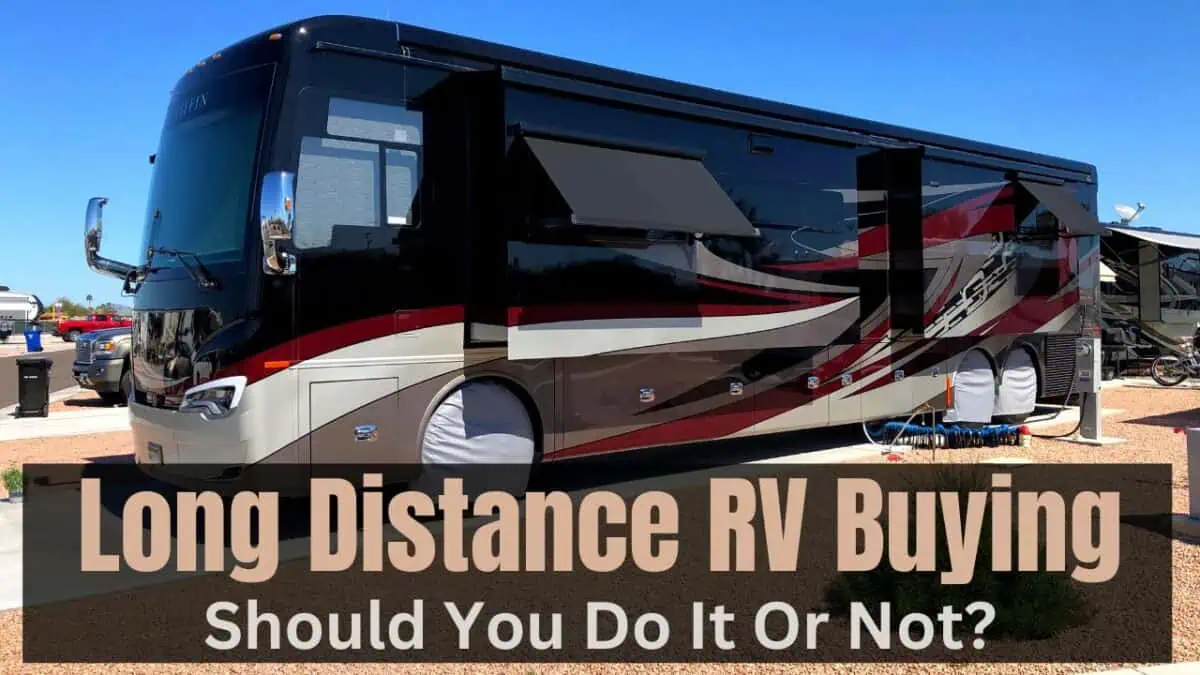
This article will be talking about buying an RV out of state. Is it really something you should do?

Well, there’s no question that these days RV buying is super popular. And the best place overall to look for RVs for sale is definitely in your area.

Where you can find RVs locally

You can find them at dealers and with private owners. But there are also online links that help you find RVs that are close by too.

And there are a lot of advantages to searching for and buying an RV that way.

Watch my video about buying RVs long distance

Table of Contents

Why Buying An RV Locally Is A Good Idea

Because it allows you as a buyer to personally go and take a look at those RVs. You can go through them and verify the shape their in and so on.

Then you can decide if it’s something that’s good for you or not. But what if you can’t find what you’re looking for locally?

Well, you could always expand your search a little bit farther away from your local area. Maybe to the entire state you live in or the region your in.

Of course, that may require a little bit of extra driving to do that. But it’s still possible for you to personally go and take a look at those RVs for sale.

However, what if you’re looking for a particular brand or model? And what if that RV just can’t be found in your area?

Or what if the ones that are nearby just don’t live up to your expectations? Should you expand your search even further away?

Perhaps look for an RV from a long distance away? Or maybe many states away from you?

Well these days, all of that is very possible with the resources that we have available to us.

How To Find RVs That Are A Long Distance Away

For instance, we have RV Trader and RVT.com that allow you to search for pretty much any RV and model nationwide.

But then there’s also eBay and Facebook groups too. And oftentimes, the folks that post there are posting their RV for sale on a nationwide basis.

Where to look for buying an RV out of state

These are all very good sources for national RV sales. And using them you can find pretty much anything that you are looking for.

However, you need to be very careful and very cautious when buying an RV out of state.

Buying An RV Out Of State – Why You Need Caution With Dealers

Because you want to avoid fraud on the one hand. And on the other hand, you don’t want to be disappointed with the RV that you buy either.

Now when you’re working long distance, the least risk you’ll probably encounter is with an RV dealer. One that is not in your area.

But that doesn’t mean that there’s no risk at all with working with them.

It just means that there’s less risk involved. Because they’re a recognized business. And they have a location where they can be found.

In fact, you can even go online and research online reviews for that particular RV dealer.

And that way you can find out how folks that have been their customers in the past have felt that the whole sales experience went with them.

You can also call and talk to them personally over the phone. And you can ask questions about the RV you are interested in.

In fact, you can even ask for them to send you specific photos about the RV.

Maybe ask for photos of areas on the RV that you want to see a little closer. Or get ask for photos with more detail.

And if they comply, that’s an indication that they actually have that RV and it is on their lot.

What If The RV You Want Is A Motorhome?

Now if it’s a motorhome, you can go even further. You can run reports like Carfax produces to find out more information about that RV.

And these reports are very good because they’ll allow you to verify the history of that motorhome.

For instance, you can determine whether there’s a lien on it or not.

You can also learn about the history of accidents for that RV. Or any other major incident in its history.

And another similar source of great information on the history of a motorhome is found at Faxvin.com.

So it’s a good idea to use both of these online resources to get as much information as you can about the RV you’re considering.

Learn about the history of a motorhome with these online resources if you're buying an RV out of state
Learn about the history of a motorhome with these online resources if you’re buying an RV out of state

Of course, all of that information is very good to be able to have. But one word of warning needs to be covered here.

Why You Can’t Fully Trust What An RV Dealer Tells You

And that is, don’t expect an RV dealer to be fully transparent with you.

Remember, they’re a dealer. So they want to sell you that RV anyway that they can.

And that often means that they’re not going to tell you everything you need to know.

Also, they just don’t want you to know about any negative things that could be associated with that RV.

However, we can say this about RV dealers. Usually, they can make the buying process so much easier.

Buying An RV Out Of State – Why A Dealer Can Be A Good Choice

And one reason for that is because they can handle all the paperwork for the sale.

You know, the things that are important. Like taxes, the bill of sale, financing, and things along that line. And that does help a lot!

But RV private owners are a very different story. And here is where it’s going to require a lot more caution on your part.

Why Buying From Private Owners Requires Even More Caution

That’s because you often really don’t know for sure who you’re dealing with in that situation.

And some have represented themselves as the RV owner when that is not the case at all.

So you really must be able to talk to somebody who owns the RV.

And to make sure your talking to the RV owner, ask questions that only an owner would know about their RV.

Once again, ask for photos of specific places on the RV that they can send to you. Why?

Because it helps verify that the RV actually exists. And that they have possession of it.

Once again, you also want to run the Carfax if it happens to be a motorhome as well.

That way you can make sure of the history of that RV before you go any further with it.

A Little Advance Knowledge Is Needed When Buying An RV Out Of State

But now, before you get into dealing with private owners, you need to do some research though.

You need to know all about the state documents that are going to be required for the RV sale.

All the things that state wants you to have for this sale to proceed legally.

And you will need to know about the taxes that will be required as well.

Here’s A Suggestion That Can Be Very Helpful

Now here’s one other suggestion that I’m going to give you here. And that is to consider the use of a third-party escrow service.

And what is an escrow service? Well essentially, they receive the funds from the buyer initially when the sale is made.

But they hold the funds until all of the agreements on the part of both the buyer and the seller has been fulfilled.

So that way it protects both parties in the arrangement. Both the buyer and the seller.

And this kind of service can be very helpful for these long distance RV transactions.

Now you can find escrow services online. Just make a search for them on Google.

But then be careful to follow their directions very carefully to make the sale go well.

What About The Condition Of The RV?

Now let’s talk a little bit about something else. And that is, how do you know what shape the RV is in since you can’t visit it yourself?

Well, you have a couple of options here. Number one is that you can buy a plane ticket and go and take a look at it personally.

And the second option is that you can hire a local RV inspector to thoroughly inspect it for you.

To do that, just go to rvhelp.com to find an inspector that’s nearby the RV.

Hire an NRVIA certified RV inspector to find out what shape an RV is really in

When you hire them, they can verify that the RV exists. And they also can verify that it matches the vehicle identification number that you have been given.

In addition, they can also verify the condition of the RV as well which is a huge help.

Now what if the seller refuses an RV inspection like this? Well, my recommendation is to just move on.

Because it means that there’s most likely something not right with this RV.

Especially when they don’t want you to know everything about that RV’s condition.

And that’s information you need since you’re the one who’s paying for the RV inspection.

What If The RV You Found Isn’t A Good One To Buy?

Now what if the RV inspection goes forward and you find out that the RV really isn’t the way it was being represented? What do you do then?

Well in that case, you have really only lost a little bit of time and the cost of the RV inspection.

But isn’t that a lot better than being stuck with an RV money pit? One that you’re probably going to spend thousands of dollars to get in shape?

And you can avoid all the irritation and frustration that would go along with that. For me, the inspection cost is well worth that!

But now, let’s suppose that the RV inspection goes forward and it finds a few things but nothing major. And that means that it meets your criteria.

In that case, you can go right on and complete the sale since it appears to be a good RV to own.

How Can You Get The RV Back To You When Buying An RV Out Of State?

But remember, that with either a dealer or a private owner you are somehow going to need to get that RV back to where you are.

And you could do that by one of two ways. First, you could fly there and transport it back yourself.

Or secondly, you could pay for a transport service to do that for you instead.

So once again, just search online for RV transport services on Google.

And you’ll find that there’s plenty available there that can do that for you.

But remember, you need to include the cost of that transport in your budget for buying an RV.

So do a little bit of advanced research on the transport cost to know how much to budget for it.

Conclusion

Now let’s talk a little bit about what we’ve gone over so far. And first of all, it’s very possible to buy almost any RV that you want these days long distance.

But you need to conduct the search and the purchase very carefully and cautiously.

I also recommend not letting any seller talk you into speeding up the sale.

Perhaps using tactics like “Oh I have somebody on it right now. So you’d better hurry and get this if you want it”.

My advice is not to fall for that. Not from a dealer or from a private owner either.

Instead, take your time and work through the process step by step without being hurried.

And if that particular sale doesn’t work out for you, don’t get shook about that.

Because there’s another great deal coming right along behind that one. There always is.

So here is the good news. Lots of people these days are successfully buying an RV out of state that they are very happy with.

And most likely it could work for you as well.

Have safe and happy RV travels!

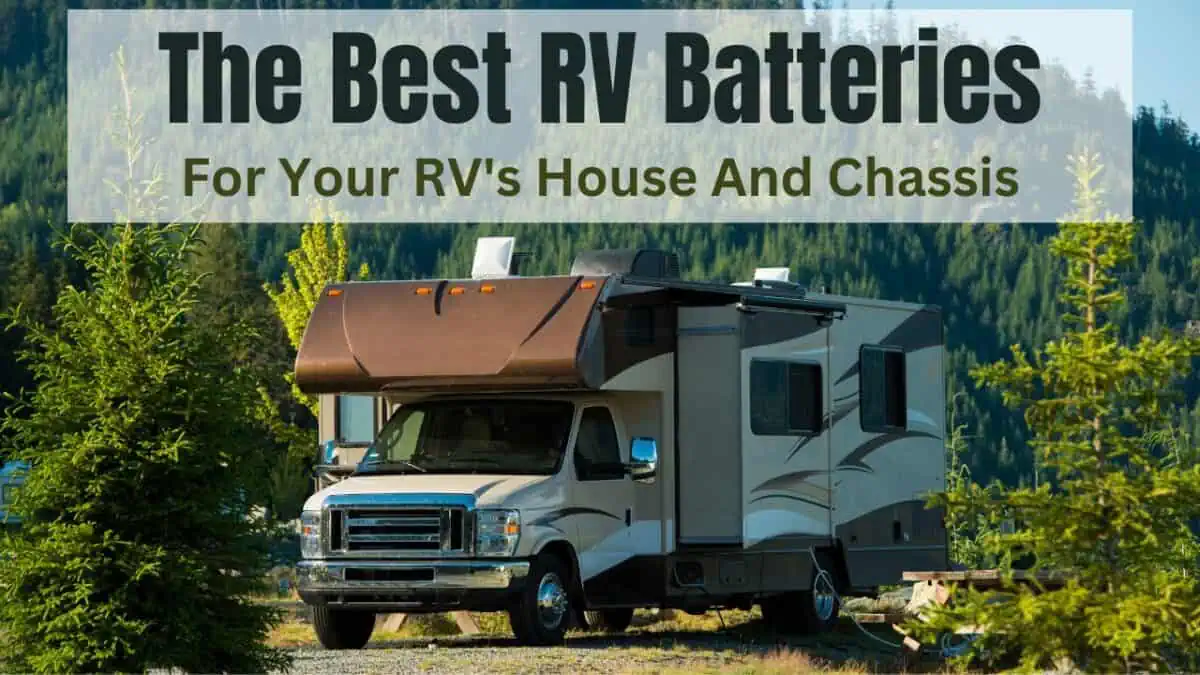
The Best RV Batteries For Both The House And Chassis

This article is going to be talking about choosing the best RV batteries for both the house and chassis. And about what will fit your needs best.

And first of all, let’s suppose you have a towable RV like a fifth wheel or a travel trailer.

Then most likely you just have house batteries in your RV. And that’s all you need to focus on.

But if you have a motorhome, very likely you’re going to have both kinds of batteries. You’ll have chassis batteries and house batteries.

Watch my video on the best RV batteries to choose

Table of Contents

Differences Between RV House And Chassis Batteries

So let’s explain the difference right away. House batteries are designed to run all the electrical needs in your RV when you’re not plugged in to shore power.

And they are designed to do that for a good long period of time as well.

But on the other hand, chassis batteries are designed mainly to start the RV engine. And then keep it running down the highway.

So what kind of batteries then do you need for the chassis in a motorhome?

The Best RV Batteries For A Motorhome Chassis

Well, actually they’re very similar to a car or auto battery. But they’re much more powerful.

Because what you need from them is a lot of cold cranking amps to get that engine started. Usually within two to five seconds or so.

And that’s often going to take around 1000 cold cranking amps or even more.

You see, those kinds of batteries have more plates in them. But they’re thinner plates.

So what that means is that you get a lot of power at once. But it doesn’t sustain that power level for a very long period of time.

Replacing RV Chassis Batteries

Now what happens when replacement is needed for your chassis batteries? And they all eventually need replacement.

Then I recommend that you use the batteries you already had in the chassis.

In other words, if the motorhome came from the factory with a battery in it, it’s a pretty good chance you need to go back with that kind of battery.

And very often you can get the information you need for replacement right off the battery itself.

But you also could consult your RV owner’s manual too. Very often they’ll tell you just what you need to get for your motorhome.

Of course, to make it simple, you also could just disconnect the battery. Then take it down to a local auto parts store and show it to them.

And very often they’ll know exactly what you need. And there’s a good chance they will have exactly what you need in stock.

But if they don’t, they can often get their hands on it in short order too.

The Best RV Batteries – Which Chassis Brands To Choose?

Now what about the best brands to choose from when you’re buying an RV chassis battery?

Well, in my case, I have used NAPA batteries quite a bit. And I’ve had very good success with their batteries too.

But I’ve also heard very good things about Interstate batteries in general as well.

Best RV Batteries - which RV chassis battery brands should you choose?
Best RV Batteries – which RV chassis battery brands should you choose?

The Best RV Batteries For The House

OK, now let’s talk about house batteries. And these are much more complicated to choose from.

Because what you choose really depends on what you want to accomplish with them.

Now there’s a lot of different kinds of batteries that could be used as RV house batteries.

But we’re going to talk about three main kinds of house batteries in use today.

Ones that are commonly used to power the RV’s house electrical needs. Especially when you’re not plugged in to shore power.

Now let me say this first. All of these kinds of batteries that I’m going to discuss will do the job.

But they all have pros and cons you need to consider.

RV House Battery Choice #1 – The Pros

So let’s start with the least expensive battery that you can get. And that is the flooded lead acid (FLA) battery.

A typical flooded lead acid RV battery
A typical flooded lead acid type of RV battery

It comes in both 12 volt versions and 6 volt versions. But with the 6 volt batteries, you have to use two of them together to make 12 volts.

And they’re often referred to as golf cart batteries because they are often used for that purpose.

Their plates are thicker, and therefore they often last longer for constant use. And that’s why golf courses love using them.

But first, let’s talk about the pros of FLA batteries. And the first pro is that they are the cheapest battery out there to buy.

So you can find them in a lot of places and you can often buy them at a great price too.

But they’re also rugged. And they can stand up to almost anything and keep on going.

So they’re very reliable and proven technology that’s been used for years and years.

And they’ll last somewhere around 500 discharge cycles on average.

What that means is discharging them all the way down and then charging them up again.

What Are The Cons Of RV Battery Choice #1?

So what are the cons? Well there’s several cons. And one of the big ones is that they are usually very heavy.

So if you have a bank of 2, 3, 4 or more of these, it’s really a lot of weight to put in your RV. And you have be sure your rig can handle that weight.

Now the other thing is that they off-gas a lot. They put off noxious and toxic fumes in the charging and discharging process.

So you can’t just put flooded lead acid (FLA) batteries inside your RV with you in most cases. In fact, it’s dangerous to do that.

And even if you put them in the RV’s outside compartment, make sure that it’s well ventilated.

Another con is that they’re going to need constant maintenance. It’s called “watering the batteries”.

That means that they have to have the water inside replenished regularly as it evaporates.

So that’s a constant thing you have to remind yourself to do if you own FLA batteries.

Another Big Disadvantage Of These Batteries

Also you really only get about half the power potential of the battery in real world use.

So for instance, when you have a rated 100 amp hour battery, actually you can only use about 50 amp hours out of it.

Because if you discharge the battery down below 50 percent, you could do damage to the battery.

And if you consistently do that you will shorten the life of the battery considerably.

So that means therefore that you really only have about half of the battery’s potential. And that’s all you can make use of for your RV.

So you have to often have a bank of several FLA batteries to get the job done.

The Best RV Batteries – The Pros Of Choice #2

OK, let’s move on to our second kind of battery. And that’s an AGM battery, or absorbent glass mat battery.

Absorbent Glass Mat batteries
The Best RV Batteries – Absorbent Glass Mat batteries

Now it’s actually still a type of flooded lead acid (FLA) battery. But there’s no liquid in it.

In this case, what they’re using instead is cell matting material in all of the battery cells. And it works very well for RVing purposes.

So now let’s talk a little bit about the pros and cons of AGM batteries.

And the first pro is that it’s mostly maintenance free and that’s a great feature that a lot of RVers love.

That means no more watering batteries on a regular basis to replace lost fluid. And it’s spill-proof too.

So they can often be installed in more places and not always in upright positions.

Also, there’s less off-gassing of toxic and noxious fumes as well. So clearly we’re moving in the right direction with this kind of RV house battery.

And you sometimes can discharge those batteries a little bit farther too. At least more than most liquid filled flooded lead acid batteries and still be okay.

Also, they’ll usually last longer too. In fact, they last roughly on average about 1000 discharge and charge cycles. Which is pretty good.

The Cons Of Choosing Battery #2

OK, now let’s move on to the cons about AGM batteries. And the big con is they are more expensive than liquid flooded lead acid batteries.

Also, they’re more sensitive to over-charging too. So you have to be very careful with them and make sure you have a quality AGM battery charger.

Now let’s move on to our last type of battery that we’re going to talk about in this article.

The Best RV Batteries – The Pros Of Choice #3

And it’s the LifePO4 lithium battery which is becoming much more popular now for RV use. In fact, we are starting to see them quite a bit.

Many consider the lithium battery to be the best RV batteries overall

So what are the pros? Well there’s a long list of pros because they really solve a lot of the issues of the first two kinds of batteries we talked about.

First of all, they are much lighter. So you can have a bank of these batteries and not really be adding as much weight to your RV.

Also, there’s essentially no maintenance to them either. And isn’t that nice? You just install them and let them do their job.

Also, there’s no off-gassing involved with RV LifePO4 lithium batteries. And that’s really great!

In fact, many RVers put these batteries right inside the house itself. You know, in a compartment inside the RV.

And that’s just fine because they don’t cause any toxic fumes that can harm people.

More Advantages Of RV Battery Choice #3

Now here’s a big pro. They can be discharged close to 100% of the rated battery power.

So you’re getting practically the full use of the power that’s stored in the battery. That’s a huge weight and space saver for RVers!

And they also charge faster as well. So they tend to bounce back quicker during the charge process.

And here’s a big one. They last a long time. In fact, they usually last between 3000 – 5000 discharge and charge cycles.

That is a very long time and way beyond the capabilities of most FLA batteries.

The Cons Of Choosing Battery #3

So what are the cons then? Well the big one is the cost! And yes, they really do cost quite a bit more than the other batteries I’ve covered.

Now just a few years ago they were pretty much $1000 per battery. But they’ve become a little more affordable at this point.

However, the cost is still more much more than either common flooded lead acid or AGM batteries.

Another con is that there’s a good chance you might need an upgraded charger at the same time that you switch to these batteries.

Because if the RV came from the factory with flooded lead acid batteries in it, very often the charger will not charge lithium batteries like it should.

And lithium RV batteries require a very specific charging process to protect the battery.

So suppose you make a complete switch of a bank of batteries you have in your RV’s house.

Well then, you may be not only replacing the batteries. But you might be replacing the charger as well and that’s an added expense.

More Cons Of Choosing RV Battery #3

Now the last con for lithium batteries is that there can be challenges for charging them in cold weather.

So in most cases you shouldn’t do it below freezing or you could damage the battery.

But of course, you could have them installed inside the RV and keep them warm that way.

And lately more and more of these lithium batteries are being made with internal heating systems. And that resolves much of that issue.

OK, so those are the pros and the cons of both house and chassis RV batteries.

Which Kind Of Battery Should You Choose?

Now let’s talk about who should choose what kind of battery for their RVing needs.

So let’s suppose that you are an RVer that’s usually found in RV parks and campgrounds. And you are most often hooked up to shore power.

Well in that case, you really don’t use your batteries all that much to run the electric components in your RV.

Because your electric needs are mostly being met by the campground power connection.

So common flooded lead acid batteries will work really well for you. And that’s especially true if you’re on a budget.

So what about AGM batteries? Well essentially they work best for the same kind of RVers.

You know, people that are in RV parks and campgrounds most of the time. Especially those that have a little bit more money to spend.

And as a result, they can afford to buy a battery that doesn’t require much maintenance.

Now who’s best for lithium LifePO4 RV batteries? Well those are great for RV boondockers.

For people who spend the majority of their time unplugged from shore power. And especially for those that enjoy a lot of off-road RVing.

Also, for those who have solar installed on their RV since lithium batteries can maximize the use of the sun’s power.

But they’re also a great choice for any RVer who can afford the higher cost of those batteries.

Now one thing needs to be said at this point. And that is the cost is certainly initially more for lithium RV batteries.

But consider the fact that they last much longer than the other kinds of batteries.

So then, the lifetime cost actually equalizes quite a bit between the various battery types.

Conclusion

Well, I hope that what I’ve covered here today in this article will help you choose the best RV batteries for both the RV house and chassis.

Have safe and happy RV travels!

Get My FREE Camping Guide

“The Top 5 Ways To Save Money On Campground Costs”

Get My Newsletter

Save on RV repairs

Get the best RV gear

Learn about RV life

RV tips and tricks

And get my free guide – The Top 5 Ways To Save Money On Campground Costs”