RV Financing – How To Avoid The Pitfalls Of RV Loans

RV financing is a vital subject for most RVers. And this article will show you how to avoid the pitfalls of financing your next RV.

These days it’s not hard at all to spend a hundred thousand dollars or more on an RV.

In fact, for many people an RV is the second biggest purchase that they’re going to make in their lifetime. Right behind their sticks and bricks home.

So how do you pay for such a big ticket item? Well of course, probably the best thing to do is just pay cash for it.

But who has that kind of cash available? So if you don’t have the cash to pay for an RV, in most cases you’re going to need RV financing instead.

And that means that you’re going to need an RV loan. But RV loans have pitfalls that can cost you a lot of money too.

And that’s what we’re going to talk about here. We’re going to talk about a process for getting an RV loan and financing that works best for you.

Watch my video on RV financing

Table of Contents

The Best Place To Start

And the first step in this process is something very simple that I encourage you to do. But believe it or not, a lot of people don’t do it.

And that is to have a personal monthly expenses budget to work with.

Make a budget for your expenses
First step – make a budget

It’s really the only way that you’re going to know how much loan payment you can afford.

So you have to know how much money is coming in every month. And you have to know how much money is going out on expenses as well.

Then you can figure out what your costs for the RV is going to be too. And see if it will fit within your budget.

Also, keep in mind that the loan payment is just one of the costs associated with owning an RV.

You’ve also got to budget in things like fuel for going on trips with it. And don’t forget maintenance, repairs, rv insurance, camping costs, etc.

So make sure you include everything in the budget that you’re going to be spending on your RV.

And that will help you know how much you can afford for the loan payment.

How Much Can You Afford To Pay?

Now once you know how much you can spend every month for your RV, then you need to go online and find an RV loan calculator.

It’s very easy to do. Just go to google and type in “RV loan calculator” and you’re going to get a lot of sites that have them.
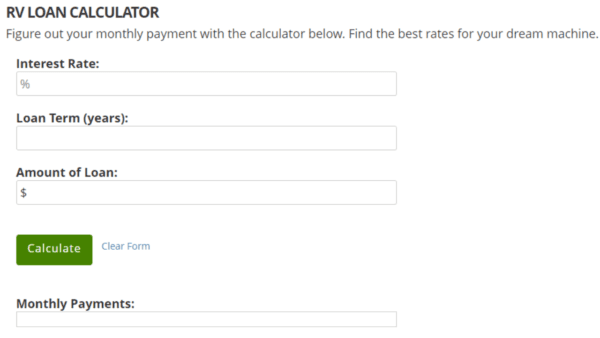
A sample RV loan calculator
A sample loan calculator

And honestly, they’re all pretty much the same. All you have to do is enter in the amount you want to finance. And then the length of time you want to finance it.

The calculator will then tell you what the monthly payment will be. So you just keep adjusting the amount to finance to see what the costs will be.

Eventually you can get it to the payment that matches what your monthly budget says you can afford.

At this point you know how much you can spend for an RV loan payment each month.

Should You Buy A New Or Used RV?

Now the next decision will be whether the RV is going to be new or used.

And if you go the new RV route, there are advantages. That’s because new RV loans actually have lower rates.

However, that can be easily offset by something else. And that’s the fact that when you buy a new RV you take a big depreciation hit on it right away.

Especially in that first year of ownership. So buying a used RV means that you can avoid that big hit in depreciation.

And the depreciation cost from there forward as you own the RV is much lower.

Also, you also get the advantage of having most of the bugs worked out if you buy a used RV.

Usually by the first or second year, the new owner finally got through all the bugs that the factory had missed in their quality control.

And so you get the advantage of that as well.

But if you buy a used RV, the loan rate is going to be higher too. So balance all of that out and decide which works best for you.

RV Financing – Your Credit Rating

Now the next point is to know your credit score before you get into RV financing. And this is super critical!

Your credit score is going to directly affect the RV loan rate that you can get.

Know your credit score
Know your credit score before shopping for an RV loan

Therefore a lower score means you’re going to pay more in interest on the loan. And a higher score means you get a better interest rate instead.

So if your credit rating is not good, then start working hard to get that credit score up as soon and as quickly as you can.

Shopping For RV Financing

Alright, the next thing to do is go ahead and start shopping for an RV loan at this point.

That’s because now you know how much you can afford for an RV loan payment.

And you’ve decided whether it’s going to be a new or used RV as well.

So now you can start shopping for the loan itself. And what I recommend is start shopping with your personal bank or your credit union first.

That’s a great place to start since they already know you. They know your finances and your credit history.

So very often they’re going to give you a more favorable RV loan rate. But I don’t recommend stopping there.

Instead, go online and shop some companies like Lightstream, Good Sam, and Alliant.

RV financing companies that specialize in RVs

These are companies who specialize in RV loans. And you may find it easier to get RV financing from them.

So shop them to see what rates they’re going to offer you too. And then you will know what your choices are.

Getting Your RV Loan Pre-Approved

Suppose you find some good rates that really seem to work. Then I highly recommend to get pre-approved with that company, bank or credit union.

Get pre-approve for an RV loan

That way you’re already approved for a certain amount of money on your RV loan.

Then all you have to do is just go out and buy the RV that matches that loan amount.

And since the loan paperwork is essentially done, it makes the buying process much quicker and easier.

What About RV Financing From Dealers?

OK, so now you can start shopping for the RV itself. And that means you’re probably going to go visit some RV dealers to see what they have to offer.

But RV dealers are definitely going to try to give you an RV loan too. They want you to finance your RV with them instead. Why?

That’s because the finance department in an RV dealership is one of the biggest profit centers for that dealer. And they make a lot of money in there.

So here is where you need to be prepared in advance for their sales tactics.

Everything you have done thus far is preparing you to get the best RV financing and loan rate possible.

So be careful to avoid this pitfall that RV dealers lay out for people.

Is An Easy RV Loan Always The Best Choice?

Now it’s it’s true that the dealer is going to make you a loan offer that’s easy.

In fact, the whole point of an RV loan at an RV dealership is it’s easy and simple. They pretty much take care of everything for you.

And a lot of folks like that. But when things are easy, sometimes things that are going on in the background will cost you more in the long run.

Now I don’t recommend that you avoid dealer financing altogether. That’s because sometimes they may actually beat the other loans you’ve found.

But that’s not usually the case. So the point is to compare the loan approvals you already have when you go shopping at the RV dealer.

And if you are prepared, then you already know what loan rates you can get.

And you know the deals that are available to you and what your options are.

How Long Should You Finance An RV?

Now the next thing you want to consider is the length of the RV loan you select. In other words, how long are you going to finance this RV?

And these days, you can finance anywhere from 10 to even 20 years for an RV.

But remember that RVs are not investments! They are depreciating expenses instead.

RVs are depreciating assets

They are like your car in that they go down in value every single year. Whereas an investment on the other hand is supposed to go up every year.

But that’s not what happens with most RVs at all. So my point is, don’t finance an RV for too long.

Now I know it’s tempting to try to get that monthly payment down as low as you possibly can.

But you can get yourself in trouble that way. Because every year that you own an RV, it is depreciating in value on a steady basis.

So you may come to the end of the life of the RV and still have a loan to pay. Nobody wants that. So don’t try to finance an RV loan too long.

Conclusion

Well, let me add a few more things beyond what I’ve covered in this article.

First of all, take the whole RV financing process nice and slow. Don’t go too fast and make a big mistake that you will regret later.

Instead, know what you’re doing and know what your options are. And don’t impulse shop!

If you follow the advice I’ve given you in this article, you can get RV financing that really works.

And you will be happy with your RV loan for many years to come.

Have safe and happy travels my friends!
Used Class C Motorhomes – Should You Buy One?

This article is about used Class C motorhomes. Should you buy one or not?

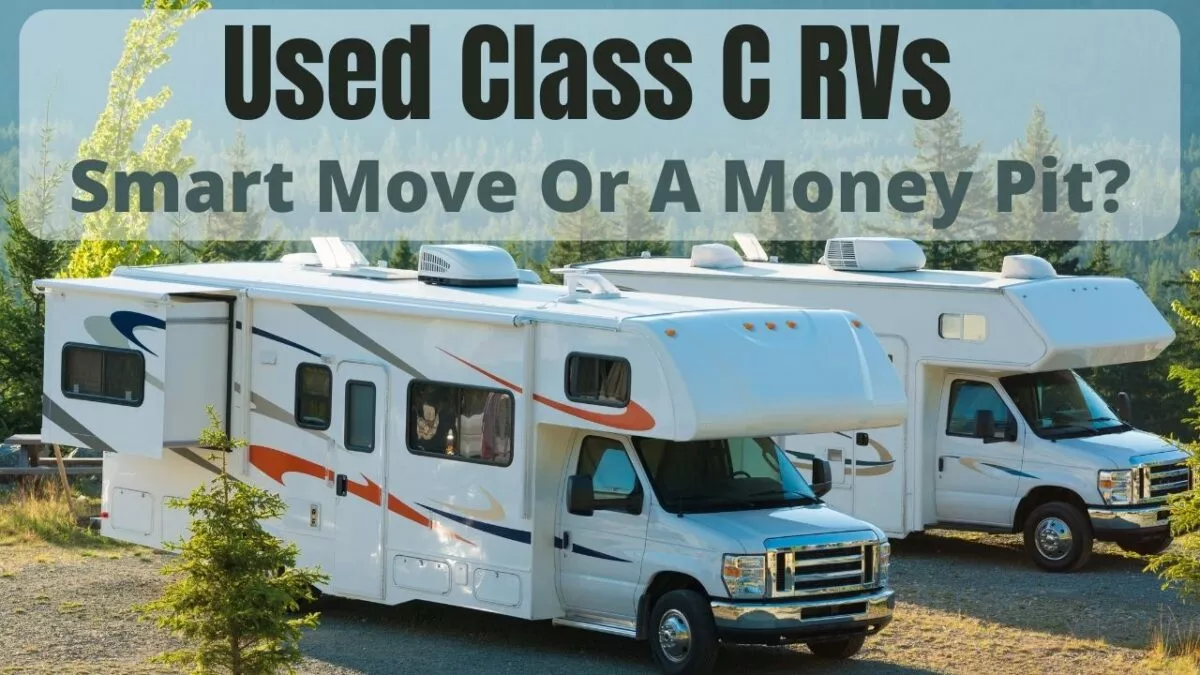
Well, if you’re not really sure about what a Class C RV really is, here’s a picture of one.

Used Class C motorhomes - what a Class C looks like
An example of a Class C motorhome

And one of the best ways to know if it’s a Class C is to look right up front there above the cab.

Do you see that area that comes out over the cab? That’s usually an identifying characteristic of a Class C RV.

And that’s because that area is often used for expanding sleeping arrangements in a Class C motorhome.

So now that we know what a Class C looks like, the next question is who should be buying a used Class C motorhome?

Watch my video on used Class C motorhomes

Well actually there’s a lot of different kinds of RVers that use them. In fact, some people even travel fulltime around the country in them.

But generally speaking, they’re most often used for part-time RVing. Also by snowbirds or weekenders, and vacation RVers. Especially those that have families.

Now let’s talk a little bit about the pros and the cons of buying a used Class C motorhome.

Table of Contents

The Pros Of Used Class C Motorhomes

Let’s start with the pros first. And the number one pro on my list is their low price compared with other new motorhomes.

For instance, compare the cost of a used Class C motorhome with a used Class A RV. You can do that here at RVTrader.com.

And here is what a Class A motorhome looks like:

An example of a Class A motorhome

Now in most cases you’re going to find that the class C will be much less expensive to buy.

So if you’re just getting into RVing and you want a low-cost motorhome, the class C is often going to be a good way to go.

The next pro is that they’re smaller than class A RVs. So they usually fit in most campsites much easier.

And this is good if you like to go to state parks, national parks and national forests.

Because this is where the campsites are often not very big and spacious.

So a Class C could work very well for you if you want plenty of choice for campsites.

More Advantages Of Class C RVs

Another advantage of a Class C motorhome is that they’re easy to repair.

In fact, the engine is right up there, so it’s very easy to access and work on.

This is unlike Class A RVs where the engine is more difficult to access in many cases.

And it’s usually a gas engine, not a diesel. So you have a lot more mechanics available to repair engine problems. And that’s a great thing.

The next pro is that it often will sleep a lot of people. More than most other kinds of motorhomes.

So if you have a family, that’s a great advantage. In fact, many Class C RVs will sleep eight to ten people. And that’s really impressive!

Another pro is that they’re generally much easier to drive. Especially for those that aren’t familiar with RVs and motorhomes at all.

For instance, Class A RVs can take a little more time to get used to driving down the highway.

But if you know how to drive a passenger vehicle or truck, then you’re probably going to be fine with a Class C.

Now there are also a couple of cons about used Class C motorhomes that need to be considered. So let’s talk about them now.

The Cons Of Class C Motorhomes

And the first one is something that a lot of people complain about the most.

That is that they feel like maybe they need more living space than a Class C RV offers.

Remember we talked about the fact that they’re not quite as big as Class A RVs. So some people feel that they prefer the Class A for that reason.

And the second con is that you’re not going to find quite as much storage area in a class C either. Not nearly as much as you do very often in class A RVs.

So there are a few cons that need to be considered. But in general there’s a lot of pros overall for buying a used Class C RV.

Now let’s talk about whether you should buy a new or a used one.

Should You Buy A New Class C Motorhome?

So first up let’s talk about the pros of buying a new one. And number one is that you get a factory warranty with it.

Obviously, that’s great for the first year of your ownership too. In fact, almost anything that goes wrong with your new RV can be taken care of at no cost to you.

And lots of people buy new RVs in general for that reason alone.

Then the next pro is that you’re going to get the latest features in a new RV.

So whatever is the latest and greatest equipment is what you’re going to get in new Class C RVs.

And you usually get the more modern colors and furnishings instead of a dated living area.

Now the next positive is that nobody has owned that RV before you. So there’s been no pets. There’s been no smoking.

Also, nobody’s been living in it before you. And many people feel good about that.

They like the fact that they’re not actually getting something that somebody else has lived in.

Now the final pro about buying new is that you know the history of the RV.

And that’s because you are actually making the history of that RV as you travel and camp in it.

That means that you can maintain and care for it properly from the first day of ownership.

So there’s lots of pros for buying a new Class C RV. But now the pros for buying a used Class C motorhome should be considered as well.

Should You Buy A Used Class C Motorhome?

And number one is the price. You can buy a used Class C motorhome for much less than a new one.

Because when you buy new, you’re going to take the biggest depreciation hit on that RV.

It’s the largest markdown in worth that anybody’s ever going to take from there forward.

Truthfully, in the first year the depreciation of most RVs is just monstrous.

And then after that, yes it goes down from year to year, but not nearly as bad as the hit you take in the first year of ownership.

So you definitely are going to save money on depreciation costs when you buy a used Class C motorhome.

Now the next pro is that the RV’s bugs have most likely been fixed by the previous owner(s) at that point.

And now you’ve got an RV that actually really works like it should.

Finally a real pro to buying used is you’re going to have a lot more models to choose from. And that’s for one simple reason.

When you buy a new RV, you only have one year of models that are available to you.

But when you buy used, you can have several years of RVs to look at instead. And that opens up a lot of options for buying.

Okay so we have gone through several points now. So do you feel that a used Class C motorhome will work for you at this point?

Buying Used Class C Motorhomes The Right Way

Well if you do, then I’ve got a three-step process that I want to share with you.

And this process is very important if you’re going to buy a used Class C motorhome.

Number one if you’re going to buy used, you need to focus on the best used Class C brands.

And this is especially true in class C RVs. That’s because the class C segment of the RV industry just seems to be filled with a lot of brands that have not been making really quality products.

Now it doesn’t mean that they can’t be good RVs eventually if you put a lot of work and care into them.

But they’re often not up to the quality standards of some of their competition.

And this is more true in the class C segment of the RV industry then almost any other type of RV.

So how do you get a good used Class C brand? Well I’ve done my best to try to help out in that area.

First of all, I encourage you to watch a video that I made a while back on the subject of the top three used Class C brands that I can recommend for your consideration as an RV inspector. Just click below to watch it.

Now the brands in that video are a great place to start when you’re looking for quality used Class C motorhomes.

Protect Yourself In The RV Buying Process

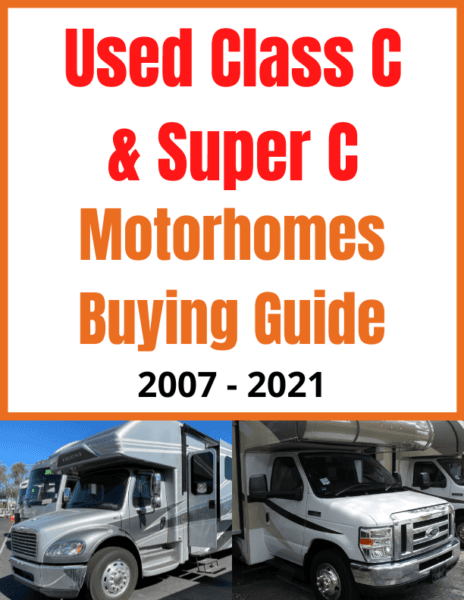
But I also took things a step further for you. And I produced a guidebook that actually covers all the used class C brands on my recommended list.

Used Class C RV buying guide

And I highly recommend you consider that as well. Because the guidebook will give you a lot more RV brands and models to choose from.

Now the next point is that you also need to have a buying process for getting the right RV.

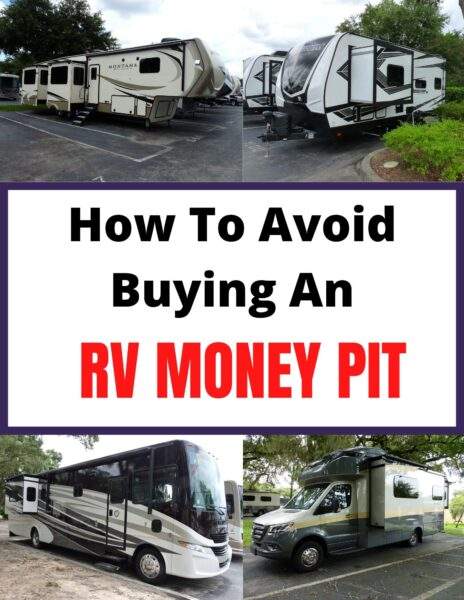
So I created a another guidebook on how to buy used RVs the right way.

How to avoid an RV money pit

And this this guidebook is going to show you how to buy a used RV at the right price.

Then make sure that it is the right RV for you personally as well.

And finally, how to spot a quality RV that is even worthy of your consideration in the first place.

In other words, it’s going to show you how to weed out all the used Class C motorhomes that you really don’t need to be spending a lot of time with.

And then you can focus on the ones that are actually worth looking at and considering for purchase.

So these guidebooks will help you know how to get the right RV, and buy it at the right price.

Now suppose you have found the one you want. What do you do then?

The Final Step For Buying Success

Well, now it’s time to call in an NRVIA certified inspector. And have them go through that RV from top to bottom.

Get an RV inspection on Class C Motorhomes
Get an RV inspection on Class C motorhomes

That way you can make sure that there aren’t any hidden problems that you can’t see.

Of course, by using my guidebook you’re going to be able to weed out a lot of RVs yourself.

And that’s because you’re going to spot some problems right away that you need to avoid completely in the RVs you look at.

However, even with all of that knowledge, there’s no way that you have the kind of skill and experience that an NRVIA certified inspector is going to have.

And they will be able to find hidden problems that you cannot see on your own.

So take the next step and get that inspection by a qualified professional. And that way you’ll know what you’re buying.

Conclusion

Now by following this three-step process you can buy a used Class C RV that you can trust.

Remember number one is to buy from the best brands. Don’t go messing around with those brands that haven’t been building with quality.

Then number two is learn how to spot a quality RV on your own. One that’s worthy of your purchase.

And then, number three is before you take delivery of that RV, get it inspected.

That way you know there’s no big hidden problems that you’re going to have to deal with later.

Now if you do all those things, let me assure you that buying a used Class C RV or motorhome can be a very smart thing to do.

Have safe and happy travels my friends.

RV Refrigerator Replacement – Time For A Residential Fridge?

What happens when it’s RV refrigerator replacement time? Should you just replace the old fridge with the same or similar RV refrigerator?

Well, these days you have more options to choose from, including residential refrigerators.

So let’s talk about RV refrigerators vs residential refrigerators for your RV.

And first of all, it has to be said that RVs present unique challenges for keeping your food cold!

There’s no question about that. Or at least a lot more challenges than you would experience in a regular home.

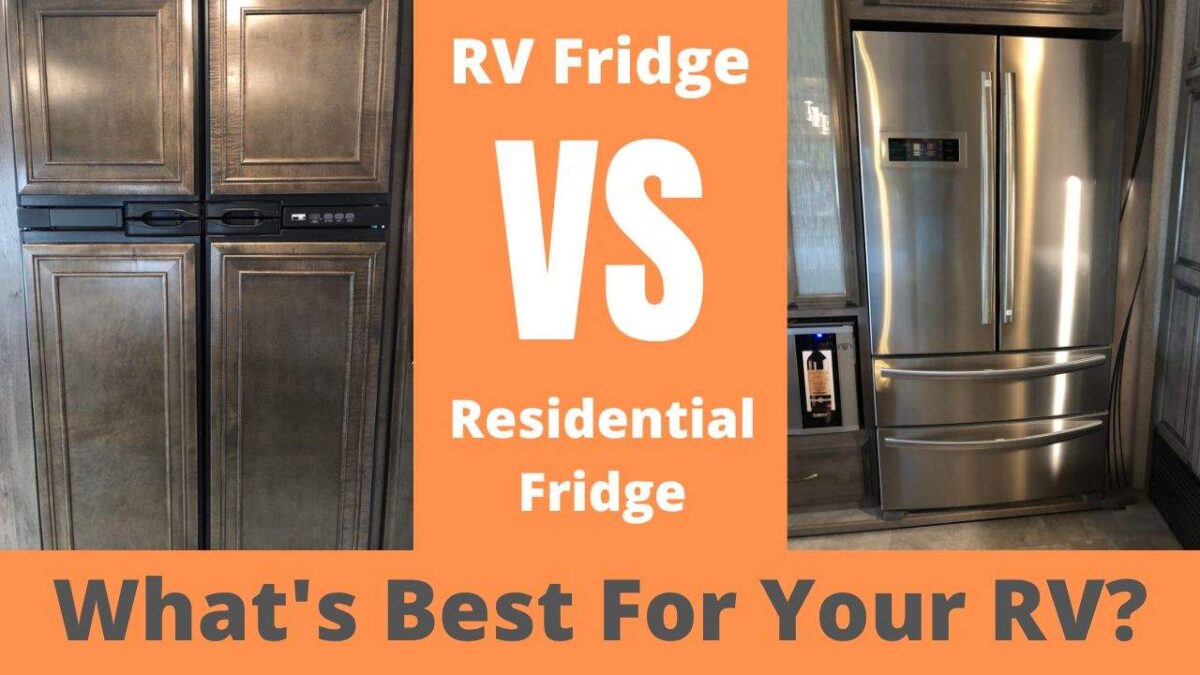
So at some point a lot of RVers start thinking about replacing that RV refrigerator, or gas absorption refrigerator, with a residential fridge instead.

Watch my video on RV refrigerators vs residential refrigerators

And let’s see what are the pros and cons of going either way. Because there’s no one right choice for all RVers.

Listen to my podcast on RV refrigerators vs residential refrigerators here

Table of Contents

RV Refrigerator Replacement – Gas Absorption Pros

So let’s start with the pros of going with a normal RV, or gas absorption refrigerator.

Gas absorption refrigerator
An example of an RV gas absorption refrigerator

And the first pro is that they are versatile. In fact, they can run on multiple power sources, and that’s great!

Because if one power source is not available for any reason, you can run it on a different one instead.

Then the second pro is that they are a low power draw on the electric side of your RV. And that’s always a good thing for power management.

Pro number three, and this is a big one, is that they are very good for boondocking. And that’s great for all of you folks that like to dry camp.

You know, maybe you like to go out and camp in places where nobody’s around.

Well then, a gas absorption RV refrigerator is made for that scenario. Because they can be run on propane , and not just electrical power.

And you’re going to really love that! Because you can run your refrigerator as long as you’ve got enough propane on hand.

More RV Refrigerator Pros

Now the next pro is that RV refrigerators are lighter than residential refrigerators. So they save weight in the RV.

And remember everything comes back to weight in an RV eventually. So it’s important to save as much as you can.

And RV refrigerators do that well. Especially if they happen to be installed in an RV slide.

That’s because you’ve got to make sure you don’t overload the slide mechanism. And too much weight can easily do that.

Now the other point is that RV refrigerators already fit right in to your RV if it was installed at the factory.

In fact, in many cases, it sort of seems like they put the refrigerator in and built the rest of the RV all around it.

But the point is that once it’s installed in an RV from the factory, RV refrigerator replacement is fairly straightforward.

It’s located in a place that’s made for it. So all you’ve got to do is just replace it when it becomes unusable at some point. And that’s a pro to consider!

The last pro is that there are no moving parts in an RV refrigerator.

In other words, let’s say that you have a gas absorption RV refrigerator. And you go down the road in your RV jostling along as you go.

Most likely it will usually handle RV travel on the road very well without anything breaking. Because that’s what they’re made to do!

So all of those are pros for RV gas absorption RV refrigerators.

RV Refrigerator Cons

But there are also cons with them when it comes to RV refrigerator replacement too.

And let’s start with the number one con. In fact, it’s the biggest one for a lot of people.

And that is that they are usually fairly small. In other words, you have less cubic feet of of actually storage space for food in an RV refrigerator.

So suppose you have an RV refrigerator. And you put one right next door to it that’s a residential refrigerator the same size.

Well then, you’re going to usually have many more cubic feet of food storage in the residential fridge. And that’s huge!

I mean we all would like to have maybe a little more area than what we have in our RV refrigerator, right?

The second con to consider is that it costs more to replace when it’s RV refrigerator replacement time.

And that’s especially true when we’re getting into the larger gas absorption RV refrigerators.

In fact, they can cost three thousand dollars or more just for the refrigerator itself. And then the installation has to be figured in as well.

Now for con number three. RV fridges are just more sensitive to hot temperatures and to temperature changes.

A lot of people notice this in the summer time. That’s when all of a sudden that ice cream just isn’t really hard anymore.

And in really hot weather, the refrigerator compartment doesn’t always stay in the most desirable range either.

That’s because they are sensitive to extreme temperatures changes. And that’s a con that must be considered!

More RV Fridge Cons

Another con is that RV refrigerators take a long time to initially cool down.

So when you want to go camping, you had better take about a day to get that RV refrigerator up and going.

Because it takes many hours to do that, especially in hot weather.

Moving along, the next con is that almost all RV refrigerators will require some kind of defrosting.

Yes, there really isn’t any kind of automatic defrosting mechanism with these kind of fridges.

So if you’re in a humid area, you could be defrosting your RV gas absorption refrigerator almost every month.

And that means taking everything out of the fridge first. Then actually defrosting it manually before putting everything back in again.

And it can take a bit of time and effort to do that. Time that could be spent doing other things.

Watch my video on how to defrost an RV refrigerator

The final con is that RV gas absorption fridges need to be pretty much level to work properly.

Of course, there is some give and take on that. But you don’t want to get too far off of level.

And that’s because a gas absorption refrigerator works on chemical reactions. So to facilitate that, it has to be in a more or less level state.

And that is certainly not as versatile as most a residential refrigerators can be.

All right, those are the pros and cons of gas absorption rv refrigerators. So now let’s start on residential fridges.

RV Refrigerator Replacement – Residential Refrigerator Pros

RV residential refrigerator
Example of an RV residential refrigerator

And the number one pro for them is having more food storage. That’s really the big one, isn’t it?

Number two is that they’re much cheaper to buy. Remember, we talked about how gas absorption fridges can cost three thousand dollars or more.

Well, if you get a residential fridge about the same size, you may be only spending a few hundred dollars. Or at the most maybe a thousand or so.

And that’s definitely a big difference in cost.

Pro number three is that residential refrigerators cool down quick. Usually just a few hours after you plug it in, you’re going to notice the difference.

It should be nice and cool in your fridge, and really cold in your freezer.

Now the fourth pro for residential fridges is they work much better in hot weather. And they’re more consistent with temperature changes in general.

In fact, a lot of people even put them out in a shed or garage at home. And they can then use them for storage of extra things they want to keep cold.

That’s because they can be out in temperature extremes and still function rather normally in most cases.

More RV Residential Refrigerator Pros

Now the next pro is that they often have a longer life span.

In fact, most residential refrigerators will probably last between 18 to 20 years.

Whereas RV gas absorption refrigerators are usually known to only last somewhere between 10 to 15 years instead.

And now the last pro for the residential refrigerator is it’s frost free capability.

That means that there’s so little maintenance that is needed for a residential fridge.

Especially as opposed to having to manually defrost gas absorption refrigerators on a regular basis.

Well now, let’s talk about the cons too. Because there are cons for residential fridges as well.

RV Residential Fridge Cons

And number one is that you probably will need to make changes to your RV to get a residential refrigerator to fit in it properly.

That’s because RVs were made to have an RV fridge. So to put a residential fridge in, very often you’ve got to make some extensive modifications.

And that means you may lose storage in your RV when you do. Because the extra room for the residential refrigerator often comes from an available storage area.

The next con to consider is that residential refrigerators are often heavier. And sometimes by quite a bit.

So that means it’s going to contribute more toward the overall weight of your RV.

And if you’re already at the limit of your gross vehicle weight rating, that’s going to be an issue.

Also, if you have your refrigerator in an RV slide-out, you’ve got to be extra careful about adding weight.

And that’s because you have to make sure that the slide-out mechanism is able to handle it.

And that is a real consideration to make before an RV refrigerator replacement takes place.

More RV Residential Fridge Cons

The number three con is that you most likely are going to need a bigger battery bank to run a residential refrigerator too.

Especially for times when you are boondocking or dry camping.

That’s because they only run on electric. And most battery banks in RVs are not really going to be up to the job.

So when you buy that residential fridge, very often you’re going to need a bigger and better battery bank too.

And maybe even a bigger and better inverter as well. Because that’s what converts 12 volt power to 120 volts to run that residential refrigerator when you’re not plugged into shore power.

Now for the fourth con. And that is that just to get a residential refrigerator into your RV may be a real challenge.

In fact, in many cases they won’t go through the door at all. They’re just too big.

So a lot of times, RV techs will take out a window to get it inside the RV.

Or if it’s a motorhome, they may have to even take out the windshield to get that refrigerator in or out of the RV.

And that’s quite a process to watch. But it’s something that’s a lot more work to do for an RV refrigerator replacement.

Now the last con is that a residential fridge is not designed to be jostled around going down the road in an RV.

It was designed to sit on a flat stationary floor in a residential home.

Of course, to be fair most people don’t have a lot of problems with that.

But some people do. And they have issues with things coming loose regularly. Things that just have to be repaired from time to time.

Which Kind Of Refrigerator Should You Choose For Your RV?

All right, those are the pros and cons of both RV gas absorption refrigerators and residential fridges.

Now what kind of RVer would be best for each type of fridge? Well, here’s my take on the subject:

I feel that an RV gas absorption refrigerator is really best for part-time RVers. Or maybe vacation travelers or weekend warriors.

Also they can be a good choice for boondockers. People who like to be out and away from everything and are going to be unplugged while camping.

In those situations, an RV fridge works very well for that due to its versatility.

Also, for those who like to stay in more moderate temperatures.

That means that you’re not seeing a lot of extremes that could affect the way your refrigerator cools.

Now for a residential refrigerator, it would be a good choice for fulltime RVers. For people who are actually living in their RV for a long while.

In this case, having a residential refrigerator just makes everything more easy, simple and comfortable.

And it works especially well for those who like to spend almost all their time in campgrounds or RV parks.

Since they’re going to be hooked up to the grid anyway, that extra power draw for the residential fridge will not mean anything to them because they’re hooked up to shore power.

Also, residential fridges work well for those who could be camping in hot weather for a while.

In that scenario they’re going to really see the benefit of having a residential fridge.

That’s because as I mentioned earlier, residential fridges just handle temperature extremes better.

Conclusion

Now let me say that either kind of refrigerator can work very well. And there’s no one choice here that’s a good solution for everybody.

So consider the pros and the cons that I’ve covered in this article.

Then compare them with your personal RV travel and camping habits.

And if you do, I’m sure that you will make the decision that is best for you.

Have safe and happy travels my friends!
Get My FREE Camping Guide

“The Top 5 Ways To Save Money On Campground Costs”

Get My Newsletter

Save on RV repairs

Get the best RV gear

Learn about RV life

RV tips and tricks

And get my free guide – The Top 5 Ways To Save Money On Campground Costs”