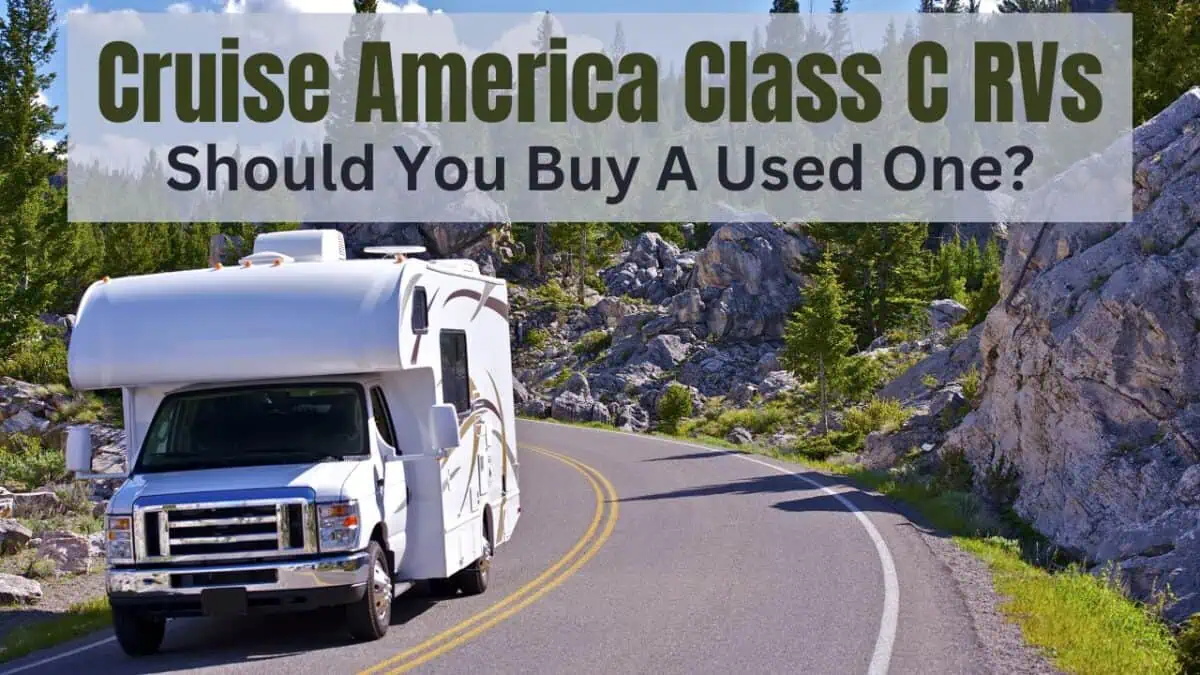
Cruise America RV Sales – should you buy a Class C RV from them or not?
Actually, I get asked about this a lot. In fact, I’m kind of surprised how often this subject comes up.
So it’s time to put my thoughts on the subject in an article now.
Of course, Cruise America is one of the largest RV rental companies in the country.
And renting really is a great way for especially newer RVers to be able to learn about motorhomes.
They can also learn about RVs in general and RV travel and camping.
And they can get experience and knowledge without having to go out and purchase an RV right away.
But what about buying used Class C rentals after their life of rental service is over? Is that a smart idea or not?
Well as almost everything else in the RV World there are pros and there are cons to buying a Cruise America Class C RV.
Table of Contents
- Pro #1 – You Can Buy The RV Cheap
- Pro #2- Their Claim Of Maintenance And Repair
- Pro #3 for Cruise America Used RV Sales – The Warranties
- Pro #4- Rent To Buy
- Pro #5- They Sell Smaller RVs
- Con #1 For Cruise America Used RV Sales – It's A Rental!
- Con #2- High Mileage
- Con #3 For Cruise America Used RV Sales- Not Much Brand Selection
- Con #4- Not Many Features And Amenities
- Con #5 – You May Have Better Choices
- Who Should Buy AN RV From Cruise America Used RV Sales?
- Conclusion
Pro #1 – You Can Buy The RV Cheap
So let’s start with the pros first. And the number one pro is that you can buy them cheap.
Yes, you can you can save considerably by buying from Cruise America RV Sales.
In fact, when I did the research for this article I was surprised at how inexpensive they were.
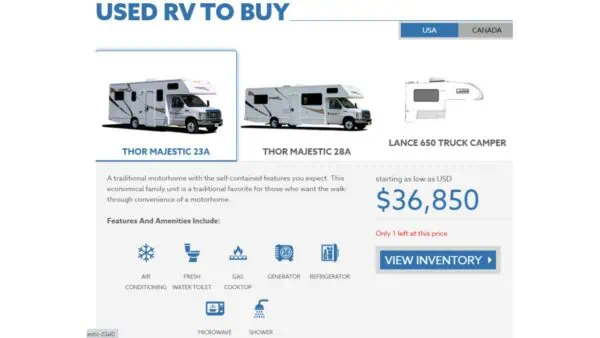
It appears that you can buy about a five year old Cruise America Class C for anywhere between the mid 30 thousands to the low 40 thousands.
And that’s a really good price for an RV of that age. So that’s a big pro for sure!
Pro #2- Their Claim Of Maintenance And Repair
Now the second pro is that Cruise America on their website claims that they maintain and refurbish every single unit before they sell it to you.
So in other words, what they’re saying is that as that unit goes through its service life they’re going to maintain it.
And as it comes in from each rental they maintain it and keep it in good shape.
Then before they sell it at the end of its service life they’re going to go even further.
They promise to go through and refurbish it completely from top to bottom.
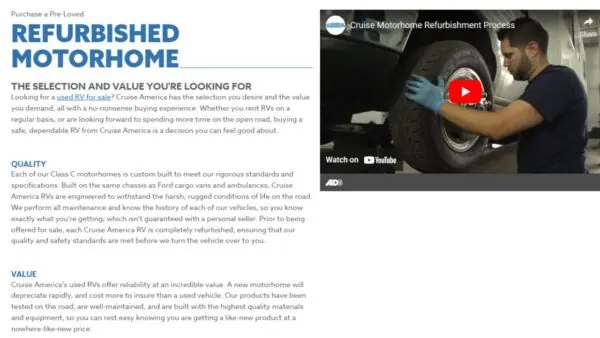
Now it’s up to you to decide how well you think they do with this kind of maintenance. Or how much you believe what they say.
Personally, I’m pretty skeptical when large companies make these kind of claims.
Because they’re very hard to actually verify. However, if they do indeed maintain and refurbish their units as they say they do, that’s a real pro!
Pro #3 for Cruise America Used RV Sales – The Warranties
Now the next pro is that Cruise America Used RV Sales is going to give you a warranty of some type with every sale.
In fact, they will give you a free three-month 3,000 mile warranty with every purchase.
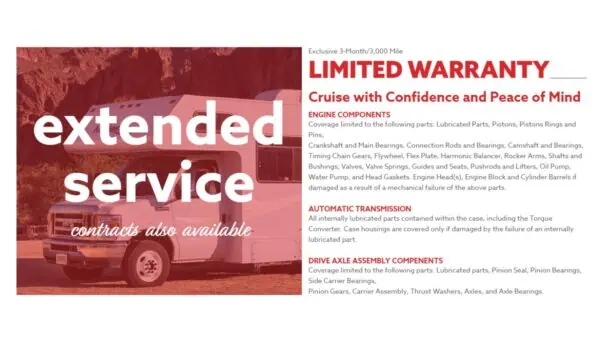
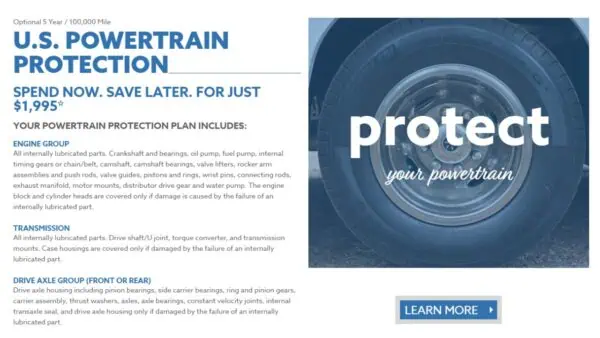
But they’ll give you the option of spending $2000 more for an extended warranty.
And that will buy you an engine and drivetrain warranty that extends the coverage for five years or 100,000 miles.
So when you buy other class C RVs on the used market very often you’ll be buying it as is.
But in this case, you have warranty options. And that’s a pro in favor of buying from Cruise America Used RV Sales.
Pro #4- Rent To Buy
The next pro is that it looks like you can actually rent to buy a used Class C RV.
Yes, it seems that Cruise America will allow you to rent one of their units first.

And you can go out and enjoy your camping experience in it for a while.
Then if you decide to buy one of their RVs, they will apply the money you spent on the rental to the cost of the RV. And that can also be considered a pro as well.
Pro #5- They Sell Smaller RVs
Now the final pro we want to talk about is that they’re all smaller class C RVs.
So that means that they’re easy to move around. They’re very nimble to get around with both in traffic and at the campsite.
And for newer RVers, this is a pretty good idea. Because it helps you get used to working with motorhomes.
And doing it in a way that you’re not overwhelmed by the bulk of a larger rig.
OK, that’s the pros of buying from Cruise America Used RV Sales. Now let’s talk about the cons as well.
Con #1 For Cruise America Used RV Sales – It’s A Rental!
And the number one con that’s in everybody’s mind is, it’s a rental RV!
And what is your experience with the way people treat rentals of anything?
I mean, from power tools to cars to whatever, how do people often treat rentals?
Well, isn’t it true that generally if they don’t own it, they don’t worry about it?
Instead, they will often abuse the rental in many cases, right? Well, it’s true of these RVs too.
They get hard use while in service. And very often, it’s by newer RVers who aren’t really good with working with an RV to begin with.
They aren’t familiar with driving it, parking it, and camping with it much at all.
So indeed, they often get hard use. And that’s a con that you need to think about before buying.
Con #2- High Mileage
Now the second con we’re going to talk about is usually they have very high mileage on their units.
In fact, the ones I have seen recently have somewhere between 125K to 150K miles on them. And for a gasoline engine that’s quite a bit.
Now if it was a diesel, you could expect it to go 300K – 400K miles and be fine. But it’s a gasoline engine.
So here’s a recommendation if you buy a Cruise America RV with that high mileage.
I think you should plan on budgeting for major repairs to the engine and drivetrain. And plan on it as if it could happen not long after purchase.
That way, if it does come up you’re ready for it. And you can have the funds on hand to take care of the necessary repairs.
And getting their extended warranty for coverage of major repairs could also be a smart move too.
Con #3 For Cruise America Used RV Sales- Not Much Brand Selection
OK, the next con is you really only have the selection of one brand of RV. And that’s Thor.
Also, the models you get to choose from are very limited too. It really comes down to just a couple of models or so. And that’s a con too.
There’s just not a lot of flexibility in your choice of RV when you buy from Cruise America.
Con #4- Not Many Features And Amenities
Now the next con is that these RVs are very spartan. And when I say that they are spartan, I really mean it.
There’s not a lot in the way of features in these RVs at all. So don’t expect to see slides, awnings, or leveling jacks in Cruise America Class C RVs.
Of course, these are things that you normally expect to see in most RVs you buy. But you’re not going to see them with Cruise America RV Sales.
And when you go inside, the interiors are very plain as well. It’s obvious that they’re made for utilitarian use, not for appearance in most cases.
But the thing to appreciate about this is that Cruise America is getting these RVs from Thor.
And they buy them with the idea of renting them out for the first several years of their life.
So they don’t want to put a lot of features in them. Because features and amenities are easily broken in many cases.
And they’re also very expensive to repair. So for the company’s sake, they’ve kept that extra cost as inexpensive as possible.
Now whether that appeals to you or not is up to you. But I would say that for many people, it’s probably going to be a con.
Con #5 – You May Have Better Choices
OK, the last con we’re going to talk about is that if you spend a little bit more, you can get more.
And I’m talking about $10K – $15 more than what Cruise America is going to cost.
And in that range, you’re going to be able to get non-rental units that haven’t had the hard use. Or most of the other cons that we’ve talked about.
Also, they’ll have lots more features too. And you can be able to buy them on the used market and not have to buy a rental RV.
So spending a little bit more money can often get you a lot more in the way of features and service.
All right, now having discussed the pros and the cons, let’s talk about who should consider buying from Cruise America Used RV Sales.
Who Should Buy AN RV From Cruise America Used RV Sales?
And honestly, it’s mainly beneficial for low price shoppers. In other words, those who want the least amount of investment possible.

Also those who may have a very tiny budget for buying an RV. So their budget just doesn’t allow them to get much more in the way of a motorhome.
And if that’s the case, this kind of RV can fit you very well. Especially if you don’t need or even want a lot of extras and amenities.
Now it’s true that there’s people that don’t even want those amenities or extras.
Because they feel that those luxuries are just more things to go wrong on an RV.
So if you’ve got a tight budget and you don’t want a lot of extras. then Cruise America Class C RVs could be right down your alley.
But of course, most buyers will probably want better quality and more features. Along with a wider selection as well.
And in that case, they really should choose to buy other used Class C RVs on the market. And choose from other brands to get better build quality.
Conclusion
So it really comes down to your choice of the way that you want to use this RV. And what you are looking for in it.
But let me say this. Whatever you buy, be sure to get a certified NRVIA inspector to go through it from top to bottom.

That way you can make sure that it works like it should when you buy it.
And to me, that’s especially true with Cruise America Class C RVs.
You need to make sure that they have refurbished it like they say that they did.
And when you get the inspection, whether it’s a Cruise America RV or not, you’re going to get a really good report on the real condition of that RV.
Then if there are issues you can get them addressed before you actually complete the sale.
And by doing that, you can make sure that your RV works from the very first day of ownership.
Whether you bought it from Cruise America Used RV Sales or not.
I hope this article has been helpful for you. And I hope you have safe and happy RV travels!