
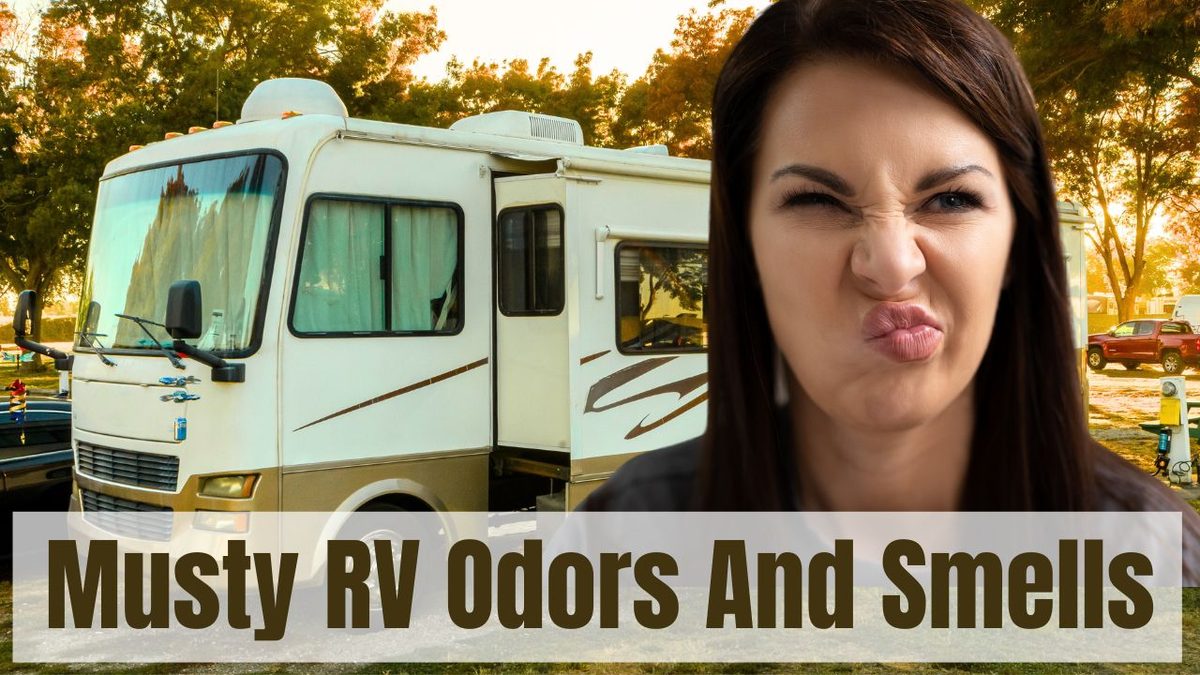
An RV owner has to learn about how to get rid of RV odors if they want to really enjoy their RV.
Because one of the quickest ways to spoil an otherwise enjoyable camping trip is to have a bad odor inside your RV.
Unfortunately, experienced RV owners know that unpleasant smells can develop for several reasons. They may come from the black or gray tank, excess moisture, spoiled food, pets, plumbing components, or something hidden inside the RV.
The key to learning about how to get rid of RV odors is to identify and correct the source. Air fresheners may cover a smell temporarily, but they usually do not solve the actual problem.
So let’s look at five common types of RV odors, what may be causing them, and how you can remove them.
1. How to Eliminate RV Sewer Smells
A sewer odor is probably the smell that RV owners complain about most often. It is unpleasant, persistent, and hard to ignore in such a small living space.
Many RVers immediately assume that the black tank needs to be cleaned. That may be true, but an RV sewer smell can come from several other sources too.
Start With the Black and Gray Tanks
Waste can accumulate on the walls and bottom of an RV holding tank. Over time, this material can create stubborn odors that ordinary dumping does not remove.
The black tank gets most of the attention, but do not overlook the gray tank. Food particles, grease, soap residue, hair, and other organic material can build up inside it and produce an odor that is surprisingly similar to a sewer smell.
Start by dumping and thoroughly flushing both holding tanks. If your RV has a built-in black-tank flush, use it according to the RV manufacturer’s instructions.
However, never turn on the black-tank flush and walk away. The black-tank valve should be positioned as required by your system’s instructions, and you must monitor the process continuously to prevent an overflow.
Consider Professional RV Tank Cleaning
If the odor has been present for a long time and normal flushing does not correct it, you may need a professional RV holding-tank cleaning service.
These companies use specialized equipment to remove hardened waste, mineral deposits, and other material from the tank’s interior surfaces. A professional cleaning may also help restore inaccurate tank sensors that have become coated with debris.
To find a service, search online for “RV black tank cleaning service near me.” Some companies operate regionally or nationwide, so compare customer reviews and ask what cleaning method they use.
Once the tanks are clean, good habits can help keep them that way.
Use Plenty of Water in the Black Tank
Too little water is one of the most common causes of RV black-tank problems. And it’s an easy way to get rid of RV odors.
Waste needs enough liquid to remain suspended and flow out of the tank when it is dumped. When RV owners conserve too much water while flushing, solids and toilet paper can accumulate inside the tank.
So use plenty of water with each flush. After dumping, add enough water to cover the bottom of the tank before using it again, following any recommendations from your RV or tank manufacturer.
Also, avoid leaving the black-tank valve open while connected to a sewer at a full-hookup campsite. Liquids can drain away while solids remain behind, eventually creating the dreaded “poop pyramid.”
Keep the valve closed, allow the tank to fill, and then dump it when necessary.

Use an Effective Holding-Tank Treatment
A holding-tank treatment can help control odors and break down waste between dumps. However, it should support good tank practices rather than replace them.
I have had good results with Happy Campers holding-tank treatment, and many other RV owners report similar experiences. Unlike a heavily perfumed product that mainly masks an odor, a good treatment helps manage the waste responsible for it.
Whatever product you choose, make sure it is compatible with your RV’s plumbing system and follow the directions on the container.
If you do, it can be a great way to get rid of RV odors.
Check the Plumbing Before Blaming the Tanks
If cleaning the holding tanks does not eliminate the odor, start checking the plumbing system.
Every sink and shower drain should have water in its P-trap. That water forms a barrier that helps prevent tank gases from entering the RV.
A P-trap can dry out while an RV is stored. Therefore, run a little water into every sink and shower drain before assuming that the tank itself is the problem.
Many RVs also have air admittance valves beneath the sinks. These inexpensive plumbing valves allow air into the drain system but should prevent odors from coming back into the RV.
If an air admittance valve sticks open or fails, gray-tank odors may enter through the cabinet below the sink. Replacing a failed valve often solves a mysterious sewer smell quickly.
Also inspect the toilet bowl seal. A small amount of water should normally remain in the bowl and create a seal against black-tank gases.
If the water gradually disappears, the toilet seal may be dirty, dry, damaged, or worn out.
Finally, examine the roof vents for the holding tanks. A blocked or improperly functioning vent may allow odors to enter the RV instead of escaping above the roof.
2. How to Remove Musty RV Smells
A musty odor usually indicates excess moisture somewhere inside the RV. It is especially common in humid climates and in RVs that remain closed for long periods.
The smell may be coming from damp carpeting, upholstery, bedding, cabinets, storage compartments, or condensation on hidden surfaces.
However, a persistent musty smell may also indicate a plumbing leak, exterior water intrusion, or mold growth. That means it should never be dismissed as nothing more than stale air.
Air Out the RV Thoroughly
Start with the simplest approach: ventilate the RV. It’s a quick and easy way to get rid of RV odors.
Open the windows, doors, and roof vents when weather conditions allow. Turn on the vent fans and use portable fans to keep air moving through the interior.
Remove bedding and cushions if they feel damp or smell stale. Air them outdoors in a dry location when possible.
In many cases, good ventilation will remove an odor caused by an RV being closed for a while. However, if the smell returns shortly after you close it again, excess moisture is probably still present.
Look for the Source of the Moisture
Check beneath sinks, around the toilet, near the shower, and around the water heater and plumbing connections. Feel for damp flooring and inspect inside lower cabinets and exterior storage compartments.

Next, look around windows, doors, roof openings, slideout corners, and wall-to-roof seams for staining, softness, discoloration, bubbling, or other evidence of water intrusion.
Water can travel through an RV’s wall or ceiling before it becomes visible. Therefore, the place where you notice a stain may not be the actual source of the leak.
If you find unexplained moisture or signs of water damage, correct the leak before trying to remove the odor. Otherwise, the smell will continue to return, and the underlying damage may become much more expensive.
For more help preventing these problems, see my collection of RV maintenance tips that can save time and money.
Use Moisture Absorbers Appropriately
Bags of activated charcoal may help capture some odor-causing compounds in the air. They are inexpensive, reusable in some cases, and easy to place in cabinets or storage areas.
A moisture-absorbing product such as DampRid can also help in smaller enclosed areas. These products collect moisture, though, so place them where the container cannot tip or spill while the RV is moving.
Moisture absorbers can be helpful during storage, but they have limited capacity. They will not correct an active water leak or control the humidity in a heavily damp RV.
But used correctly, they are a great way to get rid of RV odors.
Use an RV Dehumidifier
A small dehumidifier may be a better solution if you live or camp in a humid area.
Choose one that is appropriate for the size and temperature of your RV. Also, make sure you can empty it regularly or arrange for safe continuous drainage.
A simple digital hygrometer can help you monitor the relative humidity inside the RV. If the humidity remains high for extended periods, moisture can collect on windows, walls, mattresses, and other cool surfaces.
Reducing the humidity helps protect the RV as well as making the interior feel and smell more comfortable.
According to the EPA, mold needs moisture and oxygen to grow, so controlling the moisture source is the essential first step—not merely covering the resulting odor. Learn more about moisture and mold from the EPA.
3. How to Remove Odors From an RV Refrigerator
RV refrigerators are compact, and there is very little space for an unpleasant smell to disperse. A leaking container or forgotten food item can make the entire refrigerator smell bad.
The problem becomes even worse when an RV refrigerator is turned off and closed during storage.
This affects a lot of RVers and is a good reason why you should learn how to get rid of RV odors from this source.
Empty and Clean the Refrigerator
Remove all food, shelves, drawers, and removable containers. Check carefully for spills beneath the drawers and along the edges of the shelves.
Clean the interior with a mild solution recommended by the refrigerator manufacturer. A mixture of baking soda and water is commonly used because it cleans without leaving a strong perfume behind.
Use a soft cloth to wipe the walls, shelves, seals, drawers, and door compartments. Do not use harsh cleaners or abrasive pads that could damage the interior surface.
After cleaning, dry everything thoroughly before returning the shelves and drawers.
Check the Drain and Drip Area
Some RV refrigerators have a condensate drain tube that carries moisture to a small collection or evaporation container outside the refrigerator.
If the drain becomes blocked or the container accumulates dirty water and debris, it may produce an unpleasant odor. Consult the refrigerator manual to find and clean these components safely.
Also inspect the door seals. Food residue and moisture can collect in the folds where they may not be immediately visible.
Keep the Doors Open During Storage
When the refrigerator is turned off, remove all food and wipe the interior dry. Then leave the refrigerator and freezer doors propped open.
Many RV refrigerators have a storage position or latch that holds the doors slightly ajar. This airflow helps prevent mildew and stale odors from developing.
Placing an open box of baking soda inside may help absorb mild food odors while the refrigerator is operating. However, it is still important to clean spills and remove old food instead of relying entirely on the baking soda.
You can find more information about caring for major RV components in my RV systems and equipment guide.
4. How to Control Pet Odors in an RV
Many of us love traveling with our pets, but a small RV can hold pet odors more noticeably than a house. And they are one of the biggest reasons you may have to get rid of RV odors.
Hair, dander, damp fur, bedding, accidents, and litter boxes can all contribute to the problem. Fortunately, a regular cleaning routine can keep most pet smells under control.
Clean the Pet and Its Belongings
Regular grooming and bathing can reduce the amount of odor, hair, and dander brought into the RV. Of course, not every pet is enthusiastic about bath time, including ours.
Wash pet bedding and blankets regularly. Clean food bowls, water bowls, carriers, toys, and any favorite places where your pet sleeps.
Vacuum upholstery, carpets, and corners where hair collects. If your RV has removable cushion covers, wash them according to the manufacturer’s instructions.
For an accident on carpet or upholstery, use a cleaner designed to break down pet-related organic material. Always test the product in an inconspicuous area first to make sure it does not damage or discolor the surface.
Consider a Small Air Purifier
A portable air purifier with an appropriate particle filter can help capture airborne pet hair and dander. A unit that includes activated carbon may also reduce some odors.
Choose a purifier sized for the RV’s interior and replace or clean its filters as recommended. A dirty filter can reduce performance and may eventually become a source of odors itself.
However, remember that an air purifier is a supplement to cleaning. It cannot remove the source of an odor from dirty bedding, carpet, upholstery, or a hidden pet accident.
5. How to Track Down a Strong Unidentified RV Odor
Sometimes an RV develops a strong smell that does not respond to ordinary cleaning. When that happens, do not immediately try to overpower it with fragrance or a more aggressive treatment.
Instead, become an odor detective. It’s the first step in learning how to get rid of RV odors.
Try to determine where the smell is strongest and when it appears. Does it become worse when the air conditioner runs, when a particular sink is used, after rain, or when the RV has been closed?
Those clues may lead you to the actual cause.
Check for Hidden Sources
Inspect areas that are easy to overlook, including:
- Beneath and behind furniture
- Under mattresses and cushions
- Inside cabinets and exterior compartments
- Around plumbing connections
- Near heating ducts and floor registers
- Behind the refrigerator
- Around the water heater
- Beneath sinks and the shower
- Inside the basement or underbelly
- Near the house batteries
- Around stored food and pet supplies
A dead rodent, damaged battery, electrical component, propane leak, plumbing leak, or hidden water intrusion can all create a strong odor.
If you smell propane, rotten eggs, burning material, hot wiring, or overheated plastic, leave the RV and investigate from a safe location. Do not use an open flame or operate electrical switches while trying to find a possible gas leak.
Contact a qualified RV technician or emergency service when appropriate.
Should You Use an Ozone Generator in an RV?
Ozone generators are sometimes promoted as a solution for stubborn odors, and professional restoration companies may use ozone under controlled conditions.
However, I no longer recommend that an RV owner casually buy an inexpensive ozone generator and operate it as a general air cleaner.
The EPA warns that inhaled ozone can damage the lungs and cause coughing, chest pain, throat irritation, and shortness of breath. It may also worsen asthma and other respiratory conditions.
In addition, concentrations low enough to remain within public-health limits are generally ineffective against many indoor contaminants and odor-causing chemicals. Ozone can also produce irritating byproducts and damage rubber, electrical-wire coatings, fabrics, dyes, and other materials—all of which may be present in an RV.
If severe smoke or another deeply embedded odor remains after the source has been removed, consult an experienced restoration professional. Nobody, including people, pets, or plants, should be exposed to an ozone treatment, and the RV must be properly ventilated and confirmed safe before reentry.
You can read the complete EPA guidance concerning ozone generators.
The Best Way to Keep an RV Smelling Fresh
The most effective approach to RV odor removal follows three steps:
- Find and eliminate the source.
- Ventilate the RV with fresh outdoor air.
- Use appropriate air cleaning or moisture control as a supplement.
That order matters. Fragrances, charcoal, air purifiers, and moisture absorbers can be useful, but none can permanently correct a dirty holding tank, failed plumbing valve, leaking roof, pet accident, or spoiled food.
Regular cleaning and maintenance will also prevent many odors from developing. My article about the biggest RV mistakes owners make covers other simple habits that can help protect your RV.
And the tips found in this article should help you be able to get rid of RV odors effectively.
Frequently Asked Questions About RV Odors
Why does my RV smell like sewer gas?
Possible causes include dirty black or gray tanks, a dry P-trap, a failed air admittance valve, a toilet bowl seal that will not hold water, or a blocked holding-tank roof vent.
Start by identifying where the smell is strongest before paying for a tank cleaning or replacing components.
Why does my RV smell like sewer gas after dumping?
Waste may remain in the tanks, or the dumping process may create pressure changes that allow odors to enter through a plumbing problem.
Flush the tanks, add water back to the black tank, fill dry P-traps, check the toilet seal, and inspect the air admittance valves and roof vents.
How do I stop my RV black tank from smelling?
Use plenty of water, keep the black-tank valve closed between dumps, flush the tank regularly, and use a suitable holding-tank treatment according to its directions.
If hardened waste has accumulated, a professional tank cleaning may be needed.
Why does my RV smell musty?
A musty RV smell usually indicates excess moisture. The cause may be humidity, condensation, damp fabric, a plumbing leak, or exterior water intrusion.
Air out the RV, reduce the humidity, and inspect carefully for moisture damage. If the odor returns, continue looking for the underlying source.
Can I leave DampRid in my RV during storage?
A moisture absorber may help in a small, enclosed RV, but its container can fill and spill. Position it securely, inspect it regularly, and follow the product instructions.
For ongoing high humidity, a properly sized dehumidifier may provide better control if reliable electrical power and safe drainage are available.
Will an air purifier remove RV odors?
An air purifier can reduce airborne particles, and activated carbon may help with certain odors. However, it cannot eliminate an odor source such as dirty fabric, standing water, spoiled food, a plumbing problem, or a contaminated holding tank.
Is an ozone generator safe to use in an RV?
Ozone can harm people and animals, and it may damage materials inside an RV. It should never be used as an air purifier in an occupied space.
For an extreme odor requiring restoration work, consult a qualified professional rather than treating the RV casually with a consumer ozone machine.
Conclusion
Unpleasant RV odors are more than an annoyance. In some cases, they are an early warning of a holding-tank problem, plumbing failure, moisture intrusion, electrical issue, or another condition that deserves attention.
So do not settle for covering a bad smell with perfume. Locate the source, correct the underlying problem, clean the affected area, and then use ventilation, moisture control, or air filtration where appropriate.
When you follow that process, your RV can continue looking good, working well, and smelling fresh throughout your camping and travel adventures.
Have safe and happy travels, my friends!