
Lithium RV batteries have become one of the most talked-about upgrades in the RV industry. However, the amount of conflicting information online has left many RV owners unsure about what to believe.
On one side, you have people who say every RVer should immediately replace their lead-acid batteries with lithium. But on the other side, some claim that lithium batteries are dangerous and could suddenly catch fire or explode inside an RV.
As usual, the truth is somewhere between those extremes.
Lithium RV batteries offer some very impressive advantages, especially for boondockers and RVers with solar power. However, they cost more initially, require the right supporting equipment, and may not provide enough benefit for someone who spends almost every night connected to shore power.
If you are still comparing your options, my guide to the three main RV house battery choices explains the differences between flooded lead-acid, AGM, and lithium batteries.
So let’s look at the pros and cons of lithium RV batteries, clear up some common myths, and determine whether they make sense for your style of RV travel.
What Kind of Lithium Batteries Are Used in RVs?
When RVers talk about lithium batteries, they are usually referring to lithium iron phosphate batteries, commonly abbreviated as LiFePO4 or LFP.
That distinction is important because not all lithium battery chemistries are the same. The lithium-ion batteries used in some consumer electronics and electric vehicles may have different performance and safety characteristics.
LiFePO4 batteries are popular in RVs because the chemistry is relatively stable, delivers a long cycle life, and works well for deep-cycle applications. Quality RV lithium batteries also include a battery management system, or BMS, that monitors and protects the battery.
A BMS can provide protection against excessive voltage, low voltage, overcurrent, short circuits, and unsafe temperatures. However, it does not replace proper wiring, fusing, installation, or charging equipment.
The Advantages of Lithium RV Batteries
There are many reasons why RV owners are upgrading from flooded lead-acid or AGM batteries to LiFePO4 batteries.
Lithium Batteries Weigh Much Less
One of the first benefits you will notice is the weight difference.
A typical 100-amp-hour flooded lead-acid battery may weigh 60 to 70 pounds. Meanwhile, a comparable 100-amp-hour LiFePO4 battery commonly weighs between 25 and 35 pounds.
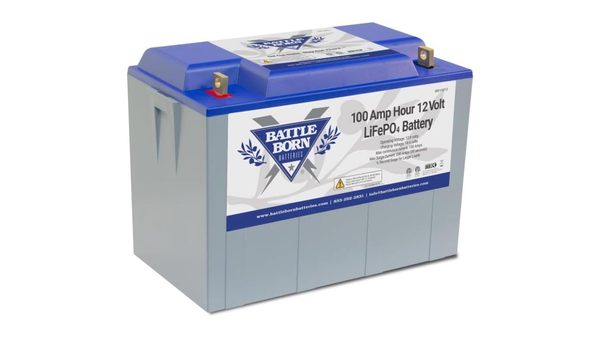
For example, the current Battle Born 100Ah battery weighs about 31 pounds. So replacing two heavy lead-acid batteries with lithium could remove 60 pounds or more from your RV.
That can be a meaningful benefit in a smaller travel trailer or motorhome with limited cargo carrying capacity. And because lithium provides more usable energy per rated amp-hour, you may not need as many batteries to obtain the power you need.
More of the Rated Capacity Is Usable
Lead-acid batteries generally last longer when they are not repeatedly discharged below approximately 50% state of charge.
So a 100-amp-hour flooded lead-acid battery is often treated as providing around 50 amp-hours of regularly usable capacity. Deeper discharges are possible, but doing so repeatedly can shorten battery life considerably.
Many LiFePO4 batteries allow 80% to 100% of their rated capacity to be used. That means a 100-amp-hour lithium battery may provide nearly twice the practical usable energy of a similarly rated lead-acid battery.
However, that does not mean you should intentionally drain a lithium battery completely every day. Depth of discharge still affects cycle life, and leaving any battery deeply discharged can eventually damage it.
Lithium Batteries Can Recharge Faster
Lithium batteries can usually accept a higher charging current than lead-acid batteries.

A typical 100Ah lead-acid battery may accept around 20 to 30 amps during bulk charging, while some 100Ah LiFePO4 batteries can accept 50 amps or more. The actual limit depends on the battery and its BMS.
This faster charge acceptance can reduce generator run time and help RVers make better use of limited solar-producing hours.
However, lithium batteries will only charge faster if the converter, solar controller, alternator-charging system, cables, and other equipment can safely supply the additional current.
They Maintain Voltage Under Load
Lead-acid battery voltage gradually drops as the battery discharges. And under a heavy load, that voltage can sag enough to cause an inverter or other appliance to shut down.
Lithium batteries maintain a much flatter voltage throughout most of their discharge cycle. So lights, pumps, inverters, and other 12-volt equipment can operate more consistently.
This makes LiFePO4 RV batteries particularly useful when powering appliances through an inverter.
Very Little Routine Maintenance Is Required
Flooded lead-acid batteries require regular inspection. Owners must monitor electrolyte levels, add distilled water when needed, clean corrosion from the terminals, and make sure the battery compartment remains ventilated.
LiFePO4 batteries do not require watering or periodic equalization. And terminal corrosion is generally much less of a problem.
However, maintenance-free does not mean inspection-free. Battery cables, connections, fuses, mounting hardware, and the battery compartment should still be checked periodically.
No Off-Gassing During Normal Operation
Flooded lead-acid batteries can release hydrogen and oxygen while charging. Hydrogen is flammable, so these batteries must be installed in a properly ventilated compartment away from ignition sources.
LiFePO4 batteries do not normally release hydrogen gas while charging. As a result, many models can be installed inside an RV when the battery manufacturer permits it.
But that does not mean a lithium battery can be placed just anywhere. It must be securely mounted, protected from excessive heat, moisture, physical damage, and short circuits, and installed according to the manufacturer’s instructions.
Lithium Batteries Usually Last Longer
Quality LiFePO4 batteries are commonly rated for approximately 3,000 to 5,000 cycles, although the actual number depends on the battery, depth of discharge, temperature, charging practices, and how the manufacturer defines the end of its useful life.
By comparison, many conventional lead-acid batteries deliver several hundred cycles, although premium lead-acid designs can do better when properly maintained.
So it is reasonable to expect a quality lithium RV battery to last much longer than a typical flooded lead-acid battery. However, saying every lithium battery will last exactly ten times longer is too broad because battery quality and usage vary substantially.
Excellent for Solar and Partial Charging
Solar power is naturally inconsistent. Clouds, shade, weather, and the position of the sun cause charging output to rise and fall throughout the day.
LiFePO4 batteries handle partial-state-of-charge operation much better than most lead-acid batteries. Lead-acid batteries should regularly return to a full charge because remaining partially discharged can promote sulfation and reduce capacity.
That makes lithium batteries a very good match for RV solar systems, particularly when the battery bank may receive an incomplete charge on cloudy days.
The Disadvantages of Lithium RV Batteries
Lithium batteries have many advantages, but they are not the perfect solution for every RVer.
The Initial Cost Is Higher
Price continues to be the largest disadvantage.
Depending on capacity, features, certifications, warranty coverage, and brand, a 100Ah LiFePO4 battery can cost anywhere from a few hundred dollars to nearly $1,000. Heated batteries and batteries with advanced monitoring generally cost more.
For comparison, Battle Born currently lists its standard 100Ah 12-volt battery at $799 during a promotion, with a regular listed price of $949. Its published specifications include a 31-pound weight, 100% usable depth of discharge, and a rated cycle life of 3,000 to 5,000 cycles. Battle Born 100Ah battery specifications
However, price alone does not determine quality. You should also compare the BMS, continuous-current rating, low-temperature protection, certifications, warranty, technical support, and the reputation of the seller.
A Lithium Conversion May Require Other Upgrades
Changing from lead-acid to lithium is not always as simple as replacing one battery with another.
LiFePO4 batteries require a compatible charging profile. An older RV converter may charge the battery only partially, or it may use charging and equalization settings that are inappropriate for lithium.
If these two devices are confusing, I also explain the difference between an RV converter and inverter and the job each one performs.
Your solar charge controller must also have the correct lithium settings. And if the RV charges the house batteries from the engine alternator, a DC-to-DC charger may be needed to control the current and protect both the alternator and battery bank.
Depending on your system, you may also need new battery cables, properly sized fuses, busbars, a disconnect switch, or a shunt-based battery monitor.
So before buying lithium batteries, consider the cost of the complete conversion rather than looking only at the battery price.
Cold-Weather Charging Requires Special Attention
LiFePO4 batteries can usually discharge and provide power below freezing. However, charging them when the battery cells are too cold can cause permanent internal damage.
The exact temperature limit varies by manufacturer. Battle Born currently advises against charging below approximately 25 degrees Fahrenheit unless the battery has internal heating, while some Victron batteries require a cell temperature above 41 degrees.
A quality BMS should prevent charging when the cells are outside the manufacturer’s safe temperature range. However, not every inexpensive battery provides reliable low-temperature protection.
RVers who camp in cold weather can install the battery in a protected interior compartment or choose a heated lithium battery. Battle Born provides additional guidance about LiFePO4 temperature limits.
A BMS Can Disconnect the Battery
A battery management system is an important safety feature, but owners need to understand how it works.
If voltage, temperature, or current moves outside the permitted range, the BMS may disconnect the battery. That protects the cells, but it can also cause the RV’s 12-volt power to shut off without much warning.
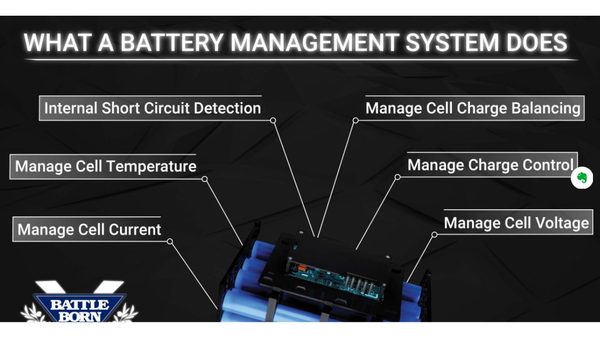
This is especially important when operating a high-powered inverter. The total continuous and surge current must stay within the limits of the batteries and their BMS units.
State of Charge Is Harder to Estimate by Voltage
The flat voltage curve that helps lithium batteries operate appliances consistently also makes their state of charge difficult to estimate with a basic voltage display.
A lithium battery can remain near its normal voltage through much of the discharge cycle and then drop quickly near the end.
So a shunt-based battery monitor is strongly recommended. It measures current entering and leaving the battery bank and provides a much more useful estimate of the remaining capacity.
Common Lithium RV Battery Myths
Now let’s clear up some of the misinformation surrounding lithium RV batteries.
Myth 1: Lithium RV Batteries Commonly Explode
Any battery stores a substantial amount of energy, and any improperly manufactured, damaged, overcharged, short-circuited, or incorrectly installed battery can fail.
However, LiFePO4 chemistry is more thermally and chemically stable than several other lithium-ion chemistries. Quality batteries add a BMS and other protective features to reduce the risk further.
Flooded lead-acid batteries have their own hazards. They contain corrosive acid and can release flammable hydrogen during charging, which is why proper ventilation is essential.
So the correct conclusion is not that one type of battery has no risk. Instead, choose a battery from a reputable manufacturer, look for appropriate independent testing and certifications, and make sure the entire system is correctly installed and protected.
Myth 2: Lithium Batteries Cannot Be Used in Cold Weather
Lithium batteries can usually discharge and power an RV below freezing.

The main restriction involves charging. If the internal cells are below the manufacturer’s minimum charging temperature, the BMS should stop charging until the battery warms up.
A heated lithium battery or temperature-controlled interior installation can solve that problem for many cold-weather RVers.
Myth 3: Lithium Batteries Are Always Too Expensive
Lithium batteries cost more initially, but the purchase price is only one part of the calculation.
Their longer cycle life, greater usable capacity, reduced weight, faster charging, and lack of routine maintenance can make them economical over many years of frequent use.
However, an occasional camper may never cycle the batteries often enough to recover the higher initial cost. So lithium is not automatically the least expensive answer for everyone.
Myth 4: Every RVer Needs Lithium Batteries
Lithium has become so popular that some RV owners feel as though their electrical system is outdated without it.
But the right battery depends on how you camp.
If you spend most nights connected to shore power and use the batteries mainly for lights, the water pump, and brief overnight stops, a quality lead-acid or AGM battery bank may still serve you very well.
Who Benefits Most From Lithium RV Batteries?
Lithium batteries make the most sense for RVers who regularly rely on stored electrical power.
Boondockers and Dry Campers
Boondockers can benefit from the greater usable capacity, faster generator charging, and ability to handle partial solar charging.
Some RVers combine solar power with an inverter generator while boondocking so they can recharge their battery bank even when sunlight is limited.
And because lithium batteries weigh less, owners can install a larger usable battery bank without consuming as much cargo capacity.
RVers With Large Solar Systems
Solar and lithium work very well together when the charge controller is properly configured.
Lithium batteries can accept strong solar output quickly, and they tolerate the changing charging conditions caused by clouds and shade better than conventional lead-acid batteries.
RVers Who Use Large Inverters
If you want to power a microwave, coffee maker, residential refrigerator, or other significant load from an inverter, lithium batteries can provide more stable voltage and higher current.
Battery capacity becomes especially important when powering an RV refrigerator off-grid because compressor-style refrigerators require a dependable source of electricity.
However, the battery bank, BMS, inverter, wiring, and fuses must all be correctly sized for the load.
Owners Concerned About Weight
Lithium can be especially helpful in travel trailers, truck campers, camper vans, and smaller motorhomes with limited cargo capacity.
Reducing battery weight does not increase the RV’s official cargo carrying capacity, but it leaves more of that capacity available for other items.
Who May Not Need Lithium Batteries?
Lithium may not be necessary if you camp almost exclusively in RV parks with full hookups.
In that situation, the converter supplies most of your 12-volt power while also maintaining the batteries. So you may rarely take advantage of lithium’s deeper usable capacity or rapid charging.
Lead-acid can also remain a practical choice for someone who camps only a few weekends each year and has a limited upgrade budget.
The important point is to buy the battery system that fits your actual needs, not the system that happens to be receiving the most attention online.
How to Choose the Best Lithium Battery for Your RV
Do not judge a lithium battery by price and advertised amp-hours alone.
Look for a dependable battery management system with protection against high and low voltage, overcurrent, short circuits, and unsafe temperatures. Also verify the continuous-current rating, especially if you plan to operate an inverter.
Check for relevant independent testing and certifications, along with clear installation documentation and accessible technical support. A long warranty has little value if the company is difficult to reach or may not be around when you need help.
You should also confirm whether the battery can be connected in series or parallel, how many batteries the manufacturer allows in a bank, and whether batteries of different ages or capacities can be combined.
And if you camp in freezing weather, choose a battery with dependable low-temperature cutoff protection or internal heating.
Is Battle Born a Good RV Lithium Battery?
Battle Born is one premium brand worth considering. I am not affiliated with the company, and I am not being paid or compensated to recommend it.
The company has a long-standing presence in the RV community, provides detailed technical documentation, and builds its 100Ah batteries with an internal BMS. Its batteries also carry published cycle-life, temperature, current, and charging specifications.
However, Battle Born is not the only acceptable choice. Other manufacturers offer quality LiFePO4 RV batteries, so compare specifications, testing, warranty support, and total system cost before making a decision.
Planning an RV Lithium Battery Upgrade
Before ordering batteries, determine how much electricity you actually use each day.
Before making major changes, it helps to spend some time understanding your RV’s electrical system and how its batteries, converter, inverter, solar equipment, and generator work together.
List your 12-volt appliances and anything you intend to power through an inverter. Then estimate daily amp-hour consumption and build a battery bank with enough reserve capacity.
Next, verify the following parts of your RV electrical system:
- Converter or inverter-charger
- Solar charge controller
- Alternator-charging circuit
- Battery cables and connections
- Main battery fuse
- Disconnect switch
- Battery monitor
- Battery mounting location
If you are uncertain about any part of the conversion, consult a qualified RV electrical technician. Lithium batteries can deliver very high current, so improper cable sizing or circuit protection can create a serious hazard.
Frequently Asked Questions About Lithium RV Batteries
Are lithium RV batteries safe?
Quality LiFePO4 batteries are generally safe when properly manufactured, installed, charged, and protected.
Choose a reputable product with an effective BMS, use correctly sized cables and fuses, and follow the manufacturer’s installation requirements.
Can I replace my lead-acid RV battery with lithium?
Possibly, but first verify that the converter, solar controller, alternator-charging system, battery monitor, cables, and fuses are compatible.
Some newer RVs already have a lithium charging mode, while older RVs may require several upgrades.
Can lithium RV batteries be used below freezing?
Most can continue discharging below freezing, although available capacity may decrease.
However, they should not be charged below the manufacturer’s minimum temperature unless they have an approved internal heating system.
Do lithium RV batteries need ventilation?
LiFePO4 batteries do not release hydrogen during normal charging like flooded lead-acid batteries do.
Many can therefore be installed inside an RV, but only in a secure location permitted by the manufacturer and protected from heat, moisture, physical damage, and short circuits.
How long do lithium RV batteries last?
Quality LiFePO4 batteries are often rated for 3,000 to 5,000 cycles, and some manufacturers advertise even more.
Actual life depends on depth of discharge, temperature, charging practices, battery quality, storage conditions, and usage.
Can I mix lithium and lead-acid batteries?
Lithium and lead-acid batteries should not be connected directly together as one house battery bank because their charging requirements and voltage characteristics are different.
They may be used in separate, electrically isolated battery systems when the charging and control equipment is specifically designed for that arrangement.
Are lithium batteries worth it for occasional campers?
They may not be.
If you camp infrequently and normally have shore power, a well-maintained lead-acid or AGM bank could provide everything you need for much less initial expense.
Conclusion: Do You Really Need Lithium RV Batteries?
Lithium RV batteries offer more usable capacity, less weight, faster charging, stable voltage, minimal maintenance, and a much longer potential service life than conventional flooded lead-acid batteries.
Those advantages make LiFePO4 batteries especially attractive for boondockers, solar users, inverter users, and RVers who depend heavily on battery power.
However, lithium batteries cost more initially and may require upgrades to the converter, solar controller, alternator-charging system, cables, fuses, and monitoring equipment.
So lithium is not automatically the best choice for every RV owner.
If you spend most of your time in campgrounds connected to shore power, a quality lead-acid or AGM battery bank may continue to serve you very well. But if you regularly camp off-grid and want more usable energy with less weight and faster charging, lithium batteries deserve serious consideration.
The goal is not to buy lithium because everyone else is doing it. The goal is to choose the battery system that safely and reliably supports the way you actually use your RV.