
RV recalls are not something most owners enjoy thinking about. However, every owner needs to understand what they mean, how to find them, and what to do when affected.
Some RV recalls involve relatively simple corrections. Others involve serious hazards such as fire, loss of braking, tire failure, steering problems, propane leaks, or structural failures.
So an RV recall should never be ignored. But you should not panic just because you discover one, either.
Learn what the recall involves, follow its safety instructions, and arrange the required repair promptly. Here is the process I recommend.
What Is an RV Safety Recall?
The National Highway Traffic Safety Administration, usually called NHTSA, oversees safety recalls involving motor vehicles and related equipment in the United States. That includes motorhomes, travel trailers, fifth wheels, tires, and many components installed in RVs.
A safety recall is issued when a vehicle or related equipment has a safety defect or does not comply with a federal motor vehicle safety standard.
Not every product problem becomes a safety recall. An RV can have an expensive quality or appliance problem without meeting the definition of a safety defect.
Manufacturers may also conduct customer-service campaigns or technical service programs that are separate from formal NHTSA safety recalls. Therefore, it is wise to ask the RV manufacturer about all open campaigns connected with your unit, not just federal recalls.
How Serious Can an RV Recall Be?
RV recalls vary considerably in severity. One recall might require a new warning label or a simple adjustment, while another may involve a condition that could cause a crash, fire, injury, or death.
For example, a recall could affect an RV frame, axle, suspension part, hitch, tire, braking system, electrical connection, refrigerator, water heater, propane component, emergency exit, or another piece of safety equipment.
The recall notice should explain the safety risk and the remedy. It may also contain urgent directions such as do not drive, stop using the appliance, or park the RV outside and away from structures until the problem is corrected.
Take those instructions literally. Do not continue traveling or using an affected component simply because it appears to be working normally.
You can find more information about everyday hazards in my article on the top RV safety dangers.
Why Are RV Recalls So Common?
RVs are complex products. Even a relatively small travel trailer combines a frame, running gear, electrical wiring, propane equipment, plumbing, appliances, furnishings, windows, doors, and many other systems.
And unlike most passenger vehicles, RVs still involve a significant amount of hands-on assembly. That creates opportunities for variations in workmanship and installation from one unit to another.
There is no question that high production pressure and weak quality control can contribute to defects. However, that is only part of the explanation.
Most RV manufacturers buy important components from a limited group of suppliers. If a widely used refrigerator, water heater, axle, window, tire, or electrical part has a safety defect, the same recall can affect many RV brands and manufacturers.
Motorhomes can be even more complicated because recalls may originate with the chassis manufacturer, the final-stage RV manufacturer, or a supplier whose equipment was installed in the coach.
Does a Long Recall List Mean an RV Is Poorly Built?
Not necessarily. Recall history is useful information, but the number of recalls alone is not a complete measure of RV quality.
A large manufacturer may appear in more recalls simply because it produces far more RVs. And one defective supplier component can place many models on recall even if the RV builder did not manufacture that component.
On the other hand, repeated recalls involving serious defects, poor remedies, or similar problems may deserve closer investigation. So consider the nature and pattern of the recalls rather than relying only on a total count.
Who Can Issue an RV Recall?
An RV manufacturer or equipment manufacturer may voluntarily decide that a safety defect exists and conduct a recall. Manufacturers have compliance and safety responsibilities that include investigating problems and reporting qualifying defects.
NHTSA can also investigate a potential safety problem. Consumer complaints, manufacturer information, testing, incident data, and other evidence may contribute to an investigation and recall decision.
There is not a fixed number of complaints that automatically triggers an investigation or recall. NHTSA reviews the available information to determine whether a possible safety-defect trend exists.
Once a recall is established, the manufacturer must notify affected owners and provide a remedy. Depending on the circumstances, the remedy may involve repair, replacement, a refund, or, in rare cases, repurchase.
How RV Owners Are Notified About Recalls
Manufacturers normally send recall notices to owners using the contact information available in their records. Dealers are also notified so they can identify affected inventory and perform the remedy.
But those records are not always current. People move, change email addresses, and sell their RVs, so a recall letter may never reach the present owner.
This is especially important if you bought a used RV. The RV manufacturer may still have the original purchaser’s name and address, with no record that you now own the unit.
So contact the manufacturer and register yourself as the current owner. Give them the RV’s vehicle identification number, your name, and your current contact information.
If you own a motorhome, it is also wise to update the chassis manufacturer’s records when applicable. And if you have an important appliance or piece of equipment with its own product registration, update that manufacturer as well.
How to Check an RV for Open Recalls
Do not rely entirely on receiving a letter. The most proactive approach is to check for RV recalls yourself.
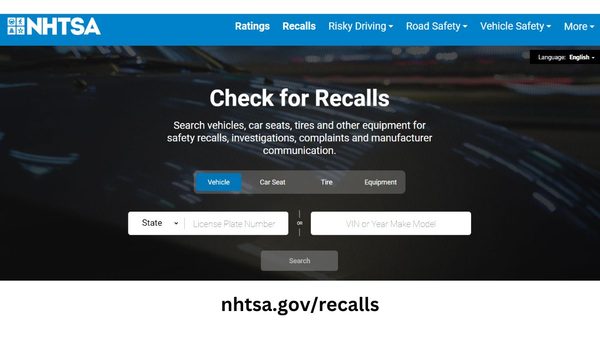
Visit the official NHTSA recall lookup page and enter the 17-character vehicle identification number, or VIN, for the RV. Depending on the vehicle and available records, the tool may also allow a license-plate search.
You can usually find the VIN on the RV’s federal certification label, registration, title, or insurance documents. A motorhome may also display it near the windshield or driver area.
If you cannot find the correct number, contact the manufacturer. Do not confuse a floorplan, model, stock, or appliance serial number with the RV’s VIN.
Also Search by Make, Model, and Equipment
The VIN search is the best starting point for determining whether a particular RV has an open safety recall. But NHTSA also lets you search by year, make, and model, as well as for tires and other vehicle-related equipment.
That additional research can be valuable for an RV. A recall could involve an appliance or component, and motorhome owners may need to consider both the completed coach and its underlying chassis.
If your RV contains an item named in an equipment recall, compare its model and serial number with the affected range. Contact the equipment manufacturer if you are unsure.
Understand the Limits of a VIN Recall Search
A result showing 0 unrepaired recalls associated with this VIN is encouraging, but it does not provide a complete lifetime history of the RV.
According to NHTSA, a VIN search generally does not display recalls that have already been repaired. It may also omit some recently announced recalls whose affected VINs are still being identified, recalls more than 15 years old, and recalls from certain small or specialty manufacturers.
The lookup also does not show manufacturer customer-service campaigns that are not safety recalls. So if you have questions, contact the RV, chassis, or component manufacturer directly.
NHTSA recommends checking regularly because recall information can change. Its free SaferCar app can also monitor saved vehicles and equipment and notify you when a new safety recall is announced.
What to Do When Your RV Has an Open Recall
Finding a recall does not mean that your RV is ruined or that you should immediately sell it. It means you need to understand the risk and follow the specified remedy process.
Here are the steps I recommend.
1. Read the Entire Recall Notice
Start by reading the recall description, affected models or VIN range, safety risk, warning signs, and remedy instructions.
Pay special attention to any direction telling you not to drive, not to use an appliance, or to park outside. Those instructions take priority over your travel plans.
2. Contact the Appropriate Manufacturer
Call the RV manufacturer and provide your VIN and recall number. For a motorhome chassis or separately recalled appliance, you may need to contact that manufacturer instead.
Ask whether your exact RV is affected, what the remedy involves, whether parts are available, and which authorized repair facilities can perform the work.
3. Schedule the Recall Repair Promptly
Once you know where the work can be done, make the appointment as soon as possible. RV service departments can have long waiting lists, and recall parts may not always be immediately available.
But a delayed appointment does not make the risk disappear. Ask the manufacturer what precautions you should take while waiting and whether the RV can be safely moved or used.
4. Confirm the Cost Before Work Begins
Safety-recall remedies are generally performed at no charge to the owner. However, confirm that the facility is authorized and that the scheduled work is being processed as a recall repair.
If someone attempts to charge you for the official remedy, contact the manufacturer before authorizing payment. Separate maintenance or unrelated repairs discovered during the appointment may still be your responsibility.
5. Keep the Completed-Repair Paperwork
After the work is finished, keep the repair order showing the recall number, VIN, date, mileage if applicable, and remedy performed.
Store a paper copy with your RV records and consider keeping a digital copy too. That documentation can help if the database is slow to update, questions arise later, or you eventually sell the RV.
Good documentation is part of responsible RV ownership, just like following a sensible RV maintenance and safety routine.
What If You Discover a Possible Safety Defect?
If your RV develops a problem that appears to create a safety risk, report it even if no recall currently exists. Your complaint could help NHTSA recognize a broader pattern affecting other owners.
You can use NHTSA’s website to report a safety problem or contact its Vehicle Safety Hotline at 888-327-4236. Provide clear facts about the RV, component, incident, and any injuries, fire, crash, or property damage.
You should also notify the appropriate manufacturer. Keep photographs, repair reports, receipts, and written communications connected with the problem.
Check for RV Recalls Before You Buy
A recall check should be part of the research process whenever you are considering another RV, especially a used one.
Ask the seller for the VIN before you spend money on travel, deposits, or an inspection. Search it on NHTSA’s website and contact the manufacturer about anything you find.
Then ask the seller for repair orders proving that completed recalls were properly remedied. Remember, a VIN result showing no open recalls does not necessarily prove that every past recall was completed, because repaired recalls normally disappear from the open-recall results.
An open recall is not always a reason to reject the RV. If the remedy is straightforward, available, and properly completed before purchase, the issue may be resolved without much difficulty.
However, a serious unresolved recall, unavailable repair parts, or a long list of outstanding work should make you slow down. You need to understand how long the RV may be unusable and who will be responsible for getting everything corrected.
For more help evaluating a potential purchase, visit my Buying an RV resource page.
A Recall Search Does Not Replace an RV Inspection
A recall search and a professional RV inspection serve two different purposes.
The recall search identifies known defects covered by formal campaigns. An inspection evaluates that particular RV, including problems that would never appear in a recall database.
So check the recall history early. If the RV remains a good candidate, hire an independent certified RV inspector before completing the purchase.
You can learn more about why that matters in my article explaining three reasons a certified RV inspection is a smart choice.
Frequently Asked Questions About RV Recalls
Are RV recall repairs free?
The official safety-recall remedy is generally provided without charge. Confirm the process with the manufacturer and use an authorized repair facility, because unrelated repairs or maintenance may not be covered.
Do RV recalls expire?
NHTSA states that a safety recall itself does not expire. However, VIN lookup results may not display recalls more than 15 years old, and free-remedy eligibility can involve additional legal and manufacturer-specific details.
Contact the manufacturer directly about an older RV or recall rather than assuming that no assistance is available.
Will NHTSA’s VIN search show completed recalls?
Usually not. The VIN tool is designed primarily to show unrepaired safety recalls associated with that specific VIN.
Ask the manufacturer and review the RV’s service records if you need confirmation that an earlier recall was completed.
Can an RV have more than one relevant recall source?
Yes. A motorhome can be affected by a chassis recall, a final-stage RV manufacturer recall, or a component recall.
Towable RVs can also contain recalled tires, appliances, axles, windows, and other equipment. That is why checking the VIN, make and model, and important equipment is useful.
Should I stop using my RV when I find a recall?
Follow the instructions in the recall notice. Some recalls permit normal use until the appointment, while others warn owners not to drive, not to use a component, or to park outside.
If the notice is unclear, contact the manufacturer before moving or using the RV.
Is an open recall a reason not to buy a used RV?
Not automatically. First determine the severity of the defect, whether the remedy and parts are available, and whether the repair can be completed before the sale.
If the problem is serious or the solution is uncertain, it may be wiser to consider another RV.
Conclusion
RV recalls can be inconvenient, but they are an essential part of protecting owners and everyone else on the road. The worst approach is to assume that no letter means no recall.
Register your contact information with the RV manufacturer, check your VIN at NHTSA.gov/recalls, and investigate the chassis and major equipment when appropriate. If you find an open recall, read the notice carefully, contact the manufacturer, and arrange the remedy promptly.
And make recall research part of every future RV purchase. Check before hiring an inspector, but remember that a clean recall search does not replace a thorough independent inspection.
That simple routine can help you catch a serious safety problem before it puts your RV, your family, or other travelers at risk.
Have safe and happy travels, my friends!