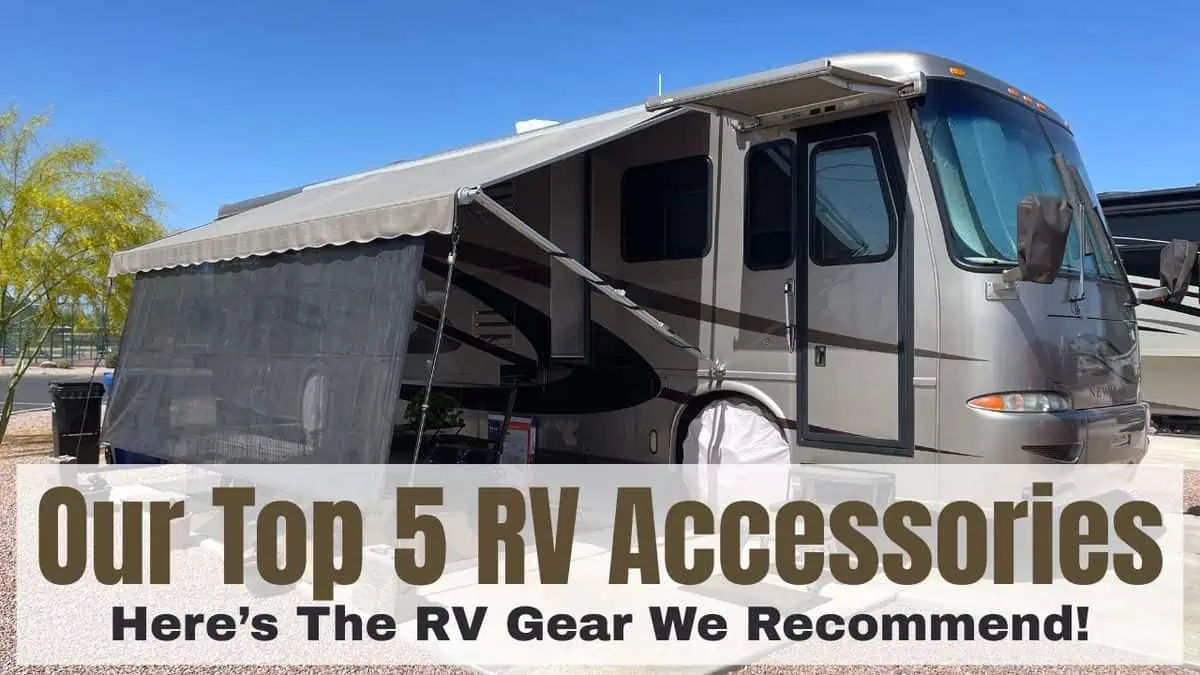
Some RV accessories look useful when you buy them, but eventually spend most of their time tucked away in a storage compartment. Others become part of your routine, and you wonder how you ever traveled without them.
That second group is what I want to share with you here. These are five must have RV accessories that we have come to appreciate through our own travels, from equipment that helps us monitor our tires to simple additions that make camping more comfortable.
As a certified RV inspector, I put a lot of value on equipment that helps you recognize a problem early. But I also appreciate anything that makes everyday RV life easier without taking up more space than it deserves.
So let’s look at why we like each accessory and whether it suits your camping style.
Quick Answer
Our five favorites are an RV tire pressure monitoring system, an awning shade, roof vent covers, a portable RV water softener, and a portable ice maker. Together, they help us keep an eye on our tires, enjoy the campsite, improve ventilation, deal with hard water, and make better use of limited freezer space.
1. An RV Tire Pressure Monitoring System
Your tires are your connection to the road, and a tire problem can become serious quickly. That applies to your RV, your tow vehicle, and any vehicle you tow behind a motorhome.
When I first started RVing, I checked all of our tire pressures manually. It took time, and getting to some of those valve stems meant plenty of bending down and getting back up again.
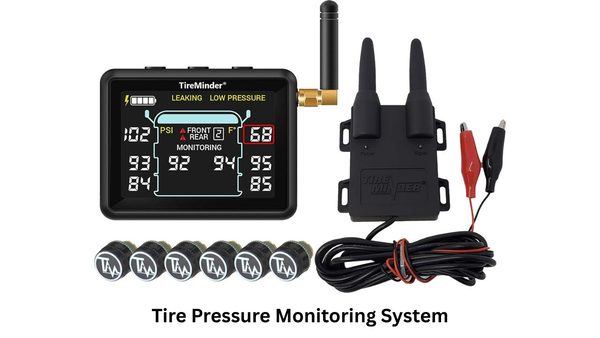
Then someone recommended a tire pressure monitoring system, usually called a TPMS. What a difference that made in keeping track of our tires.
Why a TPMS Makes Travel Easier
With our system, I can look at the monitor and see the reported tire pressures and temperatures. And while we’re traveling, alarms can alert me to readings that need attention.
A manual pressure check tells you what is happening while you’re parked. A TPMS adds information during the trip, when you might otherwise have no idea that a tire is losing pressure or getting unusually hot.
That is especially useful for a car being towed behind a motorhome. You may not feel a problem with that car’s tires from the driver’s seat of your RV.
How Our TPMS Helped Us Avoid a Bigger Problem
We had a tow bar arm break while traveling through Fort Worth, Texas, with our Honda CRV behind the motorhome. After replacing the tow bar, we encountered another problem because the new unit was unusually stiff.
As we started towing again, both front tires on the CRV began getting too hot. Our TPMS alerted me, and we were able to get off the road and address the towing issue before continuing.
Without that warning, I could have kept driving while the situation got worse. That experience is a big reason I recommend monitoring the tires on the vehicle being towed as well as those on the RV.
I explain the event in more detail in RV Tow Bar Lessons Learned When Mine Broke.
What to Check Before Buying a System
Choose a system with enough sensors for your entire setup and a pressure range that suits your tires. Also check whether your rig’s length calls for a signal booster and whether the sensors are compatible with your valve stems.
However, keep checking tire condition and setting the correct cold inflation pressure. A TPMS provides useful warnings, but it cannot prevent every tire failure or replace regular tire care. www.nhtsa.gov
For help with inflation, read Correct RV Tire Pressures For Every Rig. And follow the monitoring system’s setup instructions so its alarms suit the tires you are monitoring.
2. An RV Awning Shade
Even our 40-foot diesel pusher only had so much living space inside. So being able to sit outside comfortably made the campsite feel much more spacious.
An awning helps, but it does not always keep the sun off you. When the sun gets lower in the sky, it can shine right underneath the awning and across your chairs.
That is where an RV awning shade becomes useful. It extends downward from the outer edge of the awning and helps block that low-angle sunlight.

Creating a More Comfortable Outdoor Sitting Area
The shade we used extended down toward the ground, leaving some space underneath. It made the area beneath our awning much more comfortable when the sun would otherwise have driven us indoors.
And that gave us something like an outdoor room where we could relax and enjoy the campsite. For an accessory that packs away when you leave, that is a worthwhile improvement.
Many shades use mesh fabric that reduces glare while allowing some airflow and visibility. But the amount of shade you get depends on the fabric, the sun’s angle, and how you position it.
Choosing and Using an Awning Shade
Check your awning’s design before ordering, including how the shade attaches and how much width and drop you need. Some products have a removable lower panel, which can simplify taking them down.
Also check the instructions for any automatic awning retraction system. A shade attached to the ground may interfere with retraction, and different shade designs have different rules about what can remain attached when the awning rolls up. www.carefreeofcolorado.com
So be ready to remove the shade and retract the awning when weather requires it. An awning shade improves comfort, but it does not make the awning safe in strong wind.
You can find more advice in 5 Essentials That You Need To Know About RV Awning Care.
3. RV Roof Vent Covers
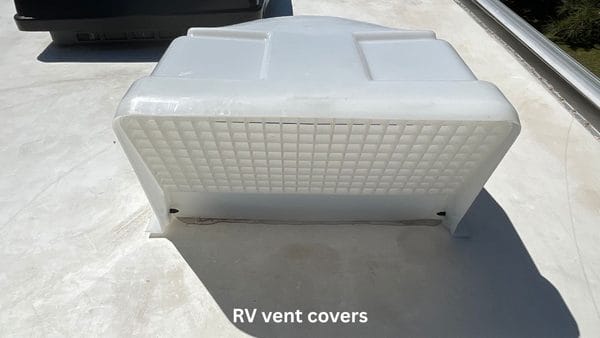
Roof vent covers are one of those accessories whose value becomes obvious after you use them. Our RV did not originally have them, but once we installed them, we really appreciated the difference.
To be clear, I’m talking about the protective covers installed above the opening vent lids. The lid still opens underneath, while the cover helps shield the opening from the weather.
Better Ventilation During Mild Weather
When conditions are comfortable outside, opening windows and using the roof vents can move fresh air through the RV. That can reduce how often you need air conditioning, especially when the outdoor air is cooler than the interior.
But without protective covers, rain can bring that ventilation to a stop. You have to close exposed vent lids to keep water from entering the RV.
Our covers let us keep using the vents in rainy conditions that previously meant closing everything up. That made a noticeable difference in how comfortable the RV felt.
Protection for the Vent Lids
We have also traveled through several hailstorms, and I appreciated having another layer over those vent lids. The covers help shield the lids from direct weather exposure and sunlight.
However, a vent cover can still be damaged, and it cannot guarantee protection from large hail or every wind-driven storm. If a cover is damaged, inspect the lid and the surrounding roof area as well.
Some cover and vent combinations also allow ventilation while traveling. But check the instructions for your specific equipment before leaving a lid open on the highway. blog.airxcel.com
Make Sure the Cover Fits the Fan
A cover needs enough clearance for the lid to open and enough airflow for the fan underneath it. A high-output vent fan may need a cover designed specifically for that application.
And remember that covered vents still need cleaning and inspection. Keep debris out of the airflow openings, and check the mounting hardware and nearby roof seals as part of your regular maintenance.
Roof vent covers made our existing ventilation system more useful, and they are worth considering if your RV has exposed vent lids.
4. A Portable RV Water Softener
We encountered plenty of hard water as we traveled across the country. And after dealing with its effects, a portable RV water softener became one of our favorite additions.
Hard water contains dissolved minerals, mainly calcium and magnesium. Those minerals can contribute to scale in plumbing and water-heating equipment, along with buildup on faucets and showerheads. www.usgs.gov

Why We Like Soft Water in the RV
For us, the difference was especially noticeable in the shower. We preferred how soft water felt, and it made everyday washing more pleasant.
Soft water also allows soap to lather more easily and helps reduce soap scum. So you may find that you need less soap than you were using with hard water.
There is a practical maintenance benefit too. Reducing incoming hardness can help limit new mineral scale, although it does not eliminate the need to clean fixtures or maintain your water heater. For heaters that use one, anode-rod inspection and replacement is part of that maintenance.
If you repeatedly camp where water is hard, this is an accessory worth a close look. You can learn more in An RV Water Softener System — Why You Really Need One.
A Water Softener and a Water Filter Do Different Jobs
A conventional water softener uses ion exchange to reduce hardness minerals. A water filter addresses whatever its particular design and rating cover, such as sediment or certain taste and odor problems.
So don’t assume that an ordinary inline filter will soften your water. And don’t assume that softened water has been disinfected or made safe from every possible contaminant.
Choose the treatment equipment that suits the water source and follow its installation instructions. A softener also does not replace your water pressure regulator.
Allow for Storage and Regeneration
Portable softeners need periodic regeneration to restore their ability to soften water. Many RV models use salt for this process, but the procedure and interval depend on the unit and the water you use. www.portablewatersoftener.com
Check the unit’s size, weight, and storage requirements before buying. And follow its directions for rinsing, winter protection, and any required maintenance.
If your usual campgrounds already supply soft water, you may see less benefit. But for our travels, it was an accessory we were very glad to have.
5. A Portable Ice Maker for RV Camping
A portable ice maker may seem like a small convenience, but we came to appreciate ours quickly. When your freezer is small, the space occupied by ice trays can feel like a lot.
And after using the ice in those trays, you have to wait for another batch to freeze.
Making Ice Without Filling the Freezer With Trays
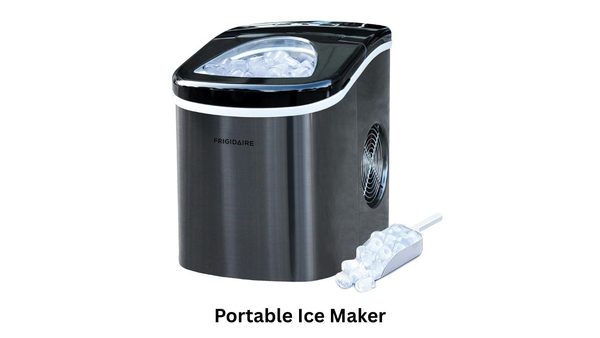
Our portable ice maker started producing ice in minutes. We could keep making more as needed instead of relying entirely on whatever was already frozen in trays.
That was handy for everyday drinks and warm afternoons at the campsite. We could also make ice ahead of time and put it into smaller bags in the freezer.
Flexible bags were easier for us to fit around the food than rigid trays, although the ice still occupies space.
Remember That Most Portable Ice Makers Do Not Store Frozen Ice
Most countertop ice makers have an ice basket rather than a refrigerated freezer compartment. So ice left in the basket eventually melts, with many machines returning that water to the reservoir. www.newair.com
Use the ice as you make it, or transfer it to your freezer if you want to keep it. Also check the machine’s batch size and production rate, since it needs time to make additional ice.
Check Your Counter Space and Power Supply
Before buying, think about where the ice maker will sit and how much ventilation space it requires. You will also need somewhere to secure it for travel.
Most countertop models need 120-volt power, so consider your electrical setup if you camp without hookups. And follow the cleaning instructions, using water suitable for drinking.
If your refrigerator already produces all the ice you need, this accessory may be unnecessary. But with a small freezer and a regular need for ice, it can be a very useful addition.
For more about your cooling and storage options, see my RV Refrigerator Comparison.
How to Choose Your Own Must Have RV Accessories
Start with the problems you actually encounter. If you regularly need better shade, struggle with hard water, or wish you had more freezer space, those are useful clues about what deserves room in your RV.
I would put tire monitoring high on the list because of the information it provides while traveling. After that, your usual weather, campground water, and daily habits can help you decide which comfort upgrades matter most.
Also consider setup time, storage space, weight, and ongoing maintenance. An accessory is more likely to earn its place when you use it regularly and can carry it conveniently.
For additional ideas, take a look at The Best RV Accessories For Travel And Camping. That article covers more of the useful gear we have enjoyed in our travels.
Frequently Asked Questions
Which of These RV Accessories Would You Buy First?
I would give a tire pressure monitoring system strong consideration first, especially if you tow a car or trailer. It can provide warnings about tire problems you might not otherwise notice while driving.
Does a TPMS Replace Checking Tires Before a Trip?
No, you still need to inspect your tires and verify proper cold inflation pressure. Check that the system is reporting current readings and that its sensors and alarms are working properly.
Can You Leave RV Roof Vents Open in the Rain?
A compatible protective cover can allow ventilation in rainy conditions. However, follow the cover and vent manufacturers’ instructions, and close the vents if conditions allow water to enter.
Is a Portable RV Water Softener Worth It?
It can be worthwhile if you frequently encounter hard water and want to reduce scale and soap scum. The benefit will be smaller if the water you normally use is already soft.
Will a Portable Ice Maker Keep Ice Frozen All Day?
Most countertop models will not, because their storage baskets are not freezers. Transfer finished ice to your RV freezer if you need to keep it frozen for later.
Conclusion
These five must have RV accessories earned their place through our own travel experiences. We relied on the TPMS for useful tire warnings, while the awning shade, vent covers, water softener, and ice maker helped make camping more comfortable.
Start with the accessories that would make the biggest difference for you, and give each purchase a purpose.
And I would love to hear about the accessories you wouldn’t be without. Leave your favorites in the comments so other RVers can learn from your experience too.
Have safe and happy travels, my friends. Until next time.