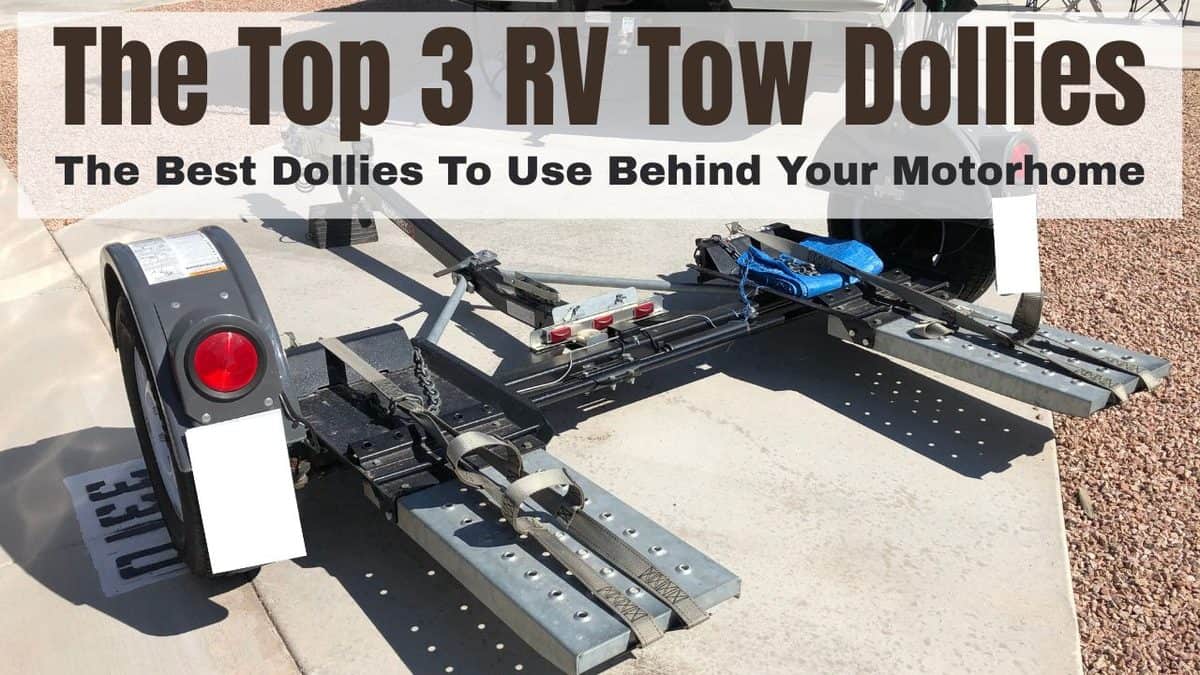
Choosing among the best tow dollies for motorhomes involves more than finding one that can carry your car. You also need to consider braking, loading, storage, vehicle compatibility, and how much physical work you’re comfortable doing.
And the most expensive dolly won’t automatically be the best choice for your situation. A simpler model that fits your vehicle and camping routine may serve you very well.
Quick Answer: Which Tow Dollies Do I Recommend?
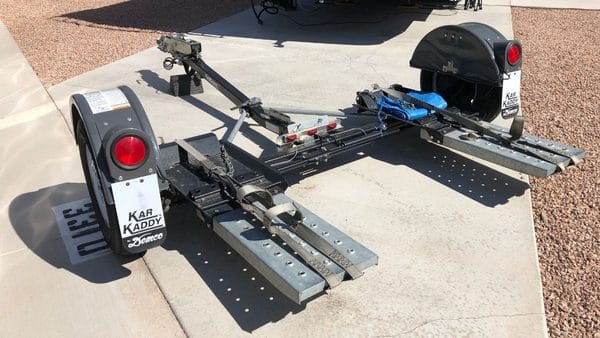
The Demco KarKaddy SS stands out for its folding design and steerable axle. The Roadmaster 2050-1 is worth considering for its adjustable ramps and electric brakes, while Master Tow offers alternatives for buyers focused on value.
However, the dolly must be approved for your vehicle’s weight, dimensions, and towing configuration. A recommendation for the brand doesn’t establish that a particular model will work with your car.
What Is a Motorhome Tow Dolly?
A tow dolly carries two wheels of your vehicle while the other two remain on the road. With the equipment discussed here, the vehicle is loaded facing forward, normally with its front wheels on the dolly.
Flat towing is different because all four wheels of the vehicle remain on the ground. And a full car trailer carries the entire vehicle.
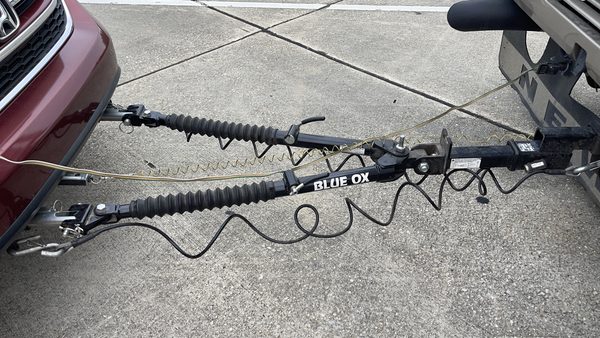
Those differences matter because a vehicle approved for one method may not be approved for another. Check its owner’s manual under recreational towing before purchasing equipment.
For a broader explanation, my article about whether an RV tow dolly is right for you covers the basic ownership considerations.
Advantages and Disadvantages of Dolly Towing
There are good reasons to choose a dolly, but there are also some practical compromises. I would think through both before deciding.
A Dolly Can Expand Your Vehicle Choices
Many front-wheel-drive vehicles that aren’t approved for flat towing may be suitable for dolly towing. That can make it easier to bring along a car you already own.
However, don’t extend that assumption to every vehicle. All-wheel-drive, four-wheel-drive, rear-wheel-drive, hybrid, and electric models require particular attention to the manufacturer’s instructions.
A dolly does not automatically protect a drivetrain just because two wheels are lifted off the ground.
Initial Setup Can Cost Less
Flat towing can require a tow bar, vehicle-specific baseplate, safety cables, supplemental braking, lighting, and installation work. Those costs can add up.
A properly equipped dolly may reduce that initial expense, especially if you find a good used one. But compare complete setups, including brakes, lighting, delivery, assembly, and anything the motorhome needs.
My comparison of dolly towing versus flat towing will help you weigh those differences.
Loading Requires Time and Physical Effort
With a dolly, you need to position the vehicle, load it correctly, install the tire straps, and complete the required connections. Unloading involves another sequence of steps.
So I wouldn’t promise that the time difference will be small for everyone. Your mobility, experience, vehicle clearance, and campsite conditions can make a big difference.
Before buying, try reaching the ratchets and handling the equipment yourself. A demonstration can tell you more than a sales brochure.
You Need Somewhere to Store It
After unloading the car, you still have a separate piece of equipment to park. And moving a dolly on gravel, grass, or a slope may take considerable effort.
Ask campgrounds about storage arrangements when necessary. Don’t assume there will always be room beside or behind your motorhome.
For a firsthand perspective, my friends Marc and Julie Bennett at RV Love published a helpful discussion of their experiences with dolly towing versus four-down towing.
What to Check Before Buying a Tow Dolly
Before comparing features, establish whether the entire towing combination will work. The car, dolly, hitch, and motorhome each have limits.
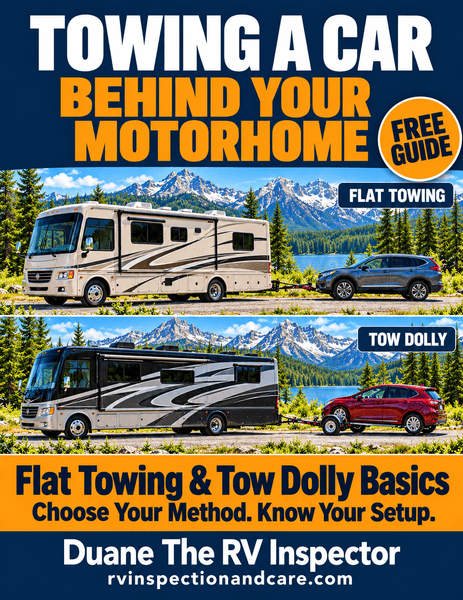
You can find more information on setting up a tow dolly correctly in my FREE guidebook here.
Vehicle Weight and Dolly Loading Limits
Check the maximum total vehicle weight the dolly permits. Then check how much weight the dolly is allowed to support on its platform or axle.
Those are different ratings because the vehicle’s rear wheels still support part of its weight. Passing the total-vehicle-weight limit doesn’t automatically mean the front-axle load is acceptable.
Also account for the dolly’s own weight when checking the motorhome’s towing capacity and gross combined weight rating. Lifting the car’s front wheels does not remove the car’s weight from the towing calculation.
Width, Clearance, and Tire Fit
Measure the vehicle using the dolly manufacturer’s specified measuring points. Inside tire spacing, outside tire width, body clearance, and strap compatibility can all matter.
Then consider the loading angle. A low bumper, spoiler, or underbody panel may contact the ramps even when the vehicle meets the weight limit.
And don’t load a vehicle backward as a shortcut around drivetrain restrictions. Follow both manufacturers’ approved procedures.
Brakes and Rear Lighting
Choose a brake-equipped dolly suitable for your setup. Its brakes act at the dolly wheels; they do not operate the car’s rear brakes.
Electric brakes require a compatible brake controller and wiring. Hydraulic surge brakes use an actuator that responds to compression at the coupler.
You also need appropriate lighting at the rear of the towed vehicle. Roadmaster’s instructions call for auxiliary rear lighting, so don’t assume the dolly’s fender lights finish the job. roadmasterinc.com
Plan to Travel Forward
Plan your fuel stops and parking so you can leave going forward. Demco’s KarKaddy SS instructions and Roadmaster’s dolly manual prohibit backing with the vehicle loaded.
So if you need to reverse the motorhome, unload and disconnect as directed by the equipment manufacturer first. A spotter doesn’t override a prohibition in the manual.
Demco KarKaddy SS: My Choice for Folding Storage
The Demco KarKaddy SS is the first dolly I would investigate if campsite storage is a major concern. And they make some of the best tow dollies for motorhomes that you can find.
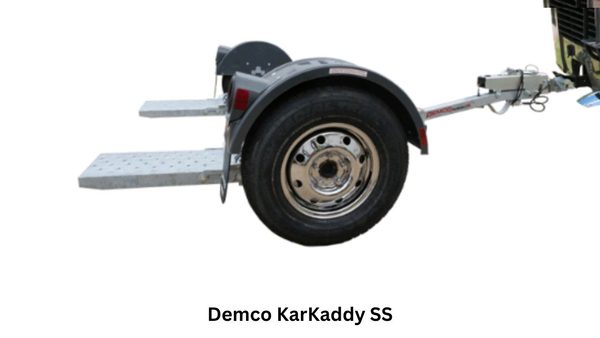
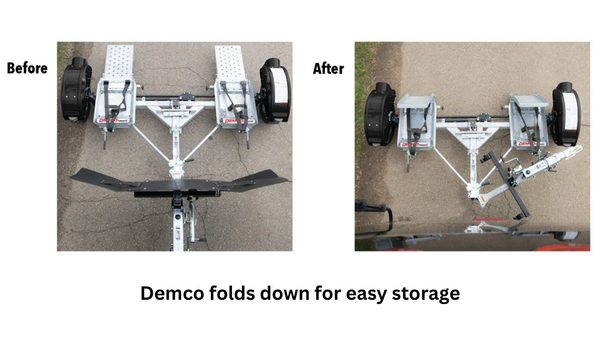
Its folding tongue and ramps distinguish it from a basic fixed-length dolly. And that can be useful both at home and when traveling.
Key Features
Demco lists these specifications and features:
- Maximum total towed-vehicle weight: 4,800 pounds.
- Dolly axle capacity: 3,500 pounds.
- Overall length: 133 inches extended and 67 inches folded.
- Steerable axle.
- Hydraulic surge disc brakes.
- Galvanized finish.
Remember that folding reduces its length, rather than making the dolly disappear. You still need enough width, suitable ground, and a manageable way to move it.
Who Should Consider It?
I would put the KarKaddy SS on the shortlist for buyers who value its storage design and steering arrangement.
However, check the loading clearance, approved vehicle dimensions, and supported axle load before buying. Even a feature-rich dolly can be the wrong match for your car.
You can review the current specifications and manual on the Demco KarKaddy SS product page.
Roadmaster 2050-1: Adjustable Ramps and Electric Brakes
Roadmaster is a familiar name to many motorhome owners because of its flat-towing equipment. But they also make some of the best tow dollies for motorhomes too.
Their 2050-1 tow dolly, also identified as the RM3477, provides another option worth considering.
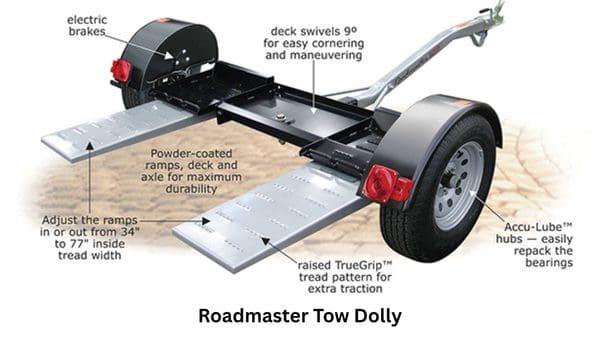
The features that interest me most are its adjustable loading arrangement and electric braking system.
Key Features
Roadmaster lists a maximum towed-vehicle weight of 4,250 pounds and an empty dolly weight of 545 pounds.
It also includes slidable Easy-load ramps, a swiveling deck, electric brakes, and Accu-Lube hubs that allow bearing lubrication through grease fittings.
That lubrication access is convenient, but it doesn’t eliminate inspections or other bearing service required by the manual.
Consider the Complete Brake Setup
Roadmaster specifies that a brake controller must be installed in the motorhome for its electric dolly brakes to function.
If your diesel motorhome has an engine or exhaust brake, ask the installer how the chosen controller responds during auxiliary braking. Controller behavior and the coach’s wiring matter.
I wouldn’t assume that electric brakes automatically eliminate every braking interaction, or that surge brakes are unsuitable for every diesel motorhome. Confirm the equipment combination with the relevant manufacturers.
The Roadmaster tow dolly product page provides the specifications to begin that discussion.
Master Tow 77T and 80THD: Options for Value Shoppers
Master Tow is another brand I recommend investigating, especially when purchase cost is a major consideration. And they still are among the best tow dollies for motorhomes that you can buy.
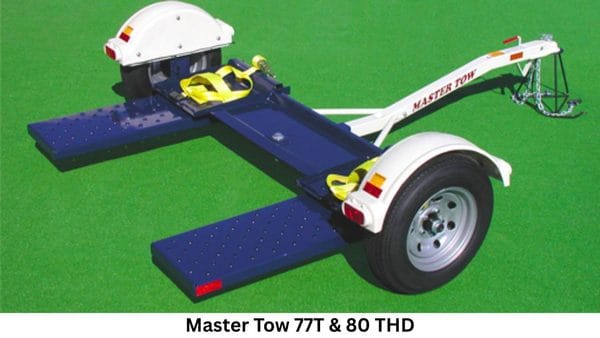
The 77T and 80THD offer different size and capacity specifications. However, there is an important qualification in the currently published information.
Confirm the Weight Rating Before Buying
Master Tow’s specification table lists maximum total towed-vehicle weights of 4,250 pounds for the 77T and 4,900 pounds for the 80THD.
However, the same website describes the 80THD elsewhere as having a 4,750-pound maximum. Because those figures conflict, have Master Tow confirm the rating for the exact unit rather than assuming the higher number applies. Master Tow
Check the supported load limit as well as total vehicle weight. The dolly’s identification, applicable manual, and manufacturer confirmation should settle the decision.
Confirm the Brake Version Too
Don’t assume that every Master Tow listing includes surge brakes. The company’s parts catalog distinguishes electric-brake, surge-brake, and idler versions. mastertow.com
Ask the seller exactly which configuration is included and what additional equipment you need. A lower advertised price isn’t a fair comparison if the braking equipment differs.
Start with the Master Tow tow dolly specifications, then verify the details of the dolly being offered.
Can Buying a Used Tow Dolly Save Money?
Absolutely, and I think the used market is worth checking. RVers sometimes sell dollies when they change vehicles, change towing methods, or stop traveling.
But a dolly that looks clean may still need tires, brake repairs, straps, or bearing work.
Inspect More Than the Paint
Check the frame, welds, coupler, ramps, pivot or steering components, tires, wheels, bearings, brakes, wiring, straps, and ratchets. Look for damage, corrosion, missing parts, and unapproved modifications.
Also confirm the model and rating, and obtain the correct operating manual. If you cannot evaluate the condition confidently, have a qualified technician inspect it before purchase.
Add the cost of necessary repairs to the asking price. Sometimes a newer or better-maintained dolly turns out to be the better value.
Frequently Asked Questions
Can Any Car Be Towed on a Dolly?
No. Your exact vehicle must be approved for that towing arrangement and must fit the dolly’s weight, dimensional, and loading requirements.
Do I Need a Brake Controller?
A conventional electric-brake dolly such as the Roadmaster discussed here requires a compatible controller. A hydraulic surge-brake system operates differently, so follow the instructions for your specific equipment.
Can I Back Up With a Loaded Tow Dolly?
The Demco and Roadmaster instructions reviewed here prohibit it. Plan ahead and unload or disconnect according to the manual before reversing the motorhome.
Are Magnetic Tow Lights Enough?
They can provide rear lighting when suitable, correctly mounted, and properly connected. However, verify that your complete lighting arrangement satisfies the equipment instructions and applicable requirements rather than assuming any magnetic light kit will do.
Is Dolly Towing Better Than Flat Towing?
It depends on your vehicle, budget, mobility, and travel routine. For the alternative, my articles about flat towing vehicles and the best RV tow bars explain the equipment and practical considerations.
Conclusion: Choose the Tow Dolly That Fits Your Setup
The best tow dollies for motorhomes combine suitable capacity, compatible braking, practical loading, and storage you can manage.
The Demco KarKaddy SS, Roadmaster 2050-1, and Master Tow models provide three useful starting points when looking for the best tow dollies for motorhomes.
But the exact equipment, ratings, and condition matter more than the brand name alone.
So start with your vehicle’s recreational-towing instructions, verify the motorhome’s limits, and compare complete setups. Then choose equipment you understand and can handle comfortably.
Have safe and happy travels, my friends!